
 close
close


 LOGIN
LOGINRugby Coach Weekly is the largest digital resource for youth coaches, trusted by 15,000+ coaches, teachers and parents every month.
-
Coach with confidence
-
Improve your teams faster
-
Run great sessions with less effort
- Expert coaching advice from TOP Coaches
- Training sessions for players from U6 to U17+.
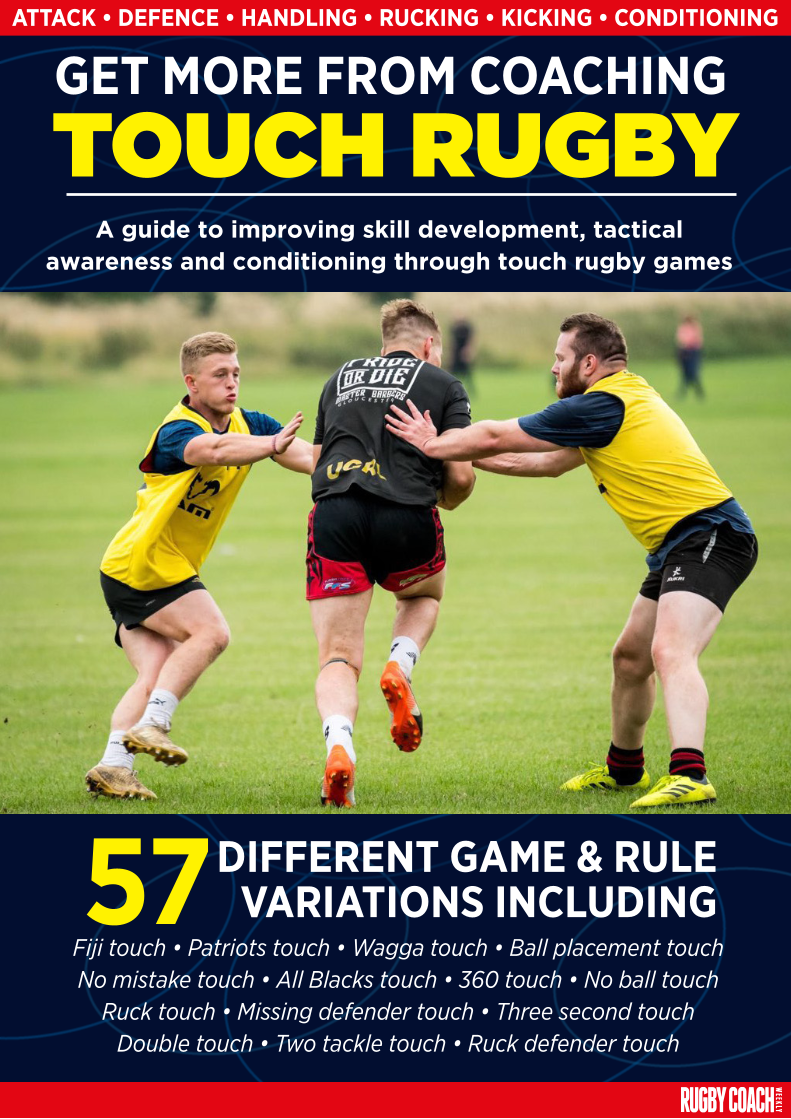
Using touch rugby to improve the basics


But touch rugby offers more than a chance to try out a few fancy passes.
Fixing a defender – the most difficult basic?
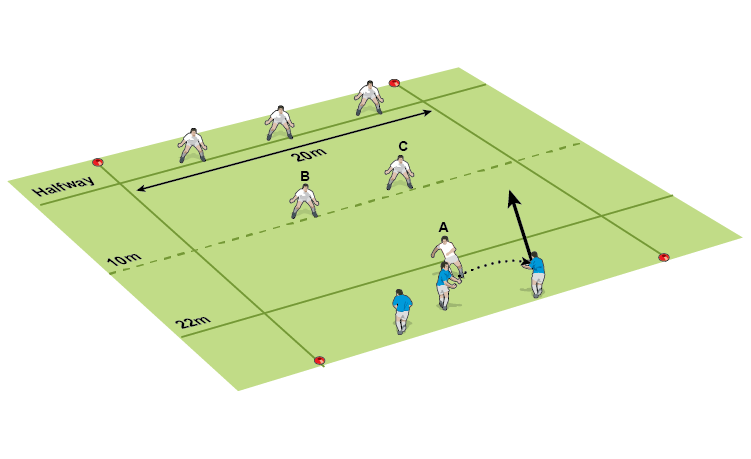
Fixing a defender means committing him to the tackle just before the ball carrier releases the pass. The receiver will then have one less defender to beat.
It is a basic requirement of rugby to take a defender out of the game, albeit momentarily, because it creates spaces. But it is a tough skill to learn and perform every time.
Touch rugby makes the problem doubly difficult because defenders do not need to shape themselves for the tackle. The distribution of weight being balanced makes it easier to defend, and so defenders are less likely to be "fixed".
Solutions
- The two-handed touch on the shorts. Players cannot be touched above the shorts, making the defender bend down and commit to the tackle.
- Tag rugby. The pulling of the tag represents some commitment to the tackle. Two tags pulled might be even more beneficial, and could promote two tacklers in a crowded area. In tag rugby, I suggest an "immediate pass" rule following a tackle to keep the game flowing, or a pass back into the "pocket" behind the tackled player within the count of three.
Depth: avoiding lazy flat pass problems
Touch rugby can encourage a player with the ball to run up towards the defence and, with a deft pass, release a player through the gap. This type of pass does not improve either the attack or defence, and often fails anyway.
It fails because the tacklers are not lining up to take physical contact. They are therefore more balanced, so not as many gaps appear.
But more crucially, this type of pass is lazy. Players in possession know they are not going to lose the ball. The potential receiver is not braced for contact. It would be better to pass deeper to enhance skill levels.
Solutions
To encourage depth, try the following variations to the game of touch rugby:
- All passes must be made to players who are running onto the ball. If not, the ball is turned over. Players will need to lie deeper in order to run onto the ball.
- A little more advanced this, but allow holding tackles by the defence. The defender can then prevent the release of the ball, slowing down the attack. Turnovers can be awarded if the ball is not released within 3 seconds.
Defence: too easy
Defence in touch rugby is easier than normal rugby because the attack cannot beat players by "bashing" through. A one hand or two hand touch allows the defender an extra 18 inches / half a metre to work in, to prevent the attacker beating them.
If the defence can be worked in a more rugby realistic way, then the benefits accrue to both sets of players.
Solutions
- Use holding tackles, rather than touch tackles.
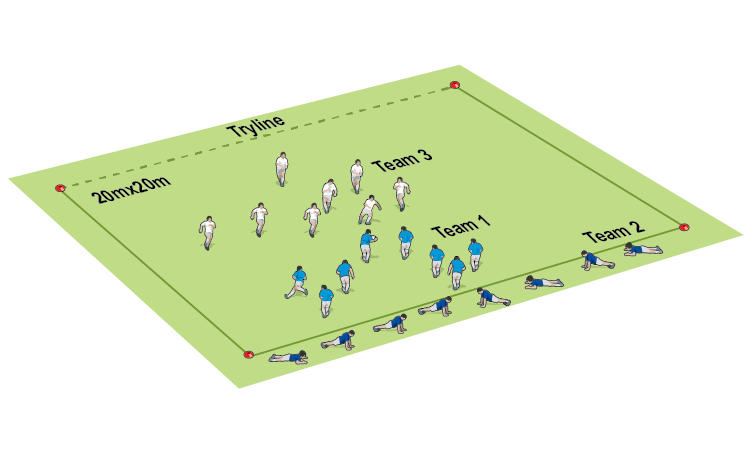
- Tacklers have to do two press ups before re entering the game.
- A tackle is only complete when two players have touched the ball carrier. Otherwise the ball carrier is free to continue to move.

Dan Cottrell
Latest Issue
Subscribe Today
Subscribe Today
Newsletter Sign Up
Coaches Testimonials

Colin Shaw

Gary Lee Heavner
Subscribe Today
Latest Issue
Be a more effective, more successful rugby coach
In a recent survey 89% of subscribers said Rugby Coach Weekly makes them more confident, 91% said Rugby Coach Weekly makes them a more effective coach and 93% said Rugby Coach Weekly makes them more inspired.
Get Weekly Inspiration
All the latest techniques and approaches


Rugby Coach Weekly offers proven and easy to use rugby drills, coaching sessions, practice plans, small-sided games, warm-ups, training tips and advice.
We've been at the cutting edge of rugby coaching since we launched in 2005, creating resources for the grassroots youth coach, following best practice from around the world and insights from the professional game.
