
 close
close


 LOGIN
LOGINRugby Coach Weekly is the largest digital resource for youth coaches, trusted by 15,000+ coaches, teachers and parents every month.
-
Coach with confidence
-
Improve your teams faster
-
Run great sessions with less effort
- Expert coaching advice from TOP Coaches
- Training sessions for players from U6 to U17+.
Sprint defence rugby coaching drill


1. Feet
Sprint research says that the most effective sprint start is where the front foot is in line with the back knee, for example right foot in line with the left knee.
This can optimise the elastic nature of the leg muscles meaning the best boost off the mark. It is also the easiest position for a rugby player to correctly align in the heat of a game.
Sprinters may make minor adjustments to this, but remember they have the benefit of blocks to rest their feet on.
Your players need to practise putting their feet into the right place by having them go down on one knee and putting the foot on the other leg in line with the knee. Rise into a crouch position, sprint and reset. Repeat the drill regularly to encourage players to get into good habits.
2. Arms
The speed of the arms in a sprint has a strong influence on the speed of the legs. The arms need to work in opposite directions to the movement of the legs. Promoting the same leg and arm forward in the sprint start position is a trap that most non-sprinters fall into.
There are a couple of ways to counteract the same arm and leg forward set up. First is to start with the right hand on the floor in line with the left foot, if the left foot is the furthest forward, and vice versa if the right foot is furthest forward.
Second is to have the left hand behind the back if the right foot is forward. It could be a combination of both, but a routine, like the feet position, should be ingrained through practice.
Once out of the blocks, the arms need to pump fast.
3. Balance
The centre of gravity of the player's body must be forward. However, it also needs to be controlled. Shoulders should be beyond the knees, and the hand on the ground can help maintain this in balance.
The players should be on the balls of their feet, with their toes ready to spring forward. Rugby drills can focus on your players' reaction times while maintaining balance, and so not moving before the ball comes out (from the back of a ruck or maul).
Your rugby drills should be based on real situations – have a scrum half passing to a player to replicate the moment of release for a sprinter. Be tough on offside and reaction times. This can turn the drill into a competition with positive and negative points for good speed or going offside.
4. Head
Sprinters focus ahead. Initially they look only at the first few feet on the ground in front of them. This is impractical for rugby. The line of sight, however, can still be restricted to allow the maximum sprint.
The sprint defender does not need to see the bigger picture, only the player they are to chase down. Defensive guards and the outside defenders can cover the other aspects.
So the head should be focused ahead, probably at hip height, with the peripheral vision able to see when the ball is going to be released. The most astute player will be able to tell from the movement of their target when the ball is released.
5. The sprint defence
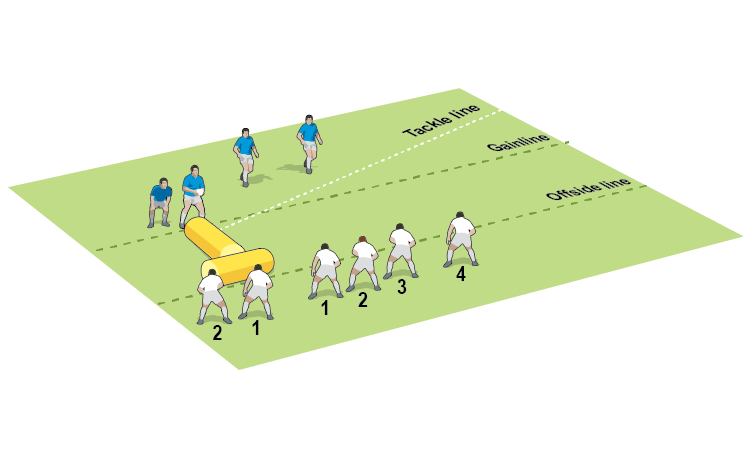
Sprint defence can work in a defensive system if the other elements of the defence can fill in. I suggest it should only be used outside your 22m, as a way of cutting down the options. It's very useful if you are trying to prevent a drop goal.
Sprint defence has a further advantage – the player is likely to be set in the correct position to make a tackle. A good base and lower body angle, which is aimed at driving up into opponents. So sprint start training has an added benefit.
All players should practise the sprint start, but in particular the forwards because they are most likely to be in the position to use it. A sprint for most forwards is likely to be over in 10m. A good starting position is vital to give that extra advantage.

Click the link to order a copy of Match Day Tactics, a manual covering explosive tactics that will help give your team the edge they deserve.
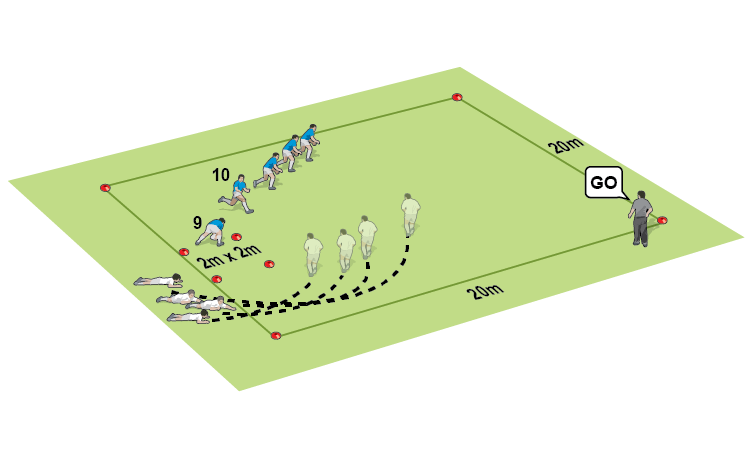
Click the link for a sprint start rugby training drill.

Dan Cottrell
Latest Issue
Subscribe Today
Subscribe Today
Newsletter Sign Up
Coaches Testimonials

Colin Shaw

Gary Lee Heavner
Subscribe Today
Latest Issue
Be a more effective, more successful rugby coach
In a recent survey 89% of subscribers said Rugby Coach Weekly makes them more confident, 91% said Rugby Coach Weekly makes them a more effective coach and 93% said Rugby Coach Weekly makes them more inspired.
Get Weekly Inspiration
All the latest techniques and approaches


Rugby Coach Weekly offers proven and easy to use rugby drills, coaching sessions, practice plans, small-sided games, warm-ups, training tips and advice.
We've been at the cutting edge of rugby coaching since we launched in 2005, creating resources for the grassroots youth coach, following best practice from around the world and insights from the professional game.
