
 close
close


 LOGIN
LOGINClever tricks to power up smaller players
Don't worry about size when you can use clever tricks to power up even your smallest players and make them get over and beyond the gain line and then get creative.
When I was a kid, one of my coaches had a great saying: "Powerful ball carrying doesn't start with eating more chips". What he meant by that was that just being large does not create an effective ball carrier. Sure, you can make big players carry the ball but you also need to develop thinking, skilled players who can evade a tackle, move a defender and pass.
We need to re-evaluate what we ask ball carriers to do and maybe think about making all players, regardless of size, more effective with the ball in hand.
Making a player "heavy" means that they are hard to bring down, hard to stop with ball in hand and have a psychological edge on the pitch. There are two ways to educate your players.

1 - After breaking the line...
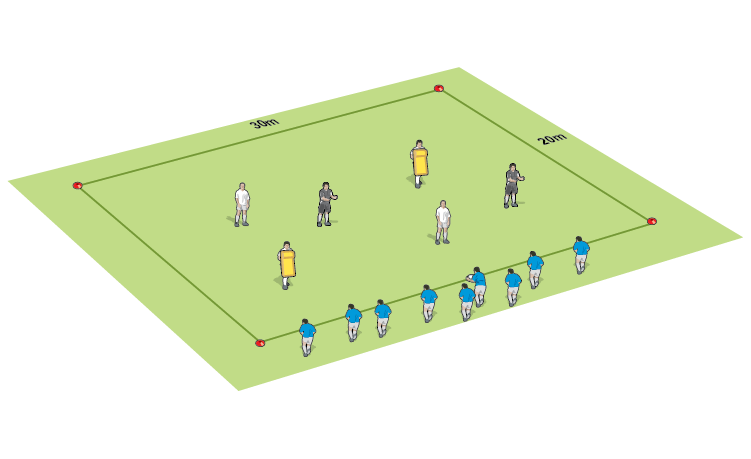
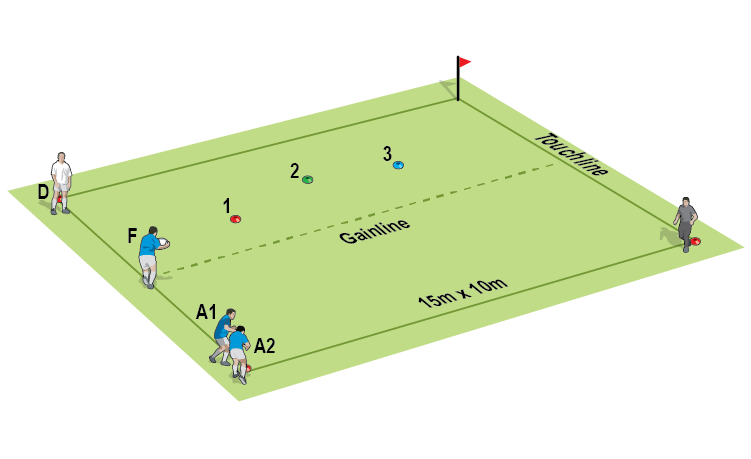
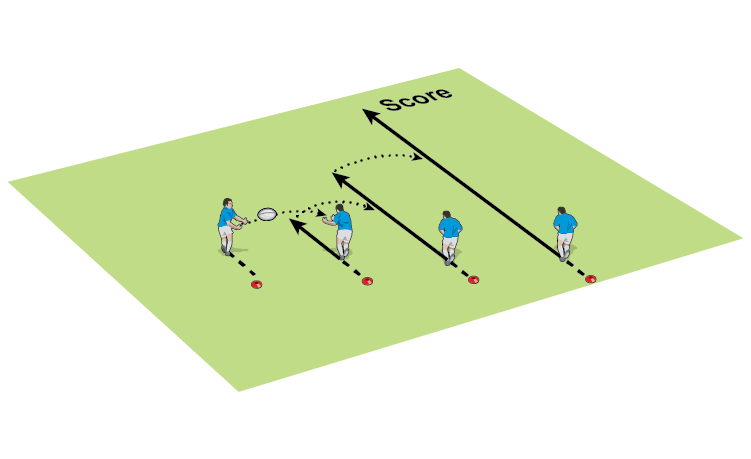
There are two things you can do with space - preserve it or use it. Exploiting space needs to done quickly, with pace and determination. The key is to create activities that do not end with making a line break but actually start once they do. See picture 1 for a simple 3v3 space-finding activity. The attackers have to get through the ruck pad holders. The real skill is in picture 2. Once space has been created, it must be exploited. Teach players about options post line break and end the activity with extra passes and a score.2 - After the contact...
Making contact doesn't have to be the end of your attempted line break. Your player sees a space and drives through but is held up without going to ground. Having a player nearby willing to help drive the ball carrier through the line (known as "latching") may not release him into open play but might free the ball carrier's arms to offload to a colleague who is able to exploit the defence. Contact doesn't necessarily mean the end of your opportunity to exploit space - it could be just the beginning.This session comes from Rugby Coach Weekly. To get more sessions like this, delivered direct to your inbox, trial or subscribe to Rugby Coach Weekly now.
Be a more effective, more successful youth rugby coach
- Win more games, without sacrificing the crucial element of fun
- Develop every player, regardless of vast differences in ability
- Run a respected, professional programme - even with a full-time job and limited time
Subscribe for full access
Or register and unlock 2 free articles,
receive our weekly newsletter, and
get a FREE coaching e-book.
Or if you are already a subscriber login for full access.

Dan Cottrell
Latest Issue

Subscribe Today
Subscribe Today

Newsletter Sign Up



Coaches Testimonials

Colin Shaw

Gary Lee Heavner
Subscribe Today
Latest Issue
Be a more effective, more successful rugby coach
In a recent survey 89% of subscribers said Rugby Coach Weekly makes them more confident, 91% said Rugby Coach Weekly makes them a more effective coach and 93% said Rugby Coach Weekly makes them more inspired.
Get Weekly Inspiration
All the latest techniques and approaches


Rugby Coach Weekly offers proven and easy to use rugby drills, coaching sessions, practice plans, small-sided games, warm-ups, training tips and advice.
We've been at the cutting edge of rugby coaching since we launched in 2005, creating resources for the grassroots youth coach, following best practice from around the world and insights from the professional game.
