
 close
close


 LOGIN
LOGINThe fall guys
When players are tackled they need to give their own players a chance to retain the ball – so teach them the art of going to ground successfully.


So much time is spent teaching young players the art of tackling it is possible to forget the other side of things – how to keep possession of the ball after being tackled and then presenting it to team mates.
The attacker needs to maximise his chances of retaining the ball and this requires good falling and presentation skills – both of which are easily taught.
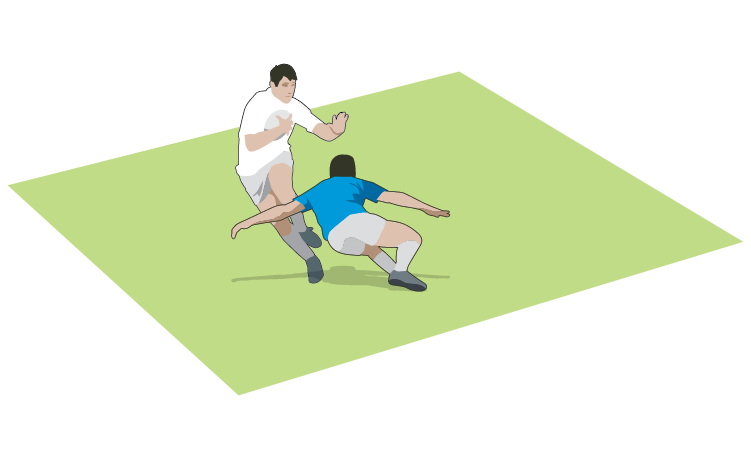
Start with the basics: While holding the ball in two hands in a standing position, players fall to the ground on your command, absorbing the impact with their knees, hips and shoulders while also preventing the ball from hitting the ground. They should also tuck the elbows in to prevent jarring.
As they fall, ensure they end up facing their own team mates in order to present the ball cleanly.
They will end up almost side-on to start with, which is a great time to teach them about the “tackle gate” and why they should be looking at a “jack knife” or even “pencil” placement.
Once they have mastered falling and not dropping the ball, build up speed from standing to walking, to jogging and finally to running.
Emphasise the need to absorb the fall to keep the ball
absorbing impactPlayers fall to the ground in stages: Knees, hips and shoulders. |
falling to retain possession
-
Elbows tucked in to prevent jarring
-
Initial contact with ground is with the knees
-
Next contact is with the hips
-
Final contact is with the shoulder
Related Files
Play the fall and present the ball
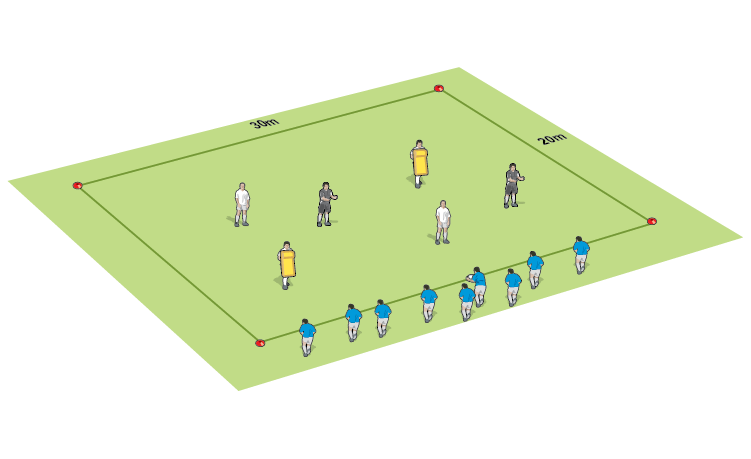
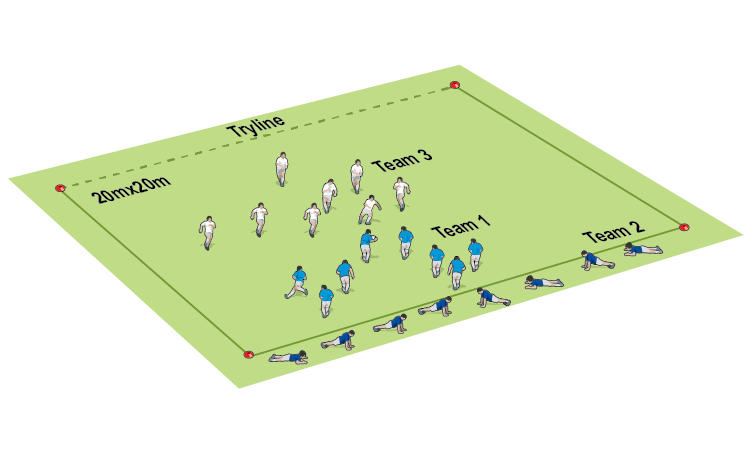
Five tacklers kneel at intervals on the outside of a circle. Three players jog around the circle.
The ball carrier (1) is tackled side-on. They fall and presents so the following player (2) can pick up the ball and run on. They, in turn, are tackled, allowing player 3 to pick up and carry on to the next tackle where player 1 will retrieve the ball. Reducing the attackers to two instils an urgency to get up after the tackle to continue as a supporter.
Attackers see how many full circles they can complete in a minute. Bonus points are awarded for presentation towards a support runner. Switch directions to promote falling on both sides.

Latest Issue

Subscribe Today
Subscribe Today
Newsletter Sign Up

Coaches Testimonials

Colin Shaw

Gary Lee Heavner
Subscribe Today
Latest Issue
Be a more effective, more successful rugby coach
In a recent survey 89% of subscribers said Rugby Coach Weekly makes them more confident, 91% said Rugby Coach Weekly makes them a more effective coach and 93% said Rugby Coach Weekly makes them more inspired.
Get Weekly Inspiration
All the latest techniques and approaches


Rugby Coach Weekly offers proven and easy to use rugby drills, coaching sessions, practice plans, small-sided games, warm-ups, training tips and advice.
We've been at the cutting edge of rugby coaching since we launched in 2005, creating resources for the grassroots youth coach, following best practice from around the world and insights from the professional game.
