
 close
close


 LOGIN
LOGINRugby Coach Weekly is the largest digital resource for youth coaches, trusted by 15,000+ coaches, teachers and parents every month.
-
Coach with confidence
-
Improve your teams faster
-
Run great sessions with less effort
- Expert coaching advice from TOP Coaches
- Training sessions for players from U6 to U17+.
How to create creativity through the right challenges
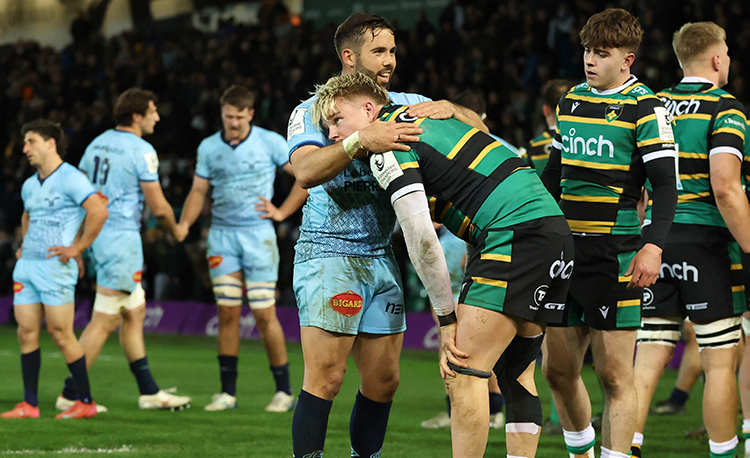
From Under 8s right through to teams like the inventive French team, La Rochelle, coaches are looking to encourage more creativity from their players. Here’s how...
By Nick Scott, DoR at Rugby Colorno & former RFU Coach Development Manager


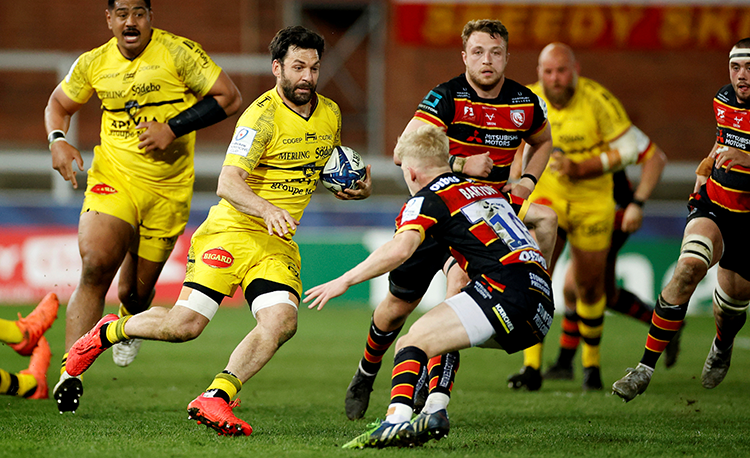
One popular definition of creativity in sport is ‘players finding new solutions to old problems’.
My favourite example of creativity was when watching an U8 session in Italy, where a simple 2 attackers v 1 defender drill was being run.
As the ball carrier approached the defender, having been told the objective was to give the ball to his mate for his mate to score, he stopped and pointed to the middle distance behind the defender. “Your Mum wants you” he said to the defender.
The defender turned to look for his Mum; the ball carrier passed the ball to his mate to scoot off and score. However, his mate also looked for the defender’s Mum, was not watching the ball and the pass hit him in the face. Brilliant distraction of the defender’s attention.
The above is an example of an innovative solution to an old problem. The player, incidentally, was told that wasn’t what the practice was about and had to run through the drill again. But there is a challenge here – while one player found a new solution by distracting the defender, it also confused his mate who was also distracted.
In a team sport, this is the creativity challenge, the issue that encourages coaches to value conformity rather than creativity. One player’s creativity can be confusing to a team-mate. Their mates might not recognise the opportunities afforded by the original piece of creativity and possession is lost, or attackers pour through your carefully created defensive system.
TRUST
I trust players to be creative. In a supportive environment, and given appropriate practice design, players will usually experiment with solutions to the problems posed in practices or in matches.
Those solutions will usually favour their personal preferences based on their physical attributes and skill levels.
Given freedom to explore, a range of players will discover very different solutions – some will be effective, some less so, and most coaches are pretty good at prompting reflection around the action.
REACT AND ADAPT
I have come to understand that the skill of the coach around creativity is more than encouraging players to seek solutions - that is stage one.
It is also about a fostering mentality within the group that reacts, adapts and profits from individual creativity.
The miracle offload needs a receiver who has processed:
- who the offloader is
- what their preferred solution might be >what the defenders might do
- whether the contact will be won >where the ball is likely to go
- what space there is to run into.
It also requires other support players distracting defenders to create space.
The processing of all of that information is about creativity, certainly. It’s also about high level rapid decision-making, which is just as important as the original piece of creativity that created the miracle offload. It is about other player’s pattern recognition, it is adaptability, it is mental agility, it comes from a mindset.
The key decisions for any support player are either supporting the ball or supporting space. Top teams make these decisions with great accuracy.
NOW FOR YOUR TEAM
So how could we better prepare the U8 receiver of the ball in the example I gave
at the start of this piece, to profit from his mate’s creativity?
Coaches should consider adapting their observation and feedback.
- Widen your observation skills, from solely “on the ball” to what happens “off the ball” and feed back accordingly.
- Stop feeding back only on the execution of a skill. Talk to players off the ball and ask them to evaluate decisions they make.
- Use a co-coach to help with the above two areas. Brief a co-coach, and ask them to give hot feedback on how players react away from the ball.
Try feeding back on the intelligent run from a support player that did not get the ball; look at the defender who responded quickly to cover the space left by a team-mate who flew out of the line because they saw an interception opportunity.
These feedback opportunities are so often missed as the feedback goes to the eye-catching work of those on the ball. The miracle offload is not successful without others being on the same wavelength. Encourage those away from the ball to reflect on what they saw and did. Or ask the ball carrier to explain what they needed from those around them.
THE CHALLENGE
The creativity challenge for coaches, is helping players reach a point where they will be innovative with the knowledge and trust in their mates that they will react and respond accordingly.
This is often known as getting to a place where players are all on the same wavelength, but it is not accidental. It is the product of an environment which encourages creativity, and where everyone is tolerant of and responsive to risk taking. Specifically, it is widening coaching focus to raise awareness off the ball, to make better decisions and influence play away from the point of focus so that risks become less risky.
NOW FOR TOP TEAMS
Back to teams like La Rochelle. I suspect they start with a common understanding – a mindset which wants to keep the ball alive. From there, I think the coaching focus is for everyone to expect something to happen to support that goal.
It is not possible to predict what exactly will happen, but it is possible to prepare players to be able to adapt to what happens next within the wider context of keeping the ball alive.
Related Files

Nick Scott

Latest Issue

Subscribe Today
Subscribe Today

Newsletter Sign Up

Coaches Testimonials

Colin Shaw

Gary Lee Heavner
Subscribe Today
Latest Issue
Be a more effective, more successful rugby coach
In a recent survey 89% of subscribers said Rugby Coach Weekly makes them more confident, 91% said Rugby Coach Weekly makes them a more effective coach and 93% said Rugby Coach Weekly makes them more inspired.
Get Weekly Inspiration
All the latest techniques and approaches


Rugby Coach Weekly offers proven and easy to use rugby drills, coaching sessions, practice plans, small-sided games, warm-ups, training tips and advice.
We've been at the cutting edge of rugby coaching since we launched in 2005, creating resources for the grassroots youth coach, following best practice from around the world and insights from the professional game.
