
 close
close


 LOGIN
LOGINSharp defences need sharp minds
Editor Dan Cottrell adds further context to two sessions.


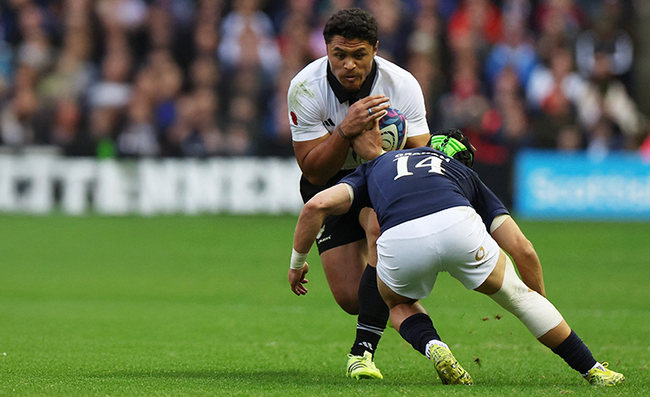
A strong defence has all the players working together as a unit. They are linked together, first in the front line and then in the backfield.
The defence compresses around the ball when the attack is close to the tackle line. It shifts and spreads as the attack reorganises or moves the ball backwards and wide.
That’s quite sophisticated movement, and especially when you have players of varying speeds creating those links. The best attacks aim to stretch and disorganise, stressing the weak points, or find spaces.
Practically, coaches only have a limited time with their players to work on all the possible scenarios. There is a danger that the system is too complicated for the team, either in terms of their skillset, or tactically for the teams they play against.
That’s why I think you need to spend time on the reasons why, as much as the techniques, skills and tactics to achieve a good defence. It doesn’t start with a tackle, it ends with it. It starts with the connection between the players.
Yet, in training, we can jump to the connection before the players have the right skills to make a good connection. To connect to the players around you, you have to be aware of what’s in front of you and be able to react to that. That requires good balance to move forwards and side-to-side to cover the attack in front of you.
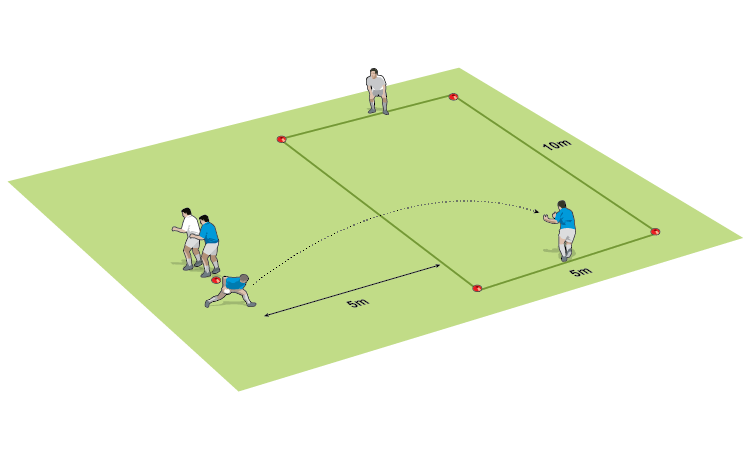
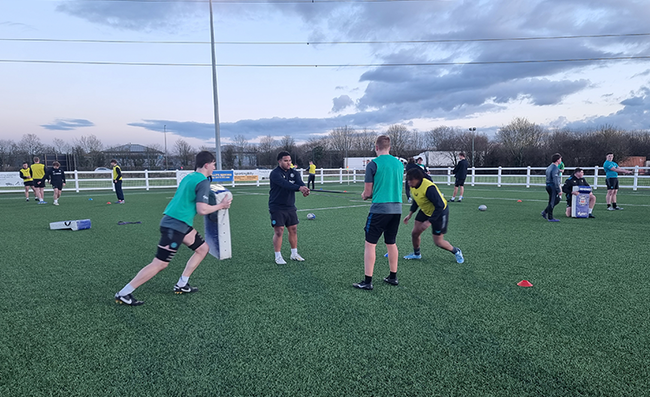
This is one of the rare occasions I like to use ruck pads for contact work. I want a player to move and make contact, with the focus on the steps before the contact. The pad holder can give feedback, saying if they felt the tackler was strong. A glancing blow, perhaps around the chest level, isn’t going to score as well as low drive, with the leading shoulder and foot working together, with a good grip.
With that awareness to move, the defenders can do the same, but with others around them. The exercise on page 4 shows how you build this up. Now, they have to connect with each other to be successful. The moving targets create enough chaos to make it important to be aware and move accordingly.
There will be some communication. That’s good. Yet, in this case, all that communication is wasted unless the players have the right sense of what’s next to them and trust that player will cover their gap.
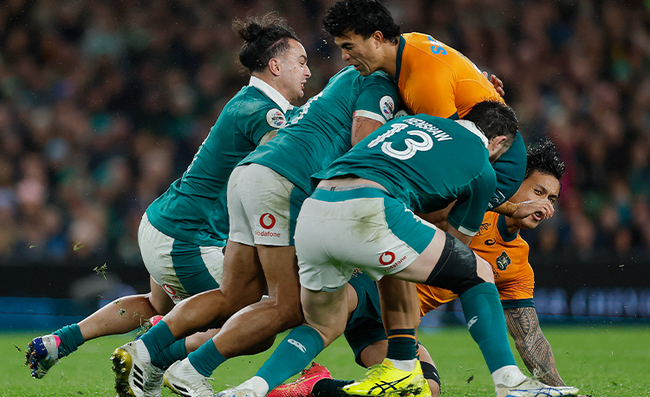
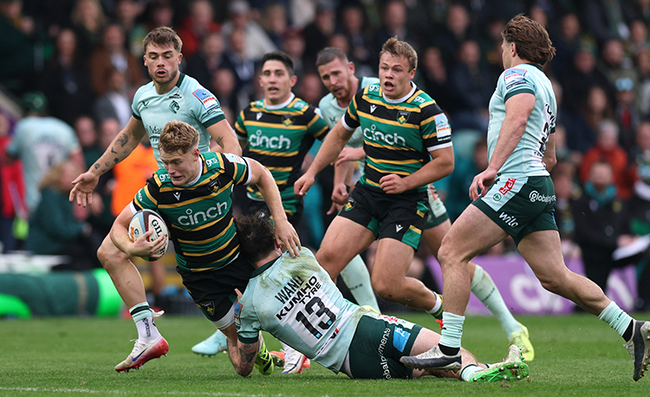
When it comes to full tackling as part of a defence, the players will come forward together, but only one will be making the tackle in the end. It’s the players around the tackler that force the tackle. If they weren’t there, the ball carrier might run to that space or pass to another player.
Don’t be fooled by players who talk a lot but don’t then make the tackles. While this sort of activity is about being organised, communicating and then coming forward together, it works best if all the players are prepared to make a tackle. An hesitation is likely to be found out by a good attacker, who might step or offload through a weak tackle and expose the defensive line.
Attack the right space after the lineout
Though I never say never, I think it’s rare that you will make many line breaks on the outside of a defence from a lineout. It’s possible, but let’s leave that for another day.
In which case, you want to make the most of the space between the two back lines to either break the line, or cause a big enough dent in the defence that you can attack a disorganised defence in the next phase. Essentially you need to get to the gain line as quickly as possible.
From an attacking point of view, the attack does have a potential advantage because if the ball is quickly delivered from the lineout, the attacking back line tends to be advanced forward more quickly than the defensive line. That’s because the referee will be holding back the defence, and not really focused on the attack.
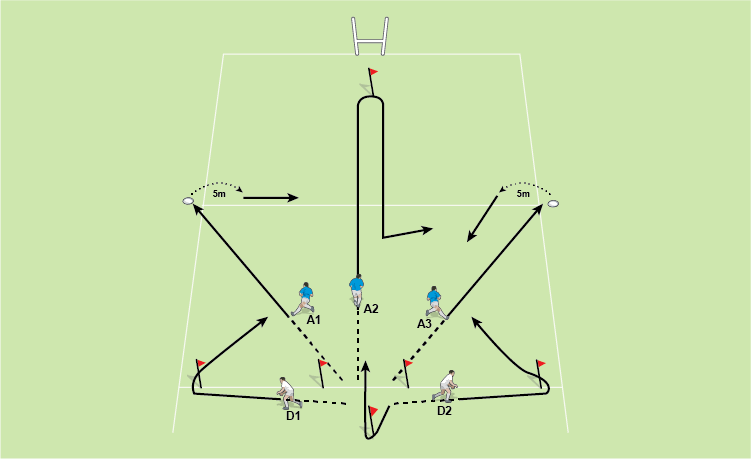
Success comes down to timing, which is awkward because of the many moving parts involved in the lineout. Your players need to take their cue from the right triggers, which might include changing their angles of run because the ball is delivered in different ways to the 9.
One simple adjustment must be down to the strength of the pass. Gareth Edwards, one of the world’s best ever 9s rarely spun pass off his left hand, preferring to dive pass instead. That changed the timing of his fly half and centres.
Now, with blindside wingers and full backs looking to enter the line, every player in the back line needs to know the power of their 9s pass. Use the exercise on page 5 to help develop these connections between the set piece and players in open play.
Related Files

Dan Cottrell
Latest Issue
Subscribe Today
Subscribe Today
Newsletter Sign Up
Coaches Testimonials

Gerald Kearney, Downtown Las Vegas Soccer Club

Paul Butler, Florida, USA

Rick Shields, Springboro, USA

Tony Green, Pierrefonds Titans, Quebec, Canada
Subscribe Today
Latest Issue

Be a more effective, more successful rugby coach
In a recent survey 89% of subscribers said Rugby Coach Weekly makes them more confident, 91% said Rugby Coach Weekly makes them a more effective coach and 93% said Rugby Coach Weekly makes them more inspired.
Get Weekly Inspiration
All the latest techniques and approaches


Rugby Coach Weekly offers proven and easy to use rugby drills, coaching sessions, practice plans, small-sided games, warm-ups, training tips and advice.
We've been at the cutting edge of rugby coaching since we launched in 2005, creating resources for the grassroots youth coach, following best practice from around the world and insights from the professional game.
