
 close
close


 LOGIN
LOGINMoving up to coach U15s: 30m webinar playback, notes and links
Moving up from U14s to U15s means a change in playing time and a new lineout skill. Your focus will now be around changing your game to be more skilful based on your tactics, playing from set pieces and developing your technical physicality.
Here’s a guide to approach this season.
MANAGING THE CHANGE
Because the players should take more ownership of their team, this is a good time to ask them what they want and how they want to play. And keep asking this question as the season progresses.
Also, ask them what they want from you. What can you do to support them?
Your team need to understand what winning means to them and what that looks like. This isn’t a quick conversation. Nor is it a chance to write-off poor performances.
Wins don’t need to look good on the scoreboard. But you can win parts of the game.
To do this effectively, split your season into blocks, where you can set targets for games in terms of what you want to achieve.
For example, in game one, what should your attack want to achieve? It might be three phases of possession and a positive finish, like a linebreak or a kick that puts the opposition under pressure. How the defence might look like how well you realign from slow ball. Can you cover the opposition’s passing width (see the webinar for this explanation 9:20)?
Then, what do you want to have done by half term and then Christmas? Look for simple ideas to measure. Gain agreement from the team.
On fitness, at this age, there will probably be the largest variation in growth spurts. Previously very fit players may fall behind. Encourage fitness, don’t make it a rod.
KEY LAWS CHANGES
First, the game will be 10 minutes longer, with 30-minute halves.
Uncontested lifted lineouts will be the most significant change from last season. We will talk about those in the skills, tactical and training focus.
SKILL FOCUS
New tackle laws
In defence
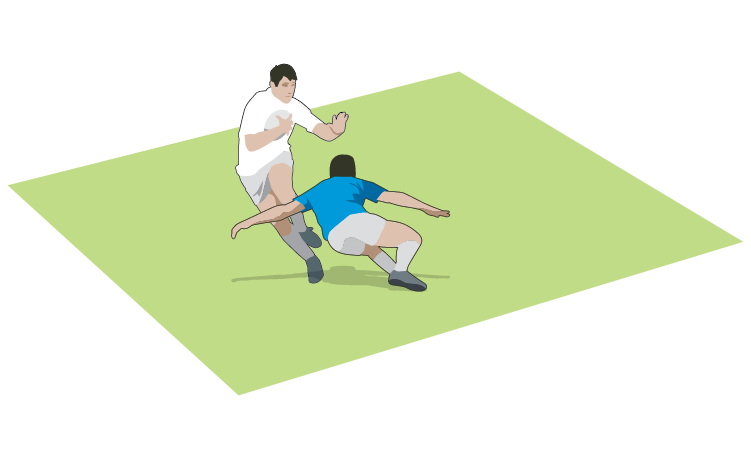
- Be more exact with the tackle technique.
- Aim for below the ball.
- Bend at the hips and knees.
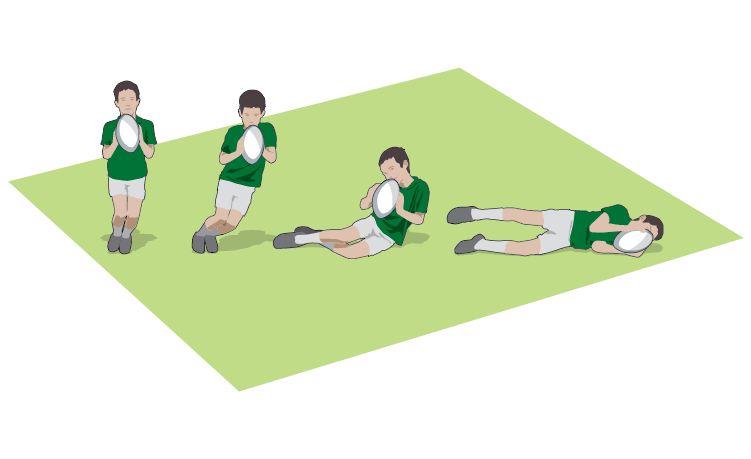
Here’s a good tackle activity to work on these skills.
In attack
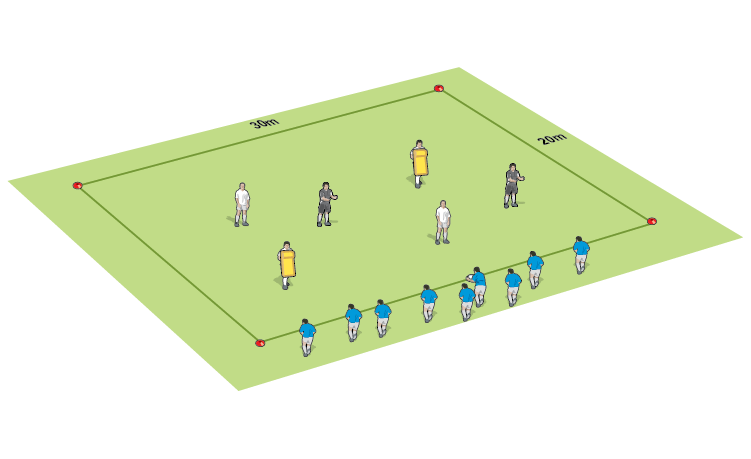
- Footwork after the catch so the ball carrier can exploit lower tackles and chances to offload.
- Two types of support runners: the one who is going to take a pass (offload) after a half break and the one who will take a pass from the tackled player who has lost the tackle.
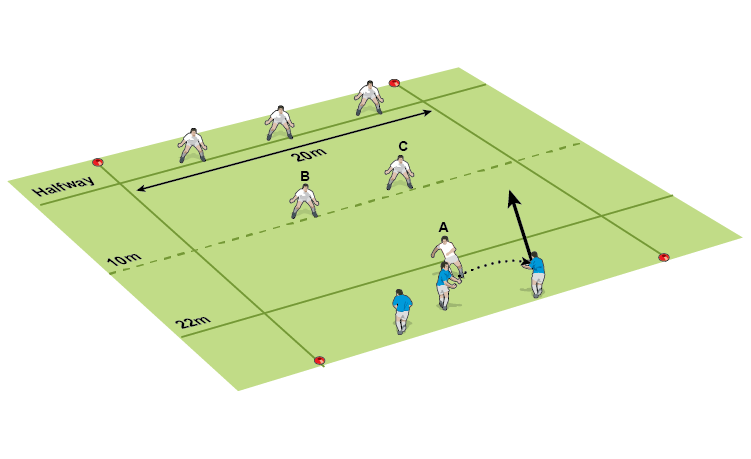
Here’s an activity to work on these decisions.
Scrum focus
- Profiles: strong body shapes before and after scrum contact.
- Connections: build a cohesive unit of players, starting in pairs and then building up to a full eight. Can they drive at the same time, every time?
- Square: the more players have their hips and shoulders in line and facing up the pitch, the better. This will also help attacking with the catch and drive from the lineout and defending it too.
Here are two ways to develop better scrum shapes and put them into more game-like situations.
VIDEO: Develop scrum shapes under pressure
Top tips to coach U14-U18 scrums
Lineout focus
- Learn to jump (up and down): all players should be working on this skill, something that a player who is moving through and beyond puberty needs to relearn sometimes.
- Lifting for everyone: while not every player will be able to be lifted, every player should be able to lift, or at least know how to lift.
- Catch and drive skills are excellent scrummaging skills cohesively.
- How many players do you have who can throw in?
Here are three activities to develop lineout skills.
Lineout throwing and jumping timing
Triggers, speed and coordination in the lineout
TACTICAL FOCUS
Lots of scrums
At U15s, you will get more scrums than any other set piece. Practise two plays with variations. I would advise not to run “behind/block” pass plays from scrums because the defence is too far away to make this effective.
Here are two articles to help develop better backs moves.
Why four strike moves is enough
Lineouts
Play with five-player lineouts. You will throw to the front. See the webinar to check this out at 18:20. See that you will want to play off 10, with a strong runner attacking here.
Definitely have a kicking strategy, which really means your main kickers have a plan of what to do and when. It is a rule of thumb, though. However, they can position themselves early rather than suddenly deciding to kick.
A good way to do this is use an IF THEN model. For example, outline four or five scenarios and then say what the players would do. If we are in our 22m, close to our line, we drive the first ball up and then kick to touch. If their wingers are covering the touchline, then we might kick long.
Attack strategy
How much training time do you have available? If you have only 90 minutes a week with your team, you should build up your attacking strategy block by block. For example, by our first game we will have an option to play off 9 if it is slow ball, and play off 10 if it is quicker ball. You might also say that the backs will always get the ball after three phases.
See 21:55 for more on this.
TRAINING
Scrum
You should spend about at least 10 minutes a week on scrum, but no more than 20.
Also, start every session by reviewing the body profiles, before and after the impact in a scrum. Then, because you won’t always have two full teams of forward, use lots of 2 v 2s, 2+1 v 1+2. See the webinar at 23:55.
Every session, come back to the basics. At some point, the better players can lead the session with your overview for safety.
You can also do “profiles” for the whole squad in the warm-up. These are good for rucks.
Here’s an activity to develop scrummaging if you only have a limited number of forwards in training.
Four live scrums - just one pack
Lineout
Get the lifts and jumps right first. Again, every lineout session should start with reviewing this part of the game.
Remember, everyone should be a lifter or at least be learning to lift, even if they won’t do it in the next game.
You will only be throwing to the front pod most of the time. Can you find more than one thrower?
Do you want to be a catch-and-drive team? A good catch-and-drive can be a real match-winner. However, if it becomes too much of a focus, the other parts of the game start to fade. Allocate no more than 5 minutes a week to this (and this is a tough target to meet!)
Here’s an activity to develop lineouts with low numbers.
Lineout threes – basics and game
Skills
Spend a little extra time on tackle for this season with the new tackle laws coming into force. If a player tends to go higher than they should in training, focus on positively changing the height rather than “penalising” them. At this age, players need lots of support and confidence. That doesn’t mean you are soft on them. Instead, you are directing them positively to a positive outcome.
At this age, the players will want to assert their physicality. With their help, you should build ways to focus this aggression so they can “win” collisions in a rugby way. Discuss how this might look, and let them model it in training. Celebrate good rugby impacts.
Depending on your training surface, you should spend at least 10 minutes playing a game of rugby. This is likely to be scenario driven. For example, attacking/defending a blindside, with say five on one team and seven on the other. Can we keep the ball for three phases? Can you drive the attack back behind the gain line?
See the webinar at 26:45 for ideas on scenarios.
This gives you a chance to test out your tackle skills.
It is also a good time to check that your ball placement is strong, and that your first arriving supporting player is positive over the ball.
Here are two activities to develop contact skills.
VIDEO: Ruck ball placement - skills zone
FINALLY
Plan in blocks if you can so you don’t become too reactive. That means making sure you are covering the full range of skills over a six-week period, rather than looking back at a previous game and worrying about what went wrong.
It is easy at this age to become set-piece focused, with forwards and backs operating in silos for too long during the session. You need a strong scrum. But most of the game is in-play, so you need to connect as a team in attack and defence.
How do we help the players emotionally react to difficult moments in the game?
Make it a team effort, so the players are focusing on "we, not me". Give them some leadership over how this might look.
Be a more effective, more successful youth rugby coach
- Win more games, without sacrificing the crucial element of fun
- Develop every player, regardless of vast differences in ability
- Run a respected, professional programme - even with a full-time job and limited time
Subscribe for full access
Or register and unlock 2 free articles,
receive our weekly newsletter, and
get a FREE coaching e-book.
Or if you are already a subscriber login for full access.
Latest Issue
Subscribe Today
Subscribe Today
Newsletter Sign Up
Coaches Testimonials

Colin Shaw

Gary Lee Heavner
Subscribe Today
Latest Issue
Be a more effective, more successful rugby coach
In a recent survey 89% of subscribers said Rugby Coach Weekly makes them more confident, 91% said Rugby Coach Weekly makes them a more effective coach and 93% said Rugby Coach Weekly makes them more inspired.
Get Weekly Inspiration
All the latest techniques and approaches


Rugby Coach Weekly offers proven and easy to use rugby drills, coaching sessions, practice plans, small-sided games, warm-ups, training tips and advice.
We've been at the cutting edge of rugby coaching since we launched in 2005, creating resources for the grassroots youth coach, following best practice from around the world and insights from the professional game.
