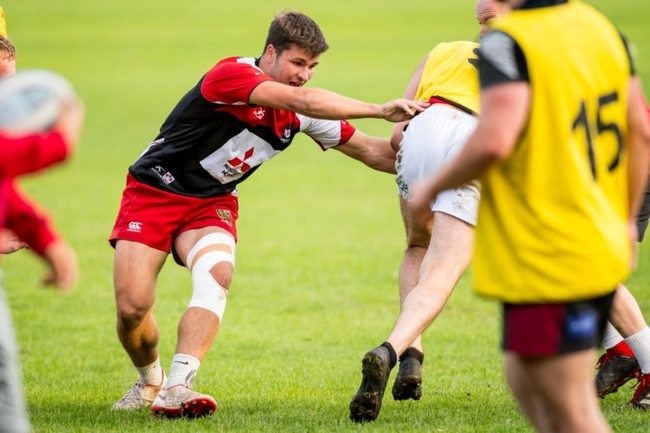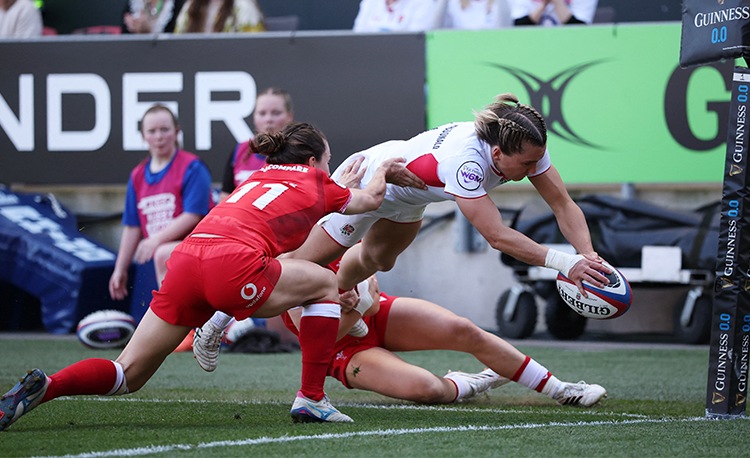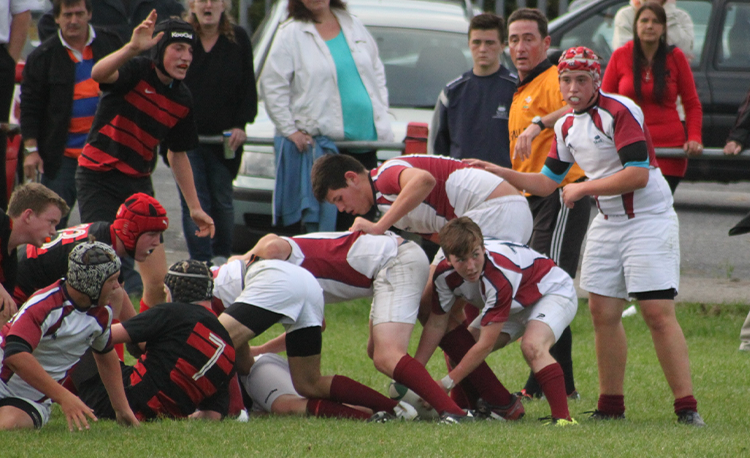
Watch Dan Cottrell interview Dan Cox on different ways to approach pre-season.
Host: Dan Cottrell | Guest: Dan Cox
[Host]: Let’s cut to the chase. I want to get clear on: what is the purpose of preseason? What’s that going to look like in terms of fitness? How do we organise 15 players during a session? And what are the dos and don’ts? But first, Dan — where are you at with preseason at the moment?
[Dan]: I’m four weeks into preseason with SGS College and five weeks in with Old Reds, who play in the National Leagues. I’ve changed my ideas over the last few years. Ultimately, we’ve really gone after robustness over the last four weeks at both places. Not just fitness, but that repeatability — that ability not to break down, to stay in games and not get injured throughout the season. Fitness is quite a broad term, but what we’re really looking for is robustness.
[Host]: And robustness — I’m assuming that’s not just physical but mental?
[Dan]: Absolutely. We’re in a sport where we’re consistently up, down, changing direction, wrestling. That ability to repeat and do those things consistently is what’s important. We’ve tried to make our sessions reflect that — not just straight-line running, but games, contact conditioning, getting up off the floor. Things that are hard. The games we play on a Saturday, Wednesday, and Sunday are tough. Can their bodies back it up? Can they come back next week and do the same thing?
At the college, the competition is tough. Can we help players come back and train on Monday after playing on Wednesday, training on Friday? Are they ready to go? It’s really difficult — if we don’t get it right now, it’s very hard to make that time up in season. Ultimately they end up spending lots of time on the physio bench.
[Host]: You’re quite keen to say this isn’t the only way.
[Dan]: Yeah, absolutely. I’m 15 years in and reflection is a powerful tool. I think about things at the end of every year: did that work? Did I get what I wanted? Where I’m at right now is my experience over the last few years in my environment — this is the rabbit we need to chase. Last preseason we got it wrong at both clubs and ended up with lots of players injured, without that repeatability. Views are ever-changing and I’m certain there’s more than one way to skin a cat.
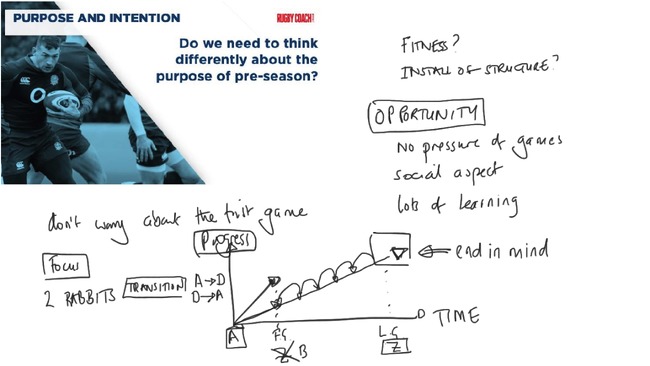
[Dan]: I think we think about the purpose of preseason in too binary a way. Does it have to be one thing? Is it about fitness? Installing structures? Basics? I think it’s about opportunity. When else do we get to spend four, three, six weeks with no games, lots of hours together, no real pressure, lots of chance to develop the social aspect, the culture, team building, lots of learning?
The way I see it is it’s just a small part of the puzzle. If we think our whole season is an opportunity for learning, this six weeks is just part of it. I used to be so worried about the first preseason game, the first league game. Actually, it’s probably not going to look that polished in either of those games. It’s just an opportunity to embed some stuff and see where we’re at.
[Host]: So in preseason, we sometimes make the mistake of wanting to get to the end point — but actually, we need to accept that the first game is just the next point on a longer journey, not the finish line.
[Dan]: Exactly. I always used to think start of preseason is point A and the preseason game is the finish line. But the first game is just point B. You’re moving through the season. And everyone else is in the same boat — the team you play on September the third won’t be overly polished either.
[Dan]: If we chase too many rabbits, chances are we’re going to catch none. We need to be really clear on our intention in preseason. What are we going after? What are the two rabbits the coaches can go and chase and catch?
[Host]: What are your two rabbits?
[Dan]: For SGS, we’ve looked a lot at our transition principles. What do we want to achieve? That transition from kick, that transition from turnover at the breakdown — our Monday, which is our big attack and fast day, is largely built around that. When we get to our first preseason game, we’ll be looking at how successful we were in the transition, and in defence, are we nailing those principles? So probably one or two in attack and one or two in defence, rather than trying to fit everything in as an install programme and hoping some of it sticks.
For defence, it’s probably connected line speed — can we put teams under pressure? It’s simple, but we’re still coaching a principle of the game. We’ve got our own SGS language for it, but that’s the thing we’re really nailing, making sure everyone has clarity on what it looks like.
[Dan]: If point A is the first day of preseason — or even your planning at the end of the previous season — and point Z is the final game of the season, ask: where do you want to be at point Z? What does that optimal model look like when all the rabbits have been caught?
For those in education, we’re almost curriculum designing backwards. Here’s the assessment at the end, this is what we want to achieve — what’s our scheme of work to get there? Then when we chunk it up, preseason makes more sense because you’re working towards a bigger goal. You don’t need to achieve everything by point B. You’re just taking them on the journey to point Z.
[Host]: Fitness is a massive part of the preseason mindset. Do we make preseason fitness fun?
[Dan]: I think we’re starting to assume nobody likes fitness in its traditional form. I used to turn up at preseason and if we were running up hills I’d absolutely love it — but I’d have been a rarity.
At SGS, we’re 15 hours a week and we have S&C staff. What I don’t necessarily need to plan myself is their straight-line running or speed and acceleration work. What I am constantly planning is how to embed robustness and hard work into gameplay and small-sided practices.
If I take myself back to coaching a one-hour-a-week team, I’d be asking: if we’re just playing games consistently, is everyone getting what they need? It can be really easy for someone to stand on the wing and get fewer touches. So how are we embedding contact conditioning — getting off the floor, winning a collision, being tackled, wrestling in a ruck?
There has to be an element of gameplay because that’s your density in the session. That bit where the ball is in play for a long time — the kick chase battle, the ball going wide to wide — where you’re breathing heavy, that needs to be simulated in training. I like the idea of creating density.
Actually, dialling down on coach intervention creates density. If the intention of the session is to have people working hard, having coach intervention every minute doesn’t replicate that. It’s all about your intention. If our intention for week one is to get some running in the legs, get some gameplay, keep ball-in-play time high — let’s dial down on coach interventions, or make sure they’re on the fly.
Timing is really important. If we say we’re in a 10-minute block and ball-in-play is 8 minutes, that’s what it needs to be. Then a 2-minute break, then back in. That’s how we get density. It’s crazy — we’re on a coaching webinar saying, let’s dial down on coaching. But what rabbit are we going after? In weeks one, two, three of preseason, that rabbit might be purely robustness and density. If our intention is fitness and high ball-in-play time, and we stop every 30 seconds for a two-minute chat, we’re not going to catch that rabbit.
[Host]: One of the favourites of all coaches — Broncos. There’s recent evidence they don’t give you the returns we expect. There may be a psychological upside because everyone hates them. You wouldn’t be doing them with your under-14s?
[Dan]: No. It’s not that they’re bad, it’s just you’re not getting as big a bang for your buck as you would from other things.
You can replicate that running in-game. If you’ve got a scenario on a big pitch where every time you score a try, everyone has to be within five metres — turn and burn — you might have done a 20, a 40, a 60 by the time you’re back in the game.
[Host]: That’s great for the flanker types, but what about the larger guys? In the game they’re not doing that amount of running.
[Dan]: It’s difficult — we’re coaching a sport with lots of people but also trying to be individualised at the same time. How can we challenge them? Can we put them in simulated line break situations — so all of a sudden the big guy who hasn’t touched the ball is through and has to go? Get their foot on the gas and have people follow them. What individual challenges can we place on them to bring them into the game? If they’re stood on the wing, get them off the wing — you now need to operate in the middle channel.
[Host]: How do we cover preseason in just four sessions before our first friendly?
[Dan]: This becomes easier when you have a clear picture of what that first friendly is about. Think with the end in mind — what would success look like for us in preseason?
For me, success looks like some sort of transfer from our transitional principles. If I see that in the game, that’s the rabbit we’ve gone after. If we lose by 10 points but everyone played and when we analyse the tape we got what we wanted — now we’ve got a benchmark of where we’re at.
At Old Reds we’re playing an internal fixture next week — 20 of our boys versus 20. The result is redundant but they’ll keep score. We’ve got a board of things we’ve gone after, and we’re awarding points for tactical challenges. We’ve installed a new lineout at Old Reds this year, so if we can get through those lineout principles successfully — you get some points for that. There’s an incentive to try those things. We’ve coached it, we think we’ve got it — now we’ve got to test it, and that’s what the friendly is for.
[Host]: Stephen Walsh asks: how important do you see video analysis for your players, and how do you use it when you don’t have access to it?
[Dan]: When I coached at FE Rugby Club in Bristol, we didn’t have the luxury of analysis or a camera. What we did was some notational work on the sidelines — people who weren’t playing in the game, people on the bench, were looking at some metrics we’d set. Something really basic like positive tackles: how many do we get? We built a rough notational system to analyse success in those areas.
I use video analysis a lot now. I try to keep it to three positive clips and something to work on — two and two. I try to keep the meetings as small as possible. And to use it, you’ve got to know what you’re looking for.
The key point is that you can look at a game and then end up looking for something else — extraneous noise, your focus away from your transfer points. Hopefully in your planning you’ve started on a journey you need to keep to.
We’ve got our own language at CSS — clarity, scanning, speed. That’s how we measure our lineout success. If it falls down, it falls down because of one of those three things: we didn’t have clarity on the call, we didn’t scan for the best space, or we didn’t have speed of execution across the floor. It’s all well and good having 25 lineouts from the game — but what are we looking for? Otherwise we’ll all look at different things and come up with different answers. I’ve only got three hours a week with them, so we need to be punchier.
[Host]: When do the basics stop and structure start? How much time do we spend on basic catch, pass, tackle, ruck?
[Dan]: I don’t think they’re mutually exclusive. Think of a set of dials — when are we really dialling up the skills area? You can’t implement any system without players who can make decisions, catch, pass, kick. But when we’re practising in small-sided areas, why can’t that look like part of our model anyway?
Take a small-sided practice — ball coming in from the touchline, 5v4. Traditionally without a shared mental model we might just set up five attackers across the pitch, four defenders. But now let’s say we’ve got some sort of shape off 10. Does using a common language increase our chance of execution? I think so. And there’ll be times we train the open, exploratory version and times we train the structured version — it’s about dialling up and dialling down. Players need to be able to do both.
[Host]: For the SGS and Old Reds context, structure plays a key role because defences are so organised. But for an under-14 team — they need to know roughly where to stand, but you’d spend more time on basics. If you had an hour and a half, how would you structure that?
[Dan]: I’d probably have a 40-minute carousel at the start:
Then I’d evolve that into a game that involves all of those things. We scaffold up — here’s some stuff to explore, here are some coaching points to help you get better, here’s a game where you can test whether you’re getting better. The game becomes almost the assessment.
[Host]: What are the basics and how do you make them purposeful?
[Dan]: Purposeful means it does something — it matters, it can be used. For it to be purposeful, we need to really understand what individuals need. Have you had that conversation with them? Going and telling someone, "We’re all going to do catch pass" is fine, I get why it’s important, but why is it purposeful to me? What keeps me coming back to work on it?
[Host]: With invested players they’ll probably know. But with an under-14 who’s playing a couple of hours a week, what questions are going to make a difference? Preseason can be one of those times where we lose players because it becomes too intense.
[Dan]: At that age they’re new to the game. Maybe we need to show them — this is our game and these are the key things within it: kick, catch, pass, tackle, contact skills on the floor — all wrapped up in a problem-solving bubble. Can you use all of those tools to unlock what’s in front of you?
[Host]: You haven’t mentioned contact.
[Dan]: Yeah — collision management is important. You’ve got both sides of the ball. If I’m carrying, there’s a hierarchy. At the top: can we evade? Can I transfer the ball, can I fend so they’re not getting a square shot? After the tackle’s been completed, how do I keep the ball? What am I doing with my body to make sure my team gets the ball back? The first thing is evade — then defending through contact, then keeping the ball or the offload off the floor. Getting into positive space probably allows all of that.
[Host]: They come along for the first session and you beast them into a corner. Some people love this. Can we be all things to all people?
[Dan]: I wish we could, but I don’t get it right with every individual. If they’re not coming back, that’s feedback about your session. I’ve had periods when I first started coaching kids where they probably weren’t coming back, and that made me think — is what I’m doing engaging, or is it just something I replicated from when I was playing? Cake definitely helps, by the way.
How can we make them desperate to come back? Can we create an environment where they’re challenged but also well-supported? I see lots of places that are really challenging. I don’t always see the wraparound support.
If we’ve challenged someone to the point of real stress — lots of chaos, their skills are really tested — when they come off the pitch, there’s probably an intervention needed. How did you find that? I found that really stressful. Why did you find it stressful? What skills do you need to make it less stressful next time? If they just walk off the pitch and go home thinking, "I was rubbish, I was under so much stress I couldn’t do anything" — that’s high challenge but not high support.
To provide high support we’ve got to really know the people we’re coaching. A cliché, but if someone comes to my session a couple of weeks in, I’d like to think I know something about them because I’ve asked a question. Where do they work? "How was your day at Rolls-Royce today?" — a little question that shows I’m invested. I dangled that question two weeks ago and I’m still following up on it.
I did part of my Level 4 recently at St. George’s Park and we had a psychology session. They spoke about the MAC approach — Mindfulness, Acceptance and Commitment. In terms of practical application, there’s a concept of Big Up, Stand Up, Step Up:
That’s the antithesis of — and the epitome of — high challenge and high support, from peers and players.
[Host]: You love set piece and you’ve admitted to making the mistake of spending too much time on it. What’s the balance?
[Dan]: I’d go 100% set piece if I could, but Woodward said it wins World Cups so you should spend some time on it. It’s important, but it’s a small percentage of the game — a start point. If I’ve got an hour with a team, I want to spend quite a lot of it on gameplay because that’s the most important part. Why can’t we start our games with a 1v1, a 2v2 scrum, or a three-man lineout?
I would caveat that: set piece isn’t something that can be purely guided discovery — there’s a safety element and a technical element. If I was coaching an under-16 side I wouldn’t just say, "Get in there and lift in a 3v3." There has to be practice. Not just so we’re safe, but so they feel confident and competent under pressure.
If I had an hour and a half, I’d probably have about 10 minutes in that technical area, then the game would have some elements of it. In terms of the pie — how much of the full set piece picture do we have by the start of preseason? At Old Reds, we’re probably 20-25% right now because we’re in install mode with some new content. For an hour-and-a-half team, significantly less.
[Host]: In preseason, the grounds are often hard. What can we do practically?
[Dan]: Strip it back. If the end point of the tackle is tackle completion and going to ground, there must be steps leading to that point. If we can’t go to ground, does that mean we can’t coach tackling and collision management? No.
When the ground was hard a few weeks ago, the physio said no contact. Absolutely fine — what we can do is footwork and approach, because footwork in defence is as important as footwork in attack. It looks like we’re all out there dancing, but we’re actually working on getting foot movement towards the tackle.
Then there’s the collision itself — I just need to think about getting my footwork right, finding the strongest parts of my body, the collision point. I don’t have to take anyone to ground to do that. And around tackle height, we’ve been doing a lot on adjusting from being upright to hinge to make a tackle — without going to the ground, just setting up small constraints where they’ve got to get their body height down.
We just need to be a bit geekier with our practice design — instead of always coaching the finish, how do we break the skill right the way down?
[Host]: And in terms of crash mats — they’re about £100-150 new. Any alternatives?
[Dan]: We regularly just build our own crash mat using tackle shields. Do they explode a little and need rearranging? Yes. But it’s a cheaper alternative. And those collisions will be a lot safer when we get there if we’ve worked on the bits before going to ground.
1. Don’t chase too many rabbits. You’ll end up catching none.
2. Don’t stress that things don’t look like the finished article. Remember the end point isn’t the first preseason game. You’ve got your own expectations and stakeholders with theirs — manage those.
3. Avoid copy-and-paste coaching. We all see the amazing stuff that comes out during the World Cup and it’s easy to geek out. But we don’t need to see 12-year-olds on Watt bikes screaming at each other, or kids running around in GPS vests weaving in and out of poles. That’s been programmed specifically by professional S&C staff. By all means look at stuff and think about how you can apply it to your practice — but it has to be specific to your players.
4. Don’t throw in random sessions. Think of Marvel’s Infinity Saga — they planned with the end in mind over 10 years, introducing small chunks of information: character arcs and storylines. Every session should be part of that box set, part of the journey. Let’s make sure we’re not chucking in random sessions that have no place in our greater picture.
5. Get some rugby balls in the session. If rugby people have turned up for a rugby session, don’t have them out there for an hour sledgehammering tyres. This applies at any level. Let’s get some rugby balls in and make it look like rugby.
1. Plan with the end in mind. If Thanos is the major villain of the Infinity Saga, how are we building towards that final battle?
2. Get to know your individuals. How can we plan with the end in mind if we don’t know our people? Preseason is a fantastic opportunity — you have that extra space to get to know the individual. Use it.
3. Set problems. There should be problems in the session all the time. The best rugby players through time — and the best sports players — are the best problem solvers. They see it before anyone else and find answers. That expertise is being able to solve problems quicker than others because you’ve built a bank of knowledge. Preseason gives them that bit more time to learn to solve those problems.
4. Involve your players. They may not hold all the answers, and if you ask 20 people you might get 20 different answers. But the reason people have come back to my environment in the last couple of years is because they feel they have a real say and that they’re helping build it.
5. Geek out. It’s a real opportunity to be genuinely geeky with your practice design. For me that’s the best part of coaching — having an end goal in mind, a problem to address, and thinking: how can we make a really clever practice that helps players find solutions and gives them the tools? Take real time to try things and geek out in your practice.
[Host]: We’ve covered a lot in an hour. My takeaways:
[Dan]: Just thank you for inviting me and thank you for everyone listening. I’m on Twitter — Cox_D_88 — if anyone wants to jump in. I’m always up for coaching chats. And this is where I’m at right now. Some things I might not have explained amazingly, but these are my current reflections.
[Host]: It’s been brilliant. Dan is continually trying to improve and bring on players — and if people want to ask questions, this recording will be available on the website soon.
CSS Lineout Framework (mentioned at 27:00)
C — Clarity (do we have clarity on the call?)
S — Scanning (what are the visual clues? what are we looking for?)
S — Speed (speed across the floor, speed into the air, speed of transfer)


In a recent survey 89% of subscribers said Rugby Coach Weekly makes them more confident, 91% said Rugby Coach Weekly makes them a more effective coach and 93% said Rugby Coach Weekly makes them more inspired.
Get Weekly Inspiration
All the latest techniques and approaches
Rugby Coach Weekly offers proven and easy to use rugby drills, coaching sessions, practice plans, small-sided games, warm-ups, training tips and advice.
We've been at the cutting edge of rugby coaching since we launched in 2005, creating resources for the grassroots youth coach, following best practice from around the world and insights from the professional game.