
 close
close


 LOGIN
LOGINKick off lifts
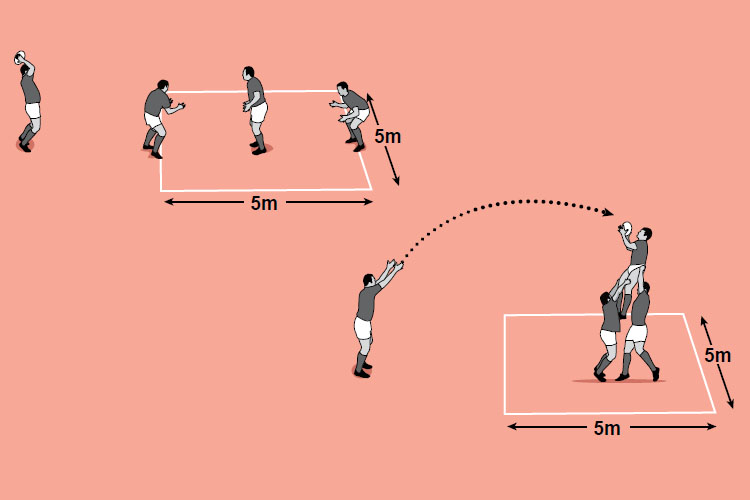
Winning the ball securely from the kick off frequently requires the catcher to be lifted to take the ball. Use this session to work on the timing skills required and as a complement to your lineout lifting sessions.
Warm up time: 5-7
Session time: 8-10
Development time: 10-15
Game time: 10-15
Warm down time: 5-8
What to think about
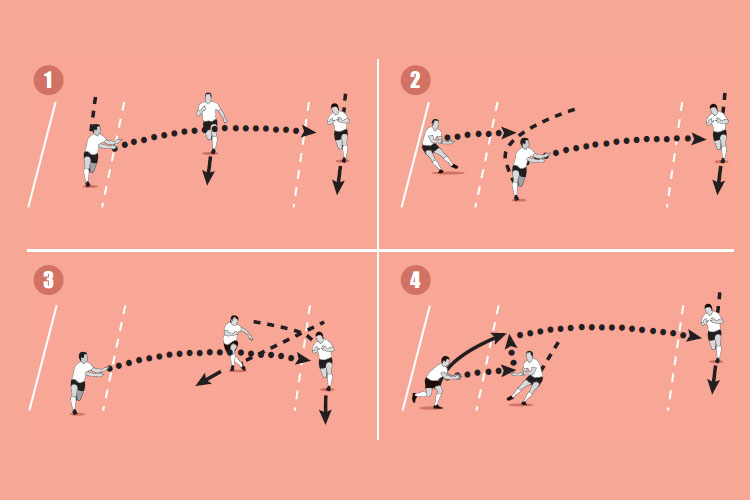
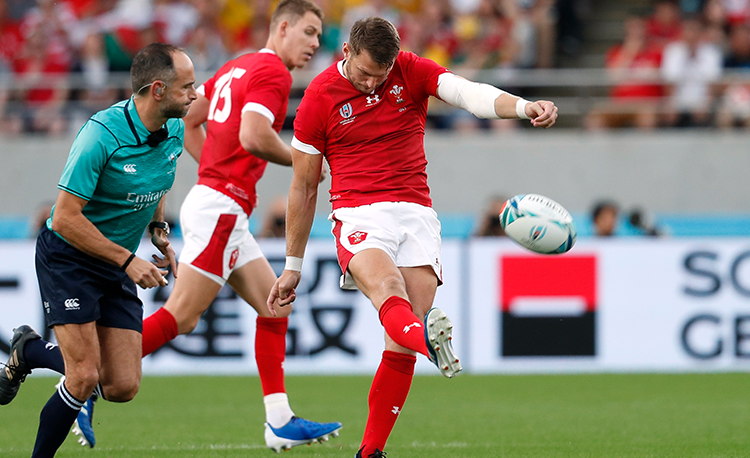
Unlike a lineout, where lifters and jumper have to fool the opposition into where they are going to jump, the players can be in position early. Initially, if the players are not used to lifting for kick offs, you will see a few mistimed or misdirected jumps. However, it should not take long to get going, in part because the opposition will need to kick the ball high enough for its own team to challenge, thus allowing the receiving team more time to be in position. Note that it is better to start with a player “throwing” the ball into the area to help players get used to timings without moving around too much. As soon as possible though, have the ball kicked in, to make sure there is enough height.set-up
- Jumper: Call for the ball, get into position and tell the lifters when to lift. Catch facing the ball (that is an at angle, not with your shoulders up the pitch).
- Back lifter: Call that you are in position, put your hands on the shorts of the jumper with your elbows pointing down, bend at the knees and hips before lifting on command.
- Front lifter: Push up on the thighs and squeeze the jumper onto the back lifter.
- Both lifters: Bring the jumper down safely.
What you get your players to do
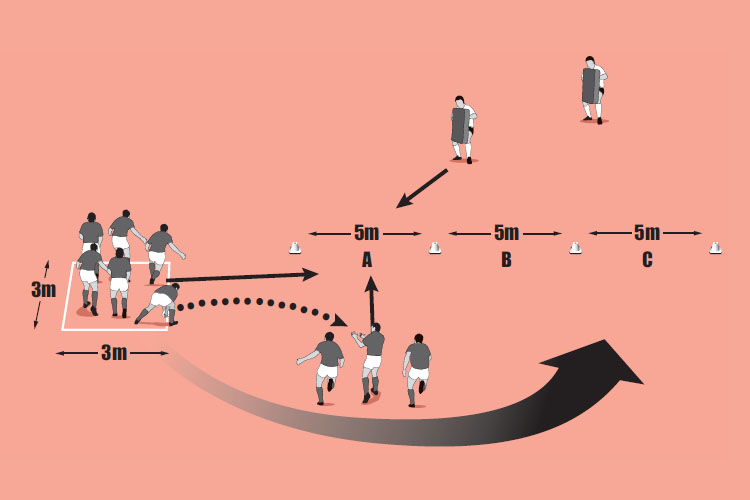
Put a jumper and two lifters inside a 5m box. Start by having the jumper move around the box, before setting and asking to be lifted. Get the players to complete the lift without the ball to get a feel for the timing. When the players are working efficiently, throw the ball high into the box as in picture 1. The jumper has to position himself to take the ball and then be lifted.Be a more effective, more successful youth rugby coach
- Win more games, without sacrificing the crucial element of fun
- Develop every player, regardless of vast differences in ability
- Run a respected, professional programme - even with a full-time job and limited time
Subscribe for full access
Or register and unlock 2 free articles,
receive our weekly newsletter, and
get a FREE coaching e-book.
Or if you are already a subscriber login for full access.

Dan Cottrell

Latest Issue

Subscribe Today
Subscribe Today
Newsletter Sign Up




Coaches Testimonials

Colin Shaw

Gary Lee Heavner
Subscribe Today
Latest Issue
Be a more effective, more successful rugby coach
In a recent survey 89% of subscribers said Rugby Coach Weekly makes them more confident, 91% said Rugby Coach Weekly makes them a more effective coach and 93% said Rugby Coach Weekly makes them more inspired.
Get Weekly Inspiration
All the latest techniques and approaches


Rugby Coach Weekly offers proven and easy to use rugby drills, coaching sessions, practice plans, small-sided games, warm-ups, training tips and advice.
We've been at the cutting edge of rugby coaching since we launched in 2005, creating resources for the grassroots youth coach, following best practice from around the world and insights from the professional game.
