
 close
close


 LOGIN
LOGINRugby Coach Weekly is the largest digital resource for youth coaches, trusted by 15,000+ coaches, teachers and parents every month.
-
Coach with confidence
-
Improve your teams faster
-
Run great sessions with less effort
- Expert coaching advice from TOP Coaches
- Training sessions for players from U6 to U17+.
Go forward from the lineout


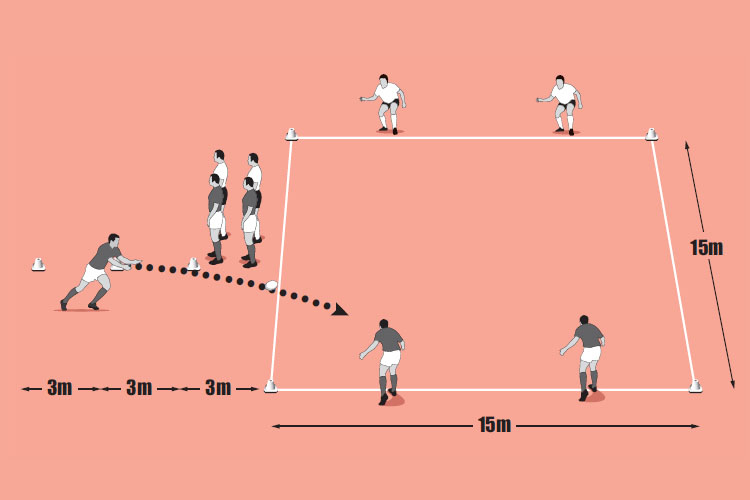
The session looks at running and support lines from the back of the lineout. There is a run up of around 10-15m for the ball carrier before he meets the lineout defence and support players arriving from the side. Both attack and defence need to consider how to cover this space effectively to create or prevent breaks and quick ball.
Warm up time: 5-7
Session time: 5-7
Development time: 10-15
Game time: 15-20
Warm down time: 5-8
What to think about
Both attack and defence face different challenges. First, there is more space between attack and defence than in most other situations. Second, attack support is in front of the ball carrier to start with, and there is open space to the outside. The danger is that both attack and defence drift too much, reducing their opportunity to win the battle to the gain line. This session is good for the whole team because you can use forwards and backs and don’t need to be too position specific. Even the first receiver can be a forward. This session is based on attack within 20m of the lineout. It builds the elements from 1v1 through to 3v3.set-up
- Win the race to the gain line. In attack, look to offload or win the tackle battle to give your support a target.
- In defence, aim to slow the ball carrier so the support defenders can be in place to slow/win the ball and/or be ready for the next play.
What you get your players to do
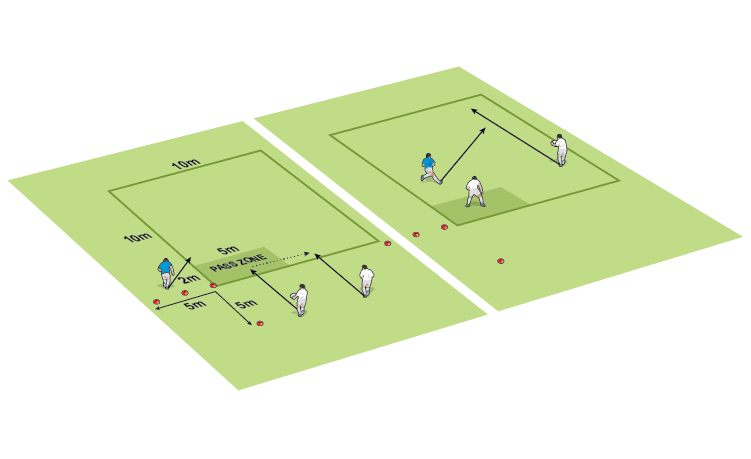
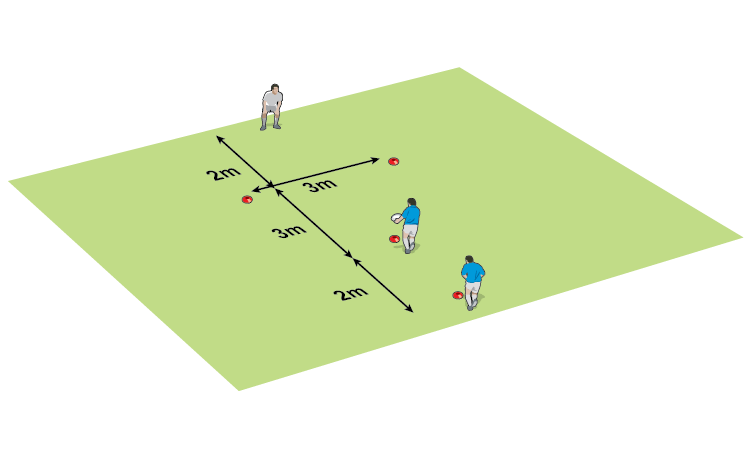
Put an attacker and defender on opposing sides of a 10m x 5m box each withn a support player outside the box. Get a feeder to pass the ball to an attacker who aims to get to the far end of the box (see picture 1). The defender in the box comes forward to tackle him. Playing full contact, let the play develop inside the box – the attacker is looking for a positive outcome: a try, an offload or a good ball placement to their supporting attacker.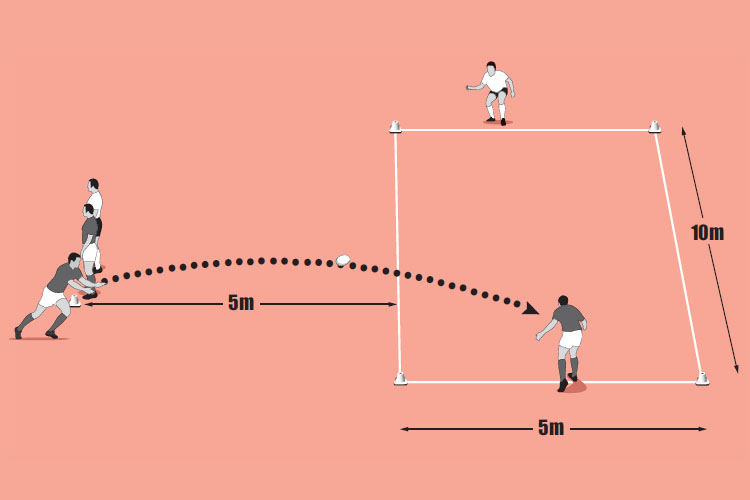
Development
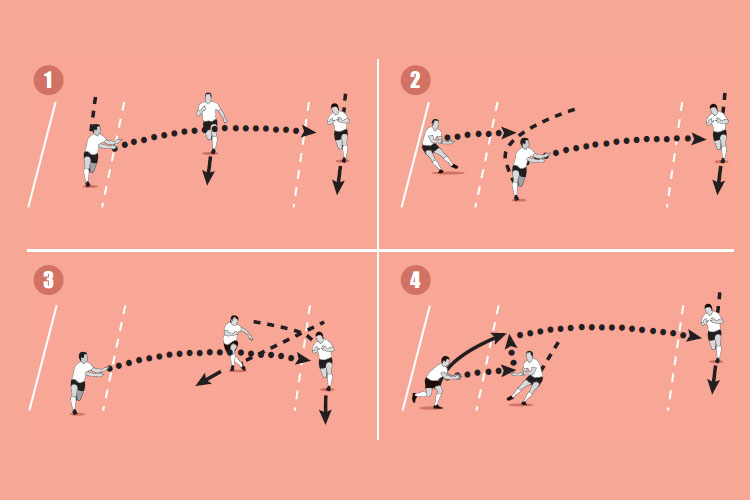
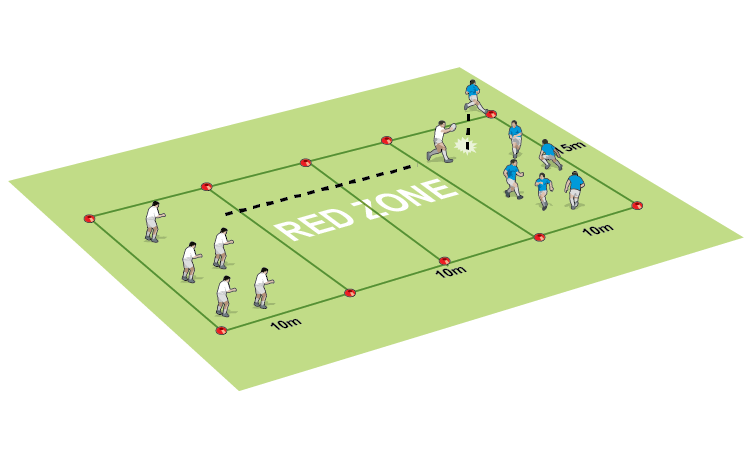
Outside a 15m square, get a feeder to pass from one of three cones (representing front, middle or back ball). Put two attackers and defenders in support as if from the back of a lineout (see picture 2). A further two attackers aim to score at the far end of the box against the two extra defenders. Play full contact.Related Files
Game situation
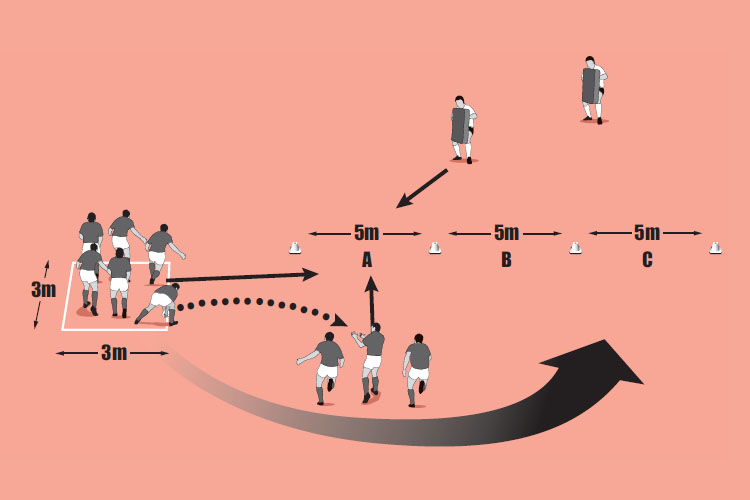
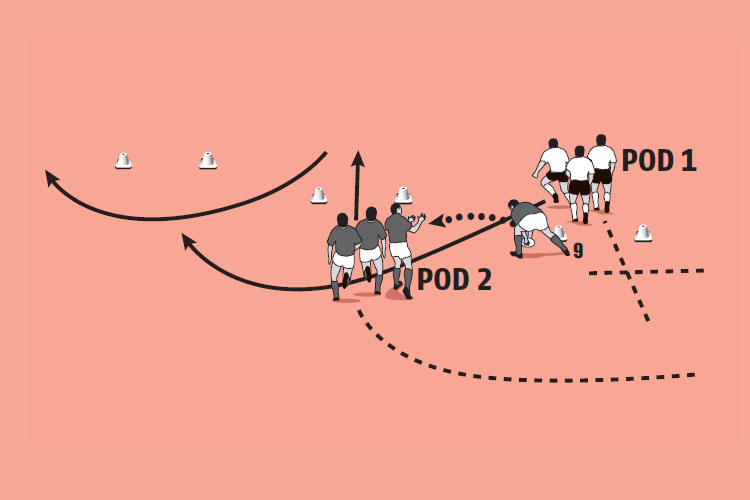
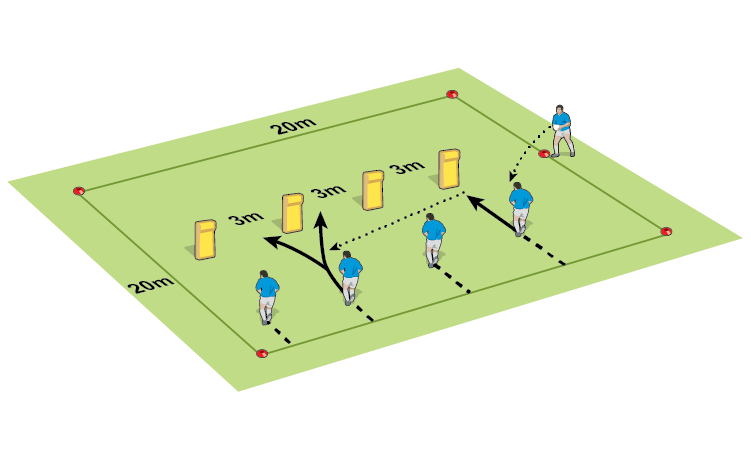
Outside a 20m x 15m box, get a forward (F) carrying a ball to run along the line of ruck pads. At a designated ruck pad, they turn, jump and drop the ball down to a clearing passer (9 - see picture 3). Two attackers and two defenders by the ruck pads support a 3v3 inside the box. You can make the box as wide as you want.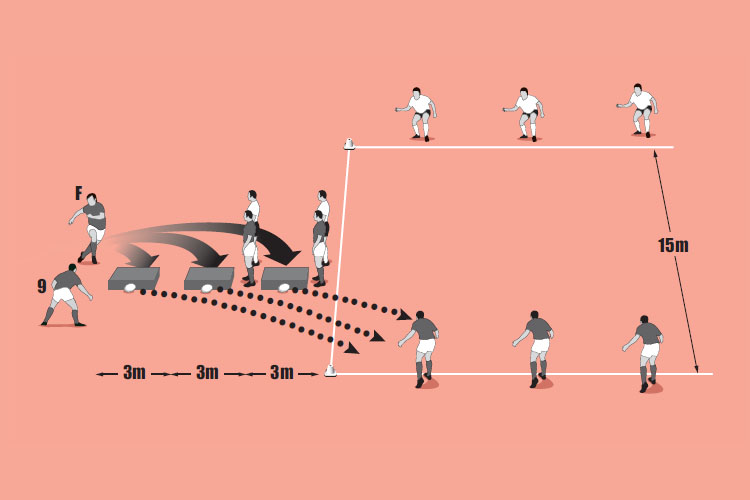
What to call out
- “Attack at speed and then at the edges of the defender”
- “Beat the defender before looking for options out of contact”
- “Anticipate where the contact will be - don’t run to the ball carrier”

Dan Cottrell

Latest Issue

Subscribe Today
Subscribe Today
Newsletter Sign Up
Coaches Testimonials

Colin Shaw

Gary Lee Heavner
Subscribe Today
Latest Issue
Be a more effective, more successful rugby coach
In a recent survey 89% of subscribers said Rugby Coach Weekly makes them more confident, 91% said Rugby Coach Weekly makes them a more effective coach and 93% said Rugby Coach Weekly makes them more inspired.
Get Weekly Inspiration
All the latest techniques and approaches


Rugby Coach Weekly offers proven and easy to use rugby drills, coaching sessions, practice plans, small-sided games, warm-ups, training tips and advice.
We've been at the cutting edge of rugby coaching since we launched in 2005, creating resources for the grassroots youth coach, following best practice from around the world and insights from the professional game.
