
 close
close


 LOGIN
LOGINSelecting the best backs moves
You need to learn the backs moves that best work for your team and their skillset. Adapt ones you already know, but also consider how you could make them more efficient.



For a backs move to succeed, your players need the correct set of skills and the right alignment. For instance, the move might need a miss pass. Can that be achieved off both hands?
It might rely on a player entering the line at pace at the right moment. Do you have a winger or full back who can time their run to do this?
So you can only really copy backs moves which suit the skillset of your team. Work to improve their weaknesses and increase the number of moves they can use.
How to learn PLAYS
Once you have worked out which moves suit your team, follow these five steps:
1. BUY IN
The team has to believe in the move and want to use it.
2. USE A TACKLE LINE
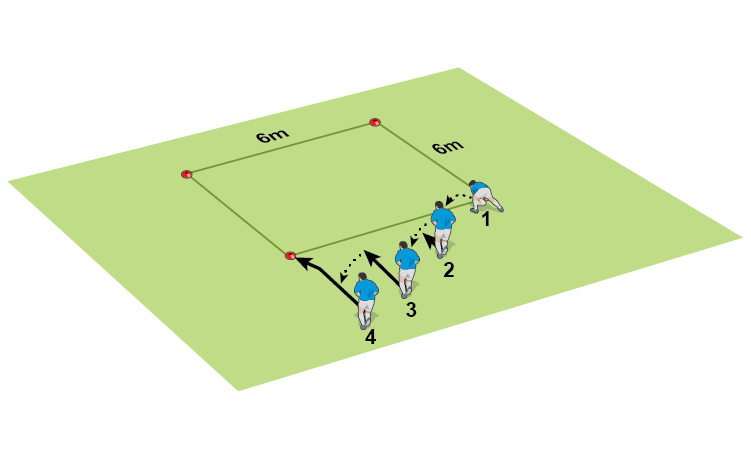
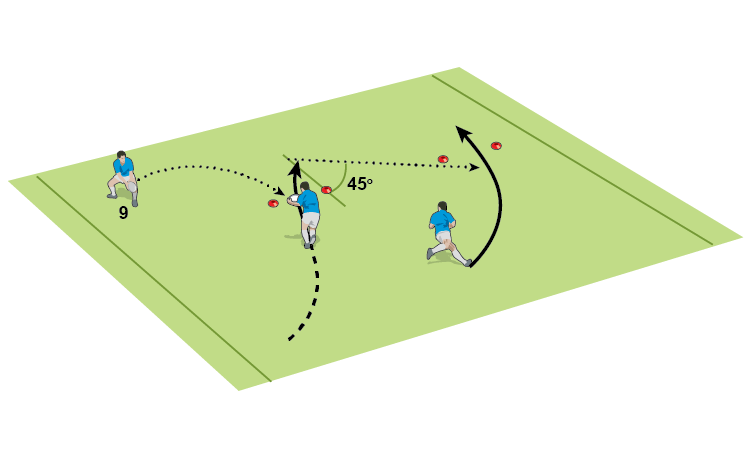
Walk through the drill and then run it with a tackle line. That means a line of cones across the pitch where defenders might meet an advancing back line. This helps players get their timing right.
3. A DEFENCE
Get defenders in front of the backline.
4. A DYNAMIC DEFENCE
Move the 9 around before they pass so the backline has to realign.
5. MIX UP THE PLAYERS
Keep changing the backline because you won’t always have the same players in position on match day.
Concentrate on running a few backs moves well. Each move should have “get out” variations if the defence does not do what you expect. Every player should expect the pass.
And think about what happens next. If you breakthrough or not, who will be in support for the next pass or next point of contact.
On the next two pages, we have concentrated on backs plays which use a change of angle from the centres. They are one pass plays, so retain some simplicity and therefore rely more on timing of runs.
On page 5 we look at “hard” lines, also known as “unders and overs”.
The activity on page 6 builds up the skills of using a “block” type pass which goes behind one runner to another who is running into the space. This type of pass and run needs all the players to understand the angles to attack the right spaces.
Related Files

Latest Issue

Subscribe Today
Subscribe Today



Newsletter Sign Up

Coaches Testimonials

Colin Shaw

Gary Lee Heavner
Subscribe Today
Latest Issue
Be a more effective, more successful rugby coach
In a recent survey 89% of subscribers said Rugby Coach Weekly makes them more confident, 91% said Rugby Coach Weekly makes them a more effective coach and 93% said Rugby Coach Weekly makes them more inspired.
Get Weekly Inspiration
All the latest techniques and approaches


Rugby Coach Weekly offers proven and easy to use rugby drills, coaching sessions, practice plans, small-sided games, warm-ups, training tips and advice.
We've been at the cutting edge of rugby coaching since we launched in 2005, creating resources for the grassroots youth coach, following best practice from around the world and insights from the professional game.
