
 close
close


 LOGIN
LOGINBody shape for forward units
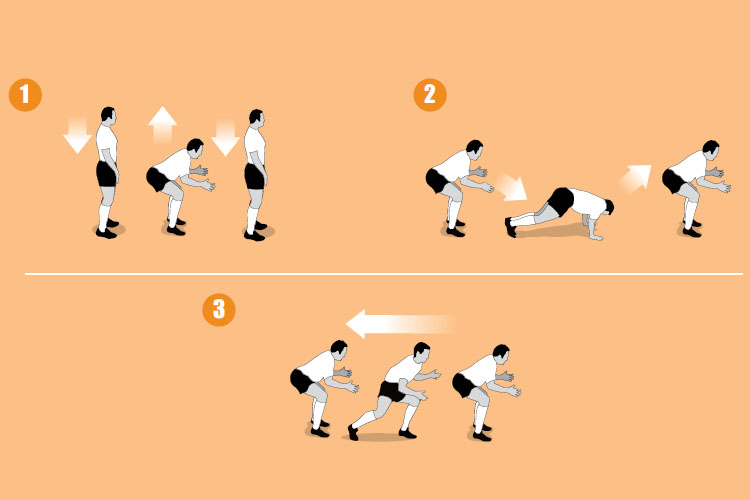
Forwards need to get their basic body shapes right before they are ready to move on to more competitive unit work. This session can be used to prepare for unit work and as a whole session for forwards. You can also mix forwards and backs together because the skills are easily transferable (ruck positions for example).
Warm up time: 5-7
Session time: 8-10
Development time: 10-15
Game time: 10-15
Warm down time: 5-8
What to think about
You can mix up this session to provide you with a warm-up for both lineout and scrums or just to get your forwards switched on for unit work in general. You can use elements as part of your pre-match warmup as well. However, you need to make sure players work on their basics properly and at the right pace, so they are not rushed.set-up
- Make sure you can hold your scrum profile AFTER you are moved out of position.
- Throw to meet the hands. Jump to meet the throw.
What you get your players to do
Scrum:- Make a player stand upright, with feet shoulder width apart. Then ask him to go into a scrummage position, so his heels are just off the ground. Then ask him to stand upright again, before repeating. Hold each shape for a minimum of five seconds (see picture 1, fig 1).
- Make a player fall forward from a scrummage position onto his hands. He then has to bounce back up and into the scrummage position once again. He might have to do this by walking his hands towards his body (see picture 1, fig 2).
- Make players take one step backwards from a scrummage position to take up the same body shape (see picture 1, fig 3).
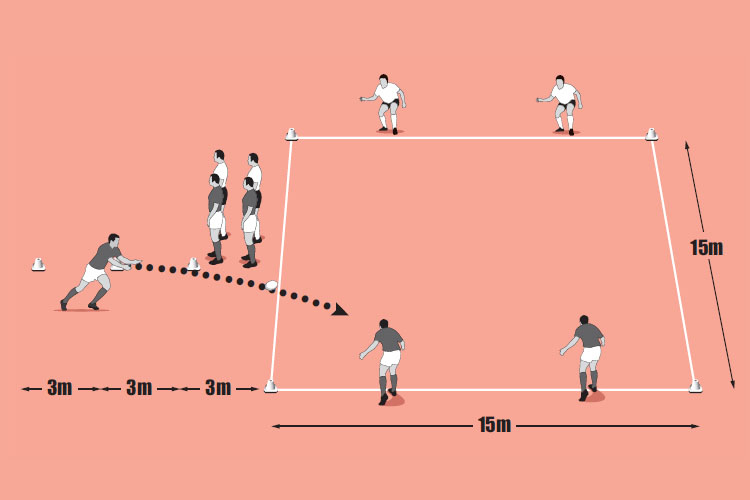
- Put three players in a triangle 5m apart sitting on ruck pads. They throw a ball overhead to each other. This replicates a throw, catch and turn process. Make sure the catcher extends himself fully if he can. Swap the direction (see picture 2, top).
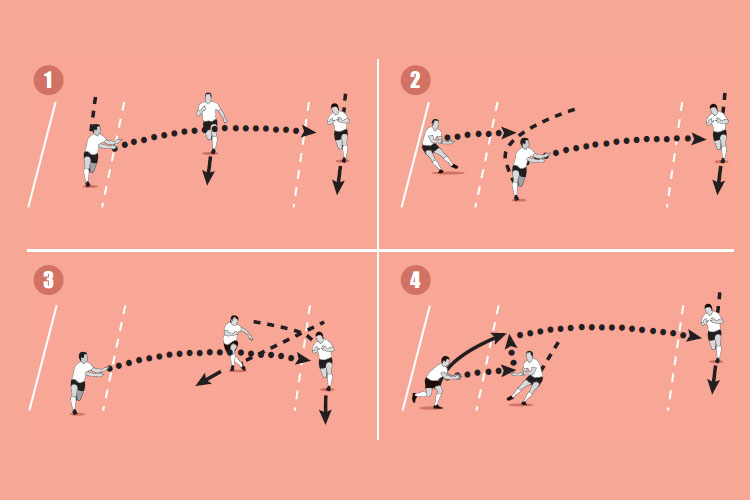
- Put a jumper between two cones 5m apart. Place a thrower 5m away from each cone and a receiver to the side. Get one thrower to throw the ball to the jumper, who jumps, catches and passes to the receiver. The receiver then passes to the other thrower. The jumper, in the meantime, turns and runs to take the ball from the next thrower (see picture 2, bottom).
Be a more effective, more successful youth rugby coach
- Win more games, without sacrificing the crucial element of fun
- Develop every player, regardless of vast differences in ability
- Run a respected, professional programme - even with a full-time job and limited time
Subscribe for full access
Or register and unlock 2 free articles,
receive our weekly newsletter, and
get a FREE coaching e-book.
Or if you are already a subscriber login for full access.

Dan Cottrell
Latest Issue
Subscribe Today
Subscribe Today
Newsletter Sign Up
Coaches Testimonials

Colin Shaw

Gary Lee Heavner
Subscribe Today
Latest Issue
Be a more effective, more successful rugby coach
In a recent survey 89% of subscribers said Rugby Coach Weekly makes them more confident, 91% said Rugby Coach Weekly makes them a more effective coach and 93% said Rugby Coach Weekly makes them more inspired.
Get Weekly Inspiration
All the latest techniques and approaches


Rugby Coach Weekly offers proven and easy to use rugby drills, coaching sessions, practice plans, small-sided games, warm-ups, training tips and advice.
We've been at the cutting edge of rugby coaching since we launched in 2005, creating resources for the grassroots youth coach, following best practice from around the world and insights from the professional game.
