
 close
close


 LOGIN
LOGINRugby coaching session to boost your lineout


On the face of it, the lineout should be simple. And yet so many teams, including international sides, struggle to win a clean lineout ball.
It is essential for players to have the ability to handle such an integral, but precise, set piece in the pressurised atmosphere of a game. The good news is that this precision can be achieved though coaching, pressure practising and developing players.
Key factors affecting your lineouts
There are 12 key factors which have an affect on each one of your lineouts, not to mention what your opponent is doing to disrupt your players. Improving each factor takes time, though most can be worked on individually and in small groups.
To hone your skills, it is important to practise every aspect of the lineout together as a pack of forwards. In this way, everyone knows their role and how each role interacts to make the lineout a success.
Your team influences these 12 factors:
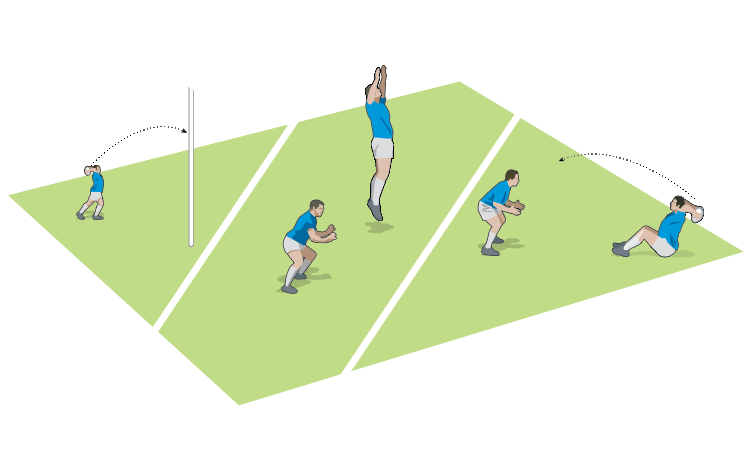
- Timing of the jump and throw.
- Accuracy of the throw.
- ”Explosiveness” of the jumper – the jumper must jump straight up with a taut body.
- Power and control of the lifters and supporters.
- Co-ordination of the jumper and lifters.
- Timing and accuracy of the ball off the top.
- Timing and angles of the runners and decoys on “peel” moves.
- Timing and body positions of supporters arriving for the catch and drive.
- Decision making – is this the right move for the field position, game situation and opposition defensive organisation?
- Movement before to the throw – are you confusing the opposition or simply confusing your own team?
- Communicating the call and subsequent changes – does everyone know what’s going on?
- Vision – can everyone in the team see what’s going on?
Closed sessions
Closed (that is without opposition) sessions are especially good for working on timing and movement – the two things that really make the lineout successful.
During the session, you should quickly pick up on areas that need improvement.
Repeat, perfect
You need to practise the same lineout repeatedly and unopposed until everyone can perform their roles flawlessly.
No pressure is put on players and they are encouraged to try new things and learn from mistakes. For example, the number 8 running a front peel might try different angles of running to see which works best.
Closed session checklist:
- Work on movement and timing.
- Correct individual technique immediately.
- Don’t put pressure on your players.
- Let your players experiment to find out what works and what doesn’t.
- Repeat lineouts until they work smoothly and flawlessly.
This session is from The Lineout and How to Win It manual.

Dan Cottrell
Latest Issue
Subscribe Today
Subscribe Today
Newsletter Sign Up


Coaches Testimonials

Gerald Kearney, Downtown Las Vegas Soccer Club

Paul Butler, Florida, USA

Rick Shields, Springboro, USA

Tony Green, Pierrefonds Titans, Quebec, Canada
Subscribe Today
Latest Issue

Be a more effective, more successful rugby coach
In a recent survey 89% of subscribers said Rugby Coach Weekly makes them more confident, 91% said Rugby Coach Weekly makes them a more effective coach and 93% said Rugby Coach Weekly makes them more inspired.
Get Weekly Inspiration
All the latest techniques and approaches


Rugby Coach Weekly offers proven and easy to use rugby drills, coaching sessions, practice plans, small-sided games, warm-ups, training tips and advice.
We've been at the cutting edge of rugby coaching since we launched in 2005, creating resources for the grassroots youth coach, following best practice from around the world and insights from the professional game.
