
 close
close


 LOGIN
LOGINRugby tactics to beat the defence
Where the wingers stand in defence
The most obvious area to observe is the position of the other team's wingers in relation to their defensive line outside their 22m. There are two positions where we might see the opposition openside winger:
- In the defensive line.
- Back from the normal defensive line.
Tactic 1: Use the cross kick: Your open side winger must stand very wide, almost in the tramlines between the 5m line and the touchline, waiting to run on to the ball. Even if your fly half is not pin point with the kick, your winger still has an excellent chance of receiving the ball in space.
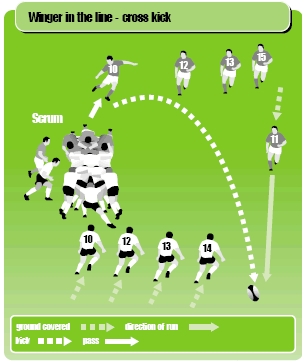
Some sides even use a "dummy switch" or "dummy cut", where the fly half fakes a pass to the inside centre (12) and then kicks the ball. Consequently, the opposition winger is held in the defensive line for longer.
Tactic 2: Winger wide, full back in
Your winger stands wide to draw out his opponent, perhaps with the angle of his run, or just by making himself heard. This should allow your full back a little more space to run through the gap between the opposition outside centre and winger.

There is then an array of moves you can use to cut through the defensive line. Many of these can be found in the backs moves on the site, such as dummy switch miss (DSM), split miss and split hit.
Click here to look at your attacking options when the opposition winger is standing back from the defence.
Be a more effective, more successful youth rugby coach
- Win more games, without sacrificing the crucial element of fun
- Develop every player, regardless of vast differences in ability
- Run a respected, professional programme - even with a full-time job and limited time
Subscribe for full access
Or register and unlock 2 free articles,
receive our weekly newsletter, and
get a FREE coaching e-book.
Or if you are already a subscriber login for full access.

Dan Cottrell

Latest Issue

Subscribe Today
Subscribe Today

Newsletter Sign Up

Coaches Testimonials

Colin Shaw

Gary Lee Heavner
Subscribe Today
Latest Issue
Be a more effective, more successful rugby coach
In a recent survey 89% of subscribers said Rugby Coach Weekly makes them more confident, 91% said Rugby Coach Weekly makes them a more effective coach and 93% said Rugby Coach Weekly makes them more inspired.
Get Weekly Inspiration
All the latest techniques and approaches


Rugby Coach Weekly offers proven and easy to use rugby drills, coaching sessions, practice plans, small-sided games, warm-ups, training tips and advice.
We've been at the cutting edge of rugby coaching since we launched in 2005, creating resources for the grassroots youth coach, following best practice from around the world and insights from the professional game.
