
 close


 LOGIN
Why a good game doesn’t always work
Grant Wrigglesworth on adapting the challenge to the players. Dan Cottrell highlights the lessons from his experience.
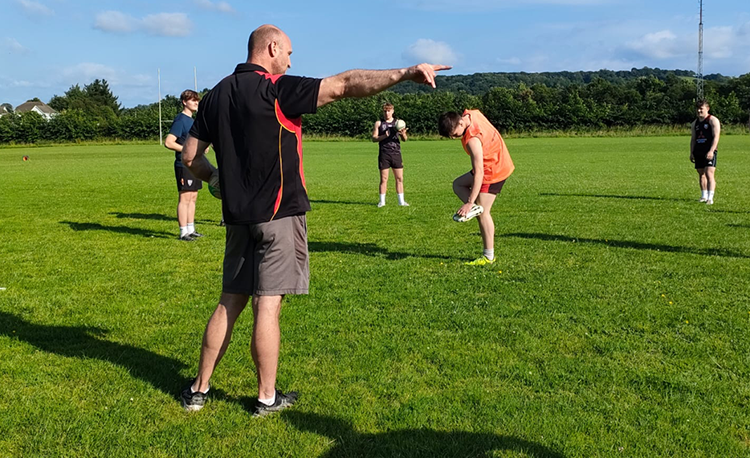
Watching good players train can give you plenty of ideas for your own sessions. However, what looks straightforward from the touchline can prove much harder when you try it with your team.
Grant Wrigglesworth explored this in a recent LinkedIn post. What interested me was his explanation of why the activity hadn’t worked, and how that changed his thinking about introducing it.
As part of his WRU Advanced Coaching course, Grant observed Wales U20 backs training. He described clear objectives, disciplined timings and exceptional execution, with very little isolated technical practice. Games brought together handling, movement, decision-making and tactical awareness.
Drawing on that experience and other observations, he tried a game he had seen at the Scarlets with Carmarthen Quins youth. He explained the purpose, demonstrated the requirements and walked the players through it.
“Then we played. It fell apart.”
Handling errors became decision-making errors. Players lost composure, frustration increased and engagement suffered. Grant and his fellow coaches reinforced the purpose and standards, eventually reaching something approaching an acceptable level.
“But it wasn’t the learning experience I’d intended.”
I think that distinction is useful. Getting an activity running reasonably well can feel like progress, especially after a difficult start. Grant was looking beyond that to consider what the players were gaining from it.
“The learning objective remains. The method adapts.” – GRANT WRIGGLESWORTH
His reflection focused on two areas. First, the psychological demands: concentration, resilience and willingness to persist through failure. He recognised their importance, but also questioned his own part in helping players demonstrate them.
“But was the environment I’d created helping the players demonstrate those qualities?”
Second, he considered the relationship between competence and complexity. His players could execute the component skills in familiar situations. Combining them with unfamiliar tactical demands, pressure and decisions had exceeded what some could manage simultaneously.
“I’d transferred an activity without sufficiently adapting the conditions that made it effective.”
For me, this is the most valuable part of his post. He identified something specific he could change, while recognising what his players could already do.
Grant’s response was to retain game-based learning and design a more appropriate route into it. He also highlighted the practical circumstances that shape a session: player capability, numbers, positional balance, coaching resources and time.
His conclusion gives coaches plenty to consider when borrowing an activity, including one from these pages: “The learning objective remains. The method adapts.”
Already a member? Log in
20 years of expertise — yours on demand
What to coach tonight…
next week…
all season.
Dan Cottrell has spent 20 years helping grassroots coaches build a consistent approach to player development — not random drills, but a proper system that works week after week. Trusted by thousands of club coaches across the UK.
✓ Code copied — paste it at checkout
Get instant accessProven resources, ready to use
3,000+ drills and 350 session plans, built and refined over 20 years. Written for club coaches, not elite programmes. Download, print, use tonight.
A consistent approach to development
New drills, games and coaching advice added regularly — so there's always something fresh to take to training, whatever stage of the season you're at.
Webinars & coaching evenings
Live and recorded sessions with Dan and expert guests — practical, grassroots-first and included in your membership.
“
RCW has changed the way I plan sessions. I've got a system now — my players are improving and they keep coming back. Worth every penny.
— Mark T., head coach, Cheshire RFC

Dan Cottrell

Latest Issue

Subscribe Today
Subscribe Today


Newsletter Sign Up




Coaches Testimonials

Colin Shaw

Gary Lee Heavner
Subscribe Today
Latest Issue
Be a more effective, more successful rugby coach
In a recent survey 89% of subscribers said Rugby Coach Weekly makes them more confident, 91% said Rugby Coach Weekly makes them a more effective coach and 93% said Rugby Coach Weekly makes them more inspired.
Get Weekly Inspiration
All the latest techniques and approaches


Rugby Coach Weekly offers proven and easy to use rugby drills, coaching sessions, practice plans, small-sided games, warm-ups, training tips and advice.
We've been at the cutting edge of rugby coaching since we launched in 2005, creating resources for the grassroots youth coach, following best practice from around the world and insights from the professional game.
