
 close


 LOGIN
Decision-making for forwards at rucks
Nominate fitter, more powerful players to concentrate only on ruck clearing to ensure opponents never get their hands on the ball after a tackle.
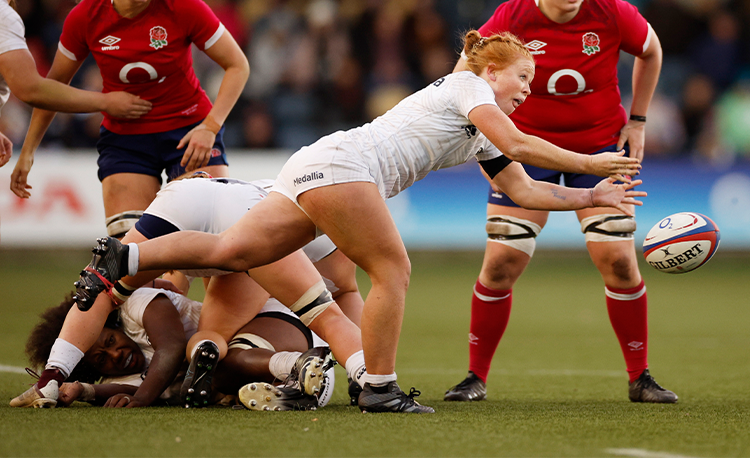
Many teams at higher levels define a forward’s role in general phase play quite specifically. Some may be nominated as ball-carriers and/or offloaders, others may be required to play in “pods” on the edge, or in the middle of the field consistently. Others will be nominated as cleanout specialists whose one task is to move from tackle to tackle, smashing opposition threats off the ball.
Such players will have a target agreed with the coaches, to hit maybe 30-40 rucks per game. The forward you pick for this role needs the following qualities:
1. Power in contact
2. Low centre of gravity
3. Appetite for work
While this works at the professional level, you need to adjust this to suit your team. You don’t want players to become one-trick ponies, with little appreciation for the wider game. However, there is no harm in giving a player that role in one game or one half of a game.
- Number of involvements:
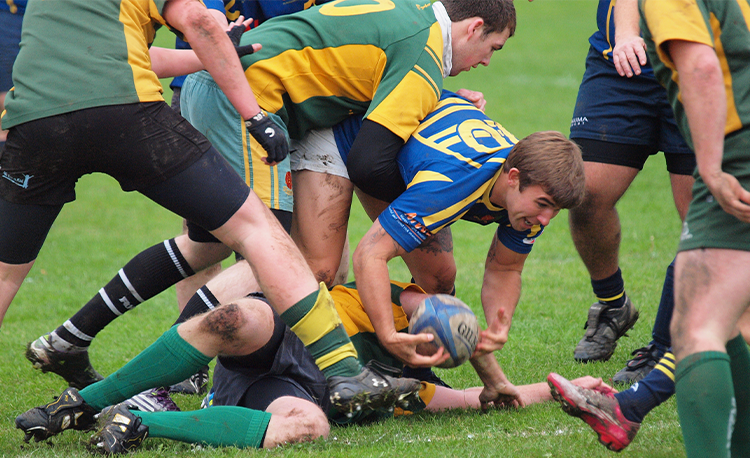
As a rule of thumb, a good rucking forward wants to be involved in every other ruck. They win one ruck, recover and look for where the next ruck is likely to be.
- Quality of involvements:
It is not enough to just appear at a ruck and “lean” on it. You have to set a standard for what you achieve.
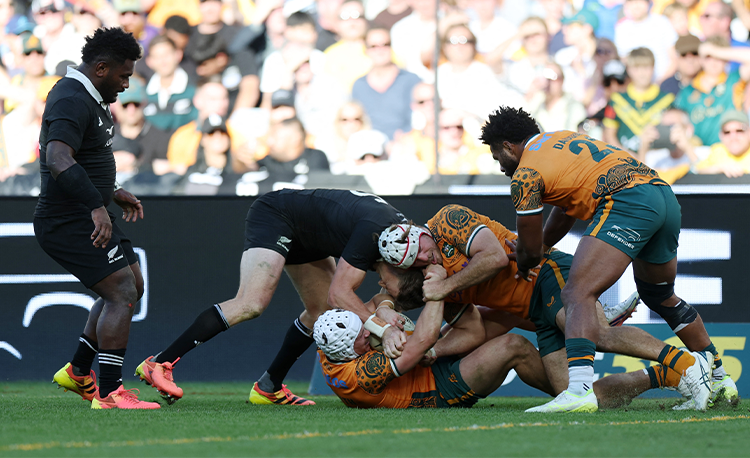
Sometimes, the rucking forward will be adding weight to the second player at the ruck, helping to secure the ball.
Other times, they must clearly win the battle for the space over the ball, giving their team quick access and preventing any threats.
Use Sean Holley’s ruck decision-making exercise on page 5 to work on this.
- Positioning and range:
Without advocating a specific system (like a 1-3-3-1), the rucking forward should put themselves between the 15m lines, probably around the first and second receivers. They have to be based in midfield, next to the two major distributors, in order to take the shortest route to the tackle area and multiply their involvements.
In a series of rucks, it is unlikely they will be moving more than 40m sideways. Otherwise these players will quickly run out of steam. Every contact will drain energy so they need to identify how to reduce their lateral movement.
To help players define their roles, use the scenario activity by Mark Calverley on page 6.
Remember to mix up the roles, both in games and training. Your backs’ decision-makers need to have a good understanding of the roles too.
Already a member? Log in
20 years of expertise — yours on demand
What to coach tonight…
next week…
all season.
Dan Cottrell has spent 20 years helping grassroots coaches build a consistent approach to player development — not random drills, but a proper system that works week after week. Trusted by thousands of club coaches across the UK.
✓ Code copied — paste it at checkout
Get instant accessProven resources, ready to use
3,000+ drills and 350 session plans, built and refined over 20 years. Written for club coaches, not elite programmes. Download, print, use tonight.
A consistent approach to development
New drills, games and coaching advice added regularly — so there's always something fresh to take to training, whatever stage of the season you're at.
Webinars & coaching evenings
Live and recorded sessions with Dan and expert guests — practical, grassroots-first and included in your membership.
“
RCW has changed the way I plan sessions. I've got a system now — my players are improving and they keep coming back. Worth every penny.
— Mark T., head coach, Cheshire RFC

Dan Cottrell
Latest Issue
Subscribe Today
Subscribe Today


Newsletter Sign Up

Coaches Testimonials

Colin Shaw

Gary Lee Heavner
Subscribe Today
Latest Issue
Be a more effective, more successful rugby coach
In a recent survey 89% of subscribers said Rugby Coach Weekly makes them more confident, 91% said Rugby Coach Weekly makes them a more effective coach and 93% said Rugby Coach Weekly makes them more inspired.
Get Weekly Inspiration
All the latest techniques and approaches


Rugby Coach Weekly offers proven and easy to use rugby drills, coaching sessions, practice plans, small-sided games, warm-ups, training tips and advice.
We've been at the cutting edge of rugby coaching since we launched in 2005, creating resources for the grassroots youth coach, following best practice from around the world and insights from the professional game.
