
 close
close


 LOGIN
LOGINShorten their defensive line
You don’t need tactics to win a match when all you have to do is get into position to score. Just use this simple activity to work on quick realignment and the tries will follow…
By Glenn Delaney, head coach, Mitsubishi Dynaboars
We want to break down organised defences in three ways:
1. Create an overload.
2. Create a mismatch.
3. Generate momentum.
These three ways are based on grouping and then spreading out the opposition’s defence.
However, most teams are only committing one or two players to the ruck. We have to manipulate this situation so defenders either commit more to the contact area, or commit their guards (the two players at the side of the rucks) and other close defenders in the next phase of play. In essence, we want to to shorten their defensive line and face fewer numbers as we attack.
Rising from the dead
We shorten the defensive line by using a “reload” phase. This type of phase comes after a “dead” phase where the defence has had time to set themselves up. The “reload” phase commits defenders, or leaves the defenders behind, at the previous ruck, and so they cannot cover the side we attack next.
The two main types of attack that we might use on a reload phase are:
1. Gaining momentum from a driving maul. If this moves forward, the opposition must commit forwards to hold the drive. The rest of the defensive line has to move backwards as well.
2. Attacking outside their second or third defender from the side of a ruck. If we then generate quick ball, we can leave these inside defenders behind.
Let’s concentrate on that second tactic.
“Stopping and starting” their drift
Being successful after the reload phase is measured first in how effectively we can draw in their close defenders. In other words, the first three defenders at the side of the ruck.
Once we have recycled the ball and left these defenders behind, we should have an overload in attack. To defend against this, the defenders will have to drift out. Our next task is to stop and start this drift defence.
A “stop and start” tactic can fracture the drift and the line of defence. If the defensive line stops and starts, it takes away its cohesive organisation.
Many defences are well drilled. In training, defenders work on a achieving a uniform line speed based on the players around them and the speed of the ball. In attack, we want to break this uniformity.
We are trying to make defenders in the line make individual decisions that aren’t necessarily in tune with the players either side of them.
A stop and start drift changes the defenders’ timing, creating wider spaces in the line. We can then exploit these spaces with our lines of running and passing into the spaces.
The main tactics are to use:
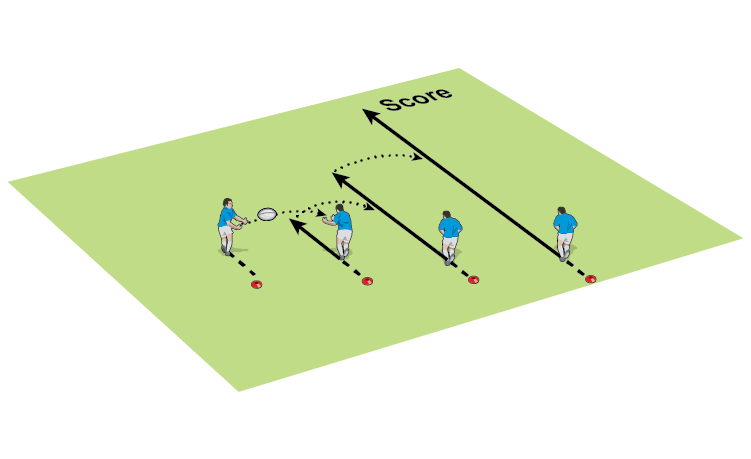
1. Dummy runners on switch lines, or
2. Passing behind flat attackers running in on angles.
If we find ourselves on the touchline, then we are probably going to be faced with a 10-man flat line in front of us. We need to reload, attack outside the third defender. We should have left at least five defenders behind and we can consider attacking as a 7v6.
Training scenarios
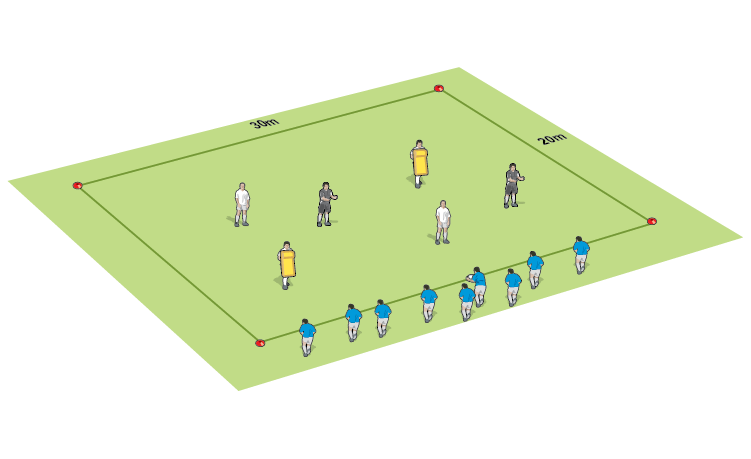
In training, we work on 4v4 games where the players use their plays to stop and start the drift. Taking this further into training games, we might use a bit part 20/100 game, where the players might go into a tackle at 20% to create a ruck, but then contest at the ruck and subsequent plays at 100%.
Players can then work on reloading into the right positions and improving their timing.
Be a more effective, more successful youth rugby coach
- Win more games, without sacrificing the crucial element of fun
- Develop every player, regardless of vast differences in ability
- Run a respected, professional programme - even with a full-time job and limited time
Subscribe for full access
Or register and unlock 2 free articles,
receive our weekly newsletter, and
get a FREE coaching e-book.
Or if you are already a subscriber login for full access.

Dan Cottrell

Latest Issue

Subscribe Today
Subscribe Today



Newsletter Sign Up

Coaches Testimonials

Colin Shaw

Gary Lee Heavner
Subscribe Today
Latest Issue
Be a more effective, more successful rugby coach
In a recent survey 89% of subscribers said Rugby Coach Weekly makes them more confident, 91% said Rugby Coach Weekly makes them a more effective coach and 93% said Rugby Coach Weekly makes them more inspired.
Get Weekly Inspiration
All the latest techniques and approaches


Rugby Coach Weekly offers proven and easy to use rugby drills, coaching sessions, practice plans, small-sided games, warm-ups, training tips and advice.
We've been at the cutting edge of rugby coaching since we launched in 2005, creating resources for the grassroots youth coach, following best practice from around the world and insights from the professional game.
