
 close
close


 LOGIN
LOGINLine-breaking moves
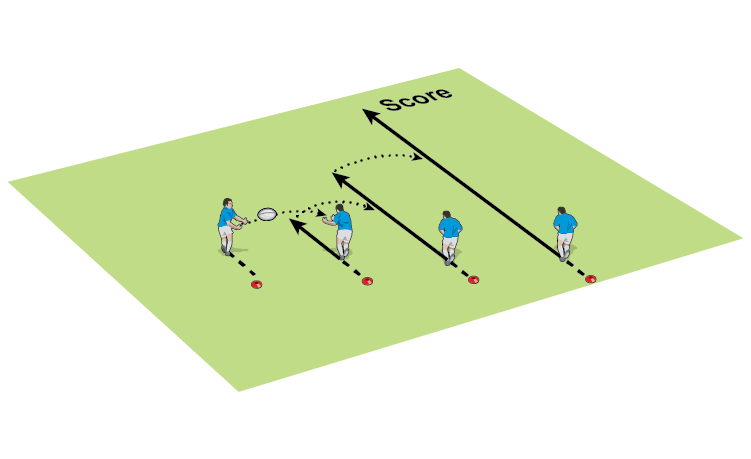
By changing running angles, centres can leave gaps for wingers. Use ’ins’ and ’outs’ to create gaps and release the blindside winger.
The terms ’ins’ and ’outs’ are also known as ’unders’ and ’overs’.
They refer to the running line of a potential receiver. This is, for example, when the inside centre (12) runs out and then in, or vice versa, to open a hole in the defence.
An in (or under) is an out-to-in run, while an out (or over) is an in-to-out run.
On their own, these changes of direction can be a very effective way of exploiting space.
Defenders have to move laterally to cover the attackers, potentially unbalancing them before attempting the tackle.
When combined with a set move with the blindside winger following a scrum, these can be a lethal attacking weapon.
Putting ’ins’ and ’outs’ into practice
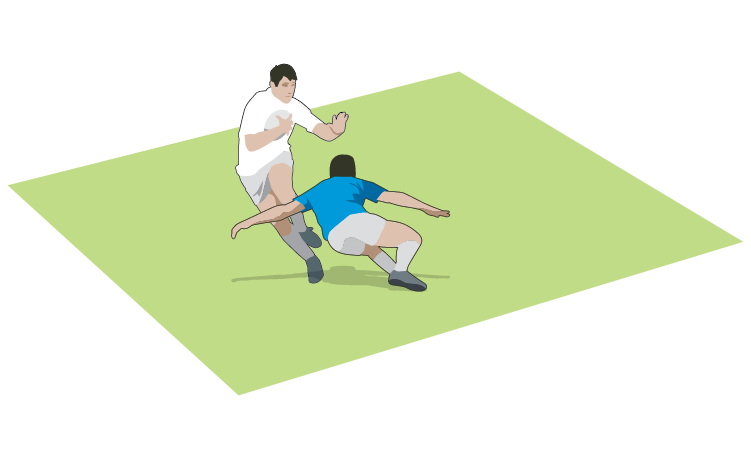
Set up your backs as shown in the illustration below - they are in the blue shirts. Your blindside winger (11) should be standing behind the 12.
Be a more effective, more successful youth rugby coach
- Win more games, without sacrificing the crucial element of fun
- Develop every player, regardless of vast differences in ability
- Run a respected, professional programme - even with a full-time job and limited time
Subscribe for full access
Or register and unlock 2 free articles,
receive our weekly newsletter, and
get a FREE coaching e-book.
Or if you are already a subscriber login for full access.
Latest Issue

Subscribe Today
Subscribe Today


Newsletter Sign Up
Coaches Testimonials

Colin Shaw

Gary Lee Heavner
Subscribe Today
Latest Issue
Be a more effective, more successful rugby coach
In a recent survey 89% of subscribers said Rugby Coach Weekly makes them more confident, 91% said Rugby Coach Weekly makes them a more effective coach and 93% said Rugby Coach Weekly makes them more inspired.
Get Weekly Inspiration
All the latest techniques and approaches


Rugby Coach Weekly offers proven and easy to use rugby drills, coaching sessions, practice plans, small-sided games, warm-ups, training tips and advice.
We've been at the cutting edge of rugby coaching since we launched in 2005, creating resources for the grassroots youth coach, following best practice from around the world and insights from the professional game.
