
 close
close


 LOGIN
LOGINDriving performance
In the last of a three-part series, ANDY LONGLEY and ALI TISDALL, from the coachup academy, explore ’up’ factors in the art and neuroscience of coaching.
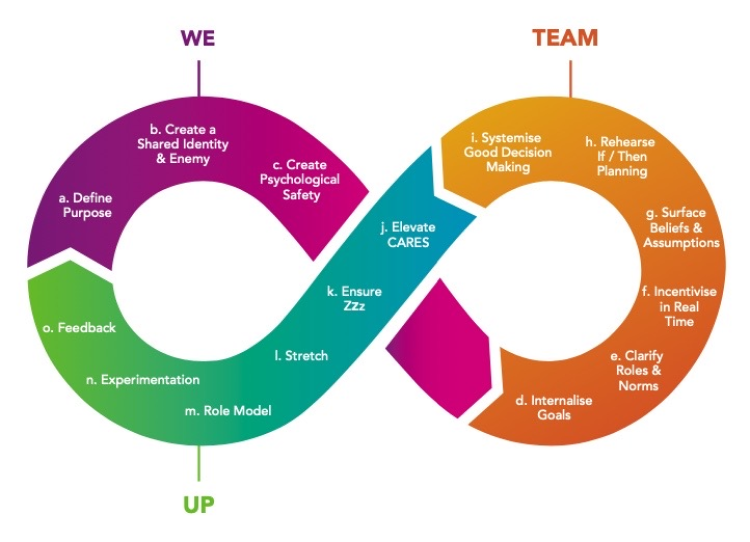
In recent weeks, we have been dissecting the three-pronged We-Team-Up model of building a high-performing and socially connected team.
Our first piece, which appeared in RCW 120 (July 28th), broke down the We part of that - how a coach uses shared purpose, identity and relationships to create the required foundations.
The second, which appeared in RCW 123 (August 18th), explored the Team factors - how a coach uses the clarity of role, goals, incentives, scenario-planning and robust decision-making to create the conditions for optimum team flow.
In this final piece, we explain the Up part of the model - how a coach uses motivation and ’stretch’ to drive performance, how they role model and how they instill a feedback culture within their team.
Up factors
The Up element is all about raising motivation, growth and team performance bars to the next level.
These can be broken down into six key factors - motivation and CARES; rest and wellbeing; stretch; role modelling; experimentation; and feedback.
Motivation and CARES
A coach needs to motivate individual players and a team, which means focusing on what the brain ‘CARES’ about.
CARES is our acronym for five universal motivators - Certainty, Agency, Relationships, Equity and Social Status.
For example, if players feel they have a sense of control (Agency), are Certain about what lies ahead, have positive Relationships and Social Status in the team, and feel there is Equitable treatment among members, they will be extra motivated.
A great coaching practice is to ask each player which of the CARES factors motivates them the most and then use them throughout the season.
Rest and wellbeing
A coach has a large part to play in ensuring team members come ready to perform, by promoting rest, nutrition and energy boosters.
We know sleep is essential for physical performance, but it is also important for cognitive performance - things like memory, attention, decision-making and creativity are all negatively affected by a lack of rest.
How can coaches expect their players to remember a new move or strategy if their cognitive functioning is impaired due to a lack of sleep?
"Attention, decision-making and creativity are all affected by a lack of rest..."
Eddie Jones, the Australia head coach formerly in charge of England, is a great exponent of prioritising rest and recovery as part of his training and preparation strategies.
Jones is known to monitor players’ training loads, providing sufficient recovery time between matches and managing their playing time effectively to avoid burnout and maintain high performance.
Stretch
Growing the players through ’stretch’ is a powerful part of the Up model.
Learning through ’stretch’ means helping your players acquire knowledge and new skills by deliberately challenging them beyond their current abilities or comfort zones. It involves you, as the coach, supporting them to push the boundaries of their known capabilities.
As a practical example, the most recent research tells us that the optimal zone for learning ‘stretch’ is to have a success rate of 85% and a failure rate of 15%. This will balance building confidence with learning through failure.
A great example of this is Sir Alex Ferguson, the legendary former manager of Manchester United FC.
Sir Alex was known for setting stretch goals to push his footballers beyond their perceived limits and allowing them to achieve something extraordinary.
He set the goal of winning a then-unprecedented treble - the Premier League, the FA Cup and the Uefa Champions League - which they achieved in 1999, becoming the first English club to do so.
Be a more effective, more successful youth rugby coach
- Win more games, without sacrificing the crucial element of fun
- Develop every player, regardless of vast differences in ability
- Run a respected, professional programme - even with a full-time job and limited time
Subscribe for full access
Or register and unlock 2 free articles,
receive our weekly newsletter, and
get a FREE coaching e-book.
Or if you are already a subscriber login for full access.

Andy Longley
Latest Issue

Subscribe Today
Subscribe Today



Newsletter Sign Up



Coaches Testimonials

Colin Shaw

Gary Lee Heavner
Subscribe Today
Latest Issue
Be a more effective, more successful rugby coach
In a recent survey 89% of subscribers said Rugby Coach Weekly makes them more confident, 91% said Rugby Coach Weekly makes them a more effective coach and 93% said Rugby Coach Weekly makes them more inspired.
Get Weekly Inspiration
All the latest techniques and approaches


Rugby Coach Weekly offers proven and easy to use rugby drills, coaching sessions, practice plans, small-sided games, warm-ups, training tips and advice.
We've been at the cutting edge of rugby coaching since we launched in 2005, creating resources for the grassroots youth coach, following best practice from around the world and insights from the professional game.
