
 close
close


 LOGIN
LOGINTrain 'no-look' passing
Editor Dan Cottrell adds further context to two sessions.
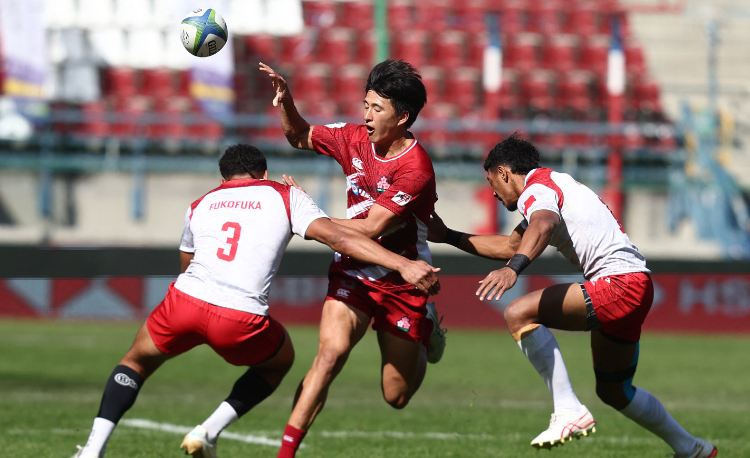
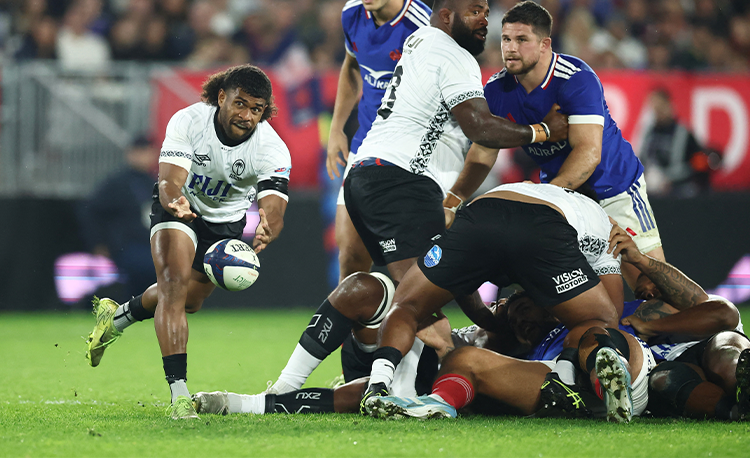
A no-look pass is clearly a high-risk skill – mistakes are easy to spot. But there’s also reward.
The main advantage is that a defender is drawn onto the ball carrier, creating space elsewhere.
So why not just fix the defender and pass while still watching the receiver? That’s the key question.
In theory, a good fix-and-pass achieves the same goal, without the added risk. The no-look version adds an element of disguise, but only works if the player is accurate and understands the situation.
Context
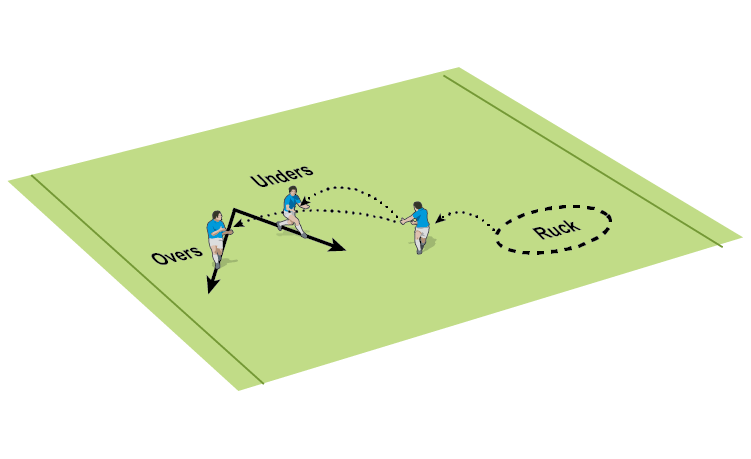
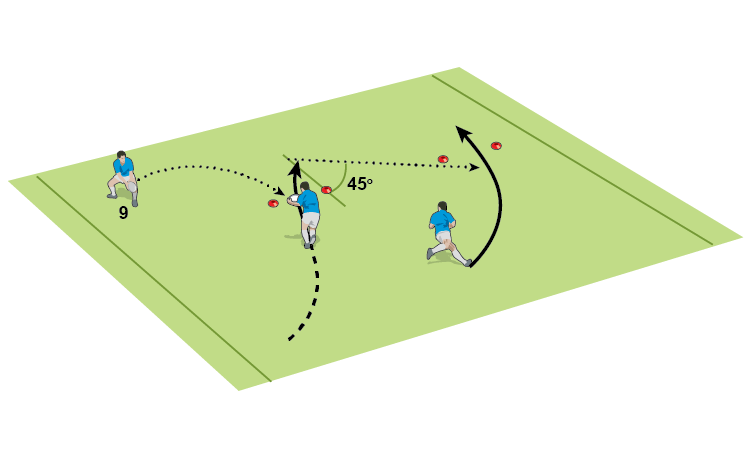
It works because the no-look pass is normally short, and the receiver is close to the ball carrier – so close, it would be easy for the defender to step over and tackle them.
If the receiver was any wider, it’s likely that they would be marked by another defender, or, in a number of situations, they might be too close to the touchline. It exploits the space right next to a defender and potentially allows a clean break.
If your players are going to use a no-look pass, they should understand the context. That is, when and why.
Pressure
Clever plays, including the no-look pass, rarely transfer successfully from skills training to matches, unless they are put under pressure. Our exercises here develop the first part of this journey.
Too often, that’s where we stop. We do increase the pressure – but is it the sort of pressure that replicates a game situation?
Pressure can be applied by reducing the time and space a player has to perform a skill. Further developments add defenders, and then defenders from different angles.
All good. But the real test is that players must choose whether to use that skill or another one. And, in the case of a no-look pass, the ratio should be about 1 to 10, I think.
In other words, the player gets one or two chances in a match to use a skill.
Creativity
Rugby is so dynamic that it’s very hard to set out hard and fast rules for when to use plays or skills. The players should react in the moment.
They have a range of right answers, in terms of ways to be successful. It could be a short pass, long pass, an offload, a dummy or a side-step. Each one might lead to a clean break this phase, the next phase or the next phase, and so on.
No-look passes are one possibility in all of these answers.
Don’t be afraid to give the players the tools to be creative, and then choose when to use them – wisely.
To check, ask them afterwards why they used the pass.
Be a more effective, more successful youth rugby coach
- Win more games, without sacrificing the crucial element of fun
- Develop every player, regardless of vast differences in ability
- Run a respected, professional programme - even with a full-time job and limited time
Subscribe for full access
Or register and unlock 2 free articles,
receive our weekly newsletter, and
get a FREE coaching e-book.
Or if you are already a subscriber login for full access.

Dan Cottrell
Latest Issue

Subscribe Today
Subscribe Today
Newsletter Sign Up
Coaches Testimonials

Colin Shaw

Gary Lee Heavner
Subscribe Today
Latest Issue
Be a more effective, more successful rugby coach
In a recent survey 89% of subscribers said Rugby Coach Weekly makes them more confident, 91% said Rugby Coach Weekly makes them a more effective coach and 93% said Rugby Coach Weekly makes them more inspired.
Get Weekly Inspiration
All the latest techniques and approaches


Rugby Coach Weekly offers proven and easy to use rugby drills, coaching sessions, practice plans, small-sided games, warm-ups, training tips and advice.
We've been at the cutting edge of rugby coaching since we launched in 2005, creating resources for the grassroots youth coach, following best practice from around the world and insights from the professional game.
