
 close
close


 LOGIN
LOGINTime to put your best passing foot forward
Editor Dan Cottrell adds further context to two sessions.


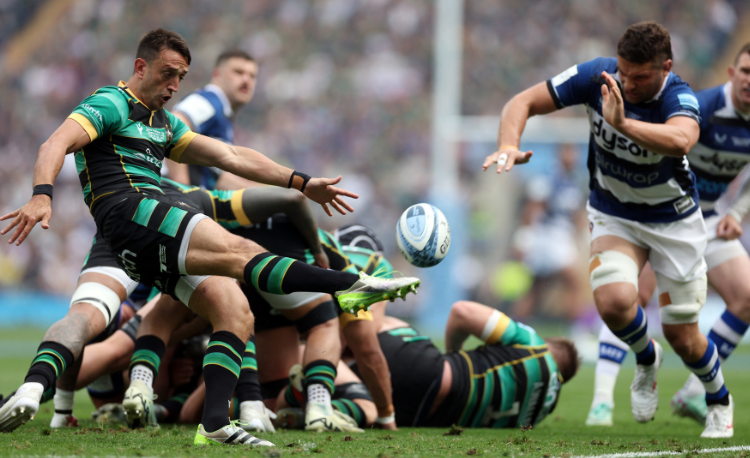
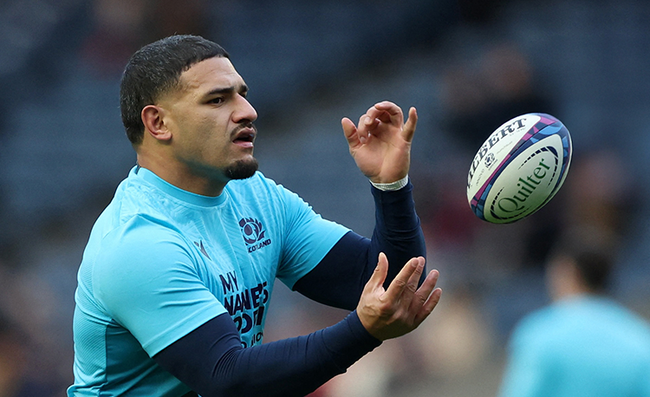
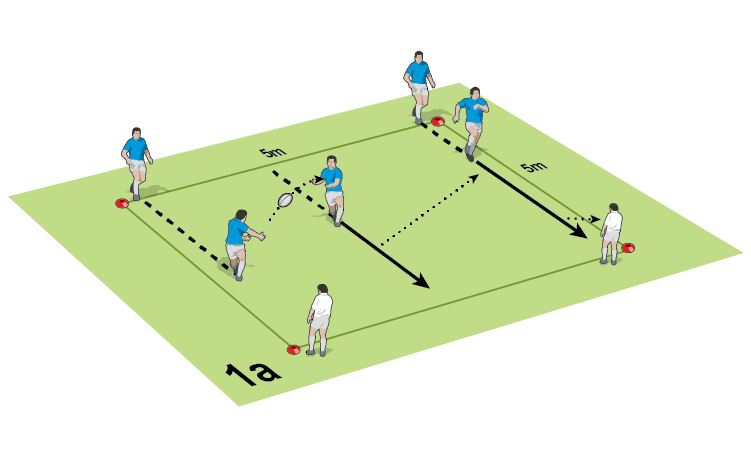
When we try to improve our players’ handling skills, one area we concentrate on is the detail of the technique.
In RCW 217 (June 20), Kim Oliver focused particularly on "firing the rifles", with the hands finishing pointing towards the target.
Footwork is another area coaches have been concentrating on. The current wave is for the passer to deliver the ball from the foot closest to the receiver. In other words, the hips are closed, not facing the receiver.
This is not a particularly natural movement. Firstly, it means far more shoulder rotation, which, in turn, probably means the passer hasn’t got the receiver in their sights as much as before. It’s not a no-look pass, though.
Secondly, with the hips closed, the arms must work harder. That’s where the advantage comes.
The elbows and wrists add the power, which leads to greater speed. It should also reduce the ball swinging below the hips during the pass, which can lead to the pass being pulled up.
Teams who are also replicating this action are finding that, not only does this increase accuracy, it speeds up the pass.
With defensive line speed getting faster, teams need to pass faster to beat the defenders to the outside players. Therefore, these factors are making a difference.
If you don’t think this works, try it out. Recently, I’ve been playing some games of walking rugby, where there’s a turnover if the passer turns their hips towards the receiver. The players eventually work out that they need to pass off the near foot.
Though they don’t realise it, they are passing a lot faster than they were before.
Initially, I ran these game with even teams. Now, I give the attack an extra player or two. With walking rugby, the speed of the pass makes a massive difference. They notice this.
We can’t get too hung up on this technique, however, because sometimes the players don’t have an opportunity to choose which foot to pass off. That’s why they need to practise off both feet.
So, although it seems simple, this practice is useful to challenge the players to develop a good feel to pass using either way.
Bounce is good jargon
’Bounce’ is a good word to use when referring to tackle recovery.
It’s an active expression, which gives a sense of returning quickly to the action.
The best players do this naturally, loving the thrill of making a difference more than once during a short passage of defensive play.
We need to think creatively to design exercises that challenge more players to think this way, and execute the skills more often in matches.
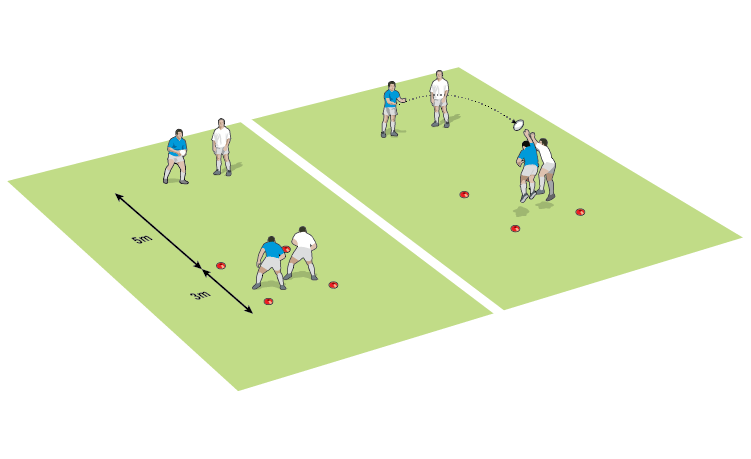
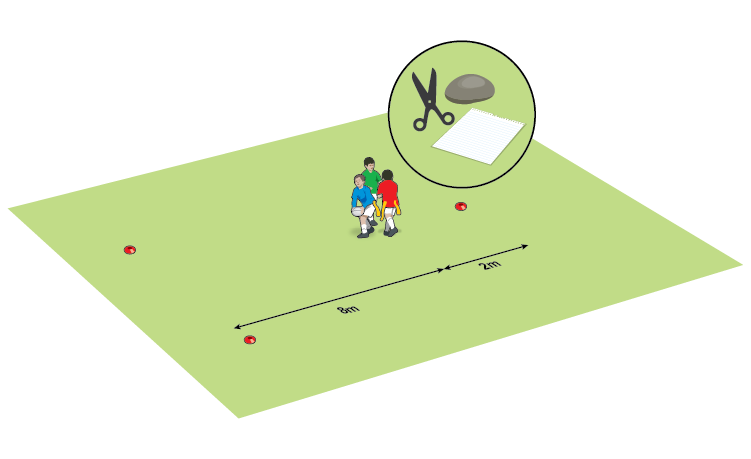
The whole of the team needs to become more aware of what that skill looks like, and then become accustomed to the actions involved. That’s why I designed an activity that replicates the disorientation which happens during a tackle.
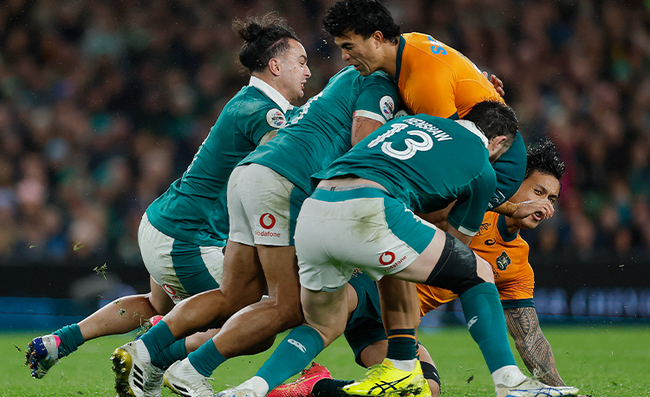
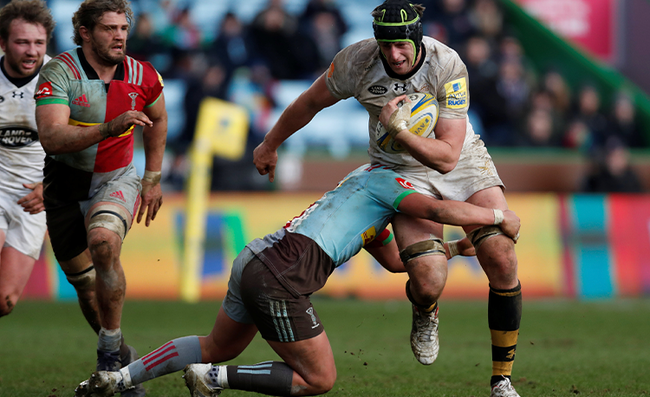
In almost all tackling instances, the tackler will be unbalanced, their eyes will close and they will twist before the end of the tackle.
From that position, they must understand where they are, recover their feet, and then snap back into the action. That’s not a natural reaction.
As they do ’bounce up’, they need to read the cues to be ready to move into position to attack the ball, or, most probably, defend the next attack. That often requires some lateral movement, scanning and communication.
This exercise starts this process. I’ve developed it since, so the action can happen on either side of the tackle, meaning the tackler has to check whether to go left or right.
I found that, if I tried this with real tackles, the players tended not to be aggressive enough in contact. They were unrealistically up and out of the tackle faster than they should be.
I also tried it with players hugging another player. This didn’t really work, even with older players – too much mucking around.
So, though I rarely like to use ruck pads, they worked well in this instance.
Related Files

Dan Cottrell
Latest Issue
Subscribe Today
Subscribe Today
Newsletter Sign Up
Coaches Testimonials
Gerald Kearney, Downtown Las Vegas Soccer Club

Paul Butler, Florida, USA

Rick Shields, Springboro, USA

Tony Green, Pierrefonds Titans, Quebec, Canada
Subscribe Today
Latest Issue

Be a more effective, more successful rugby coach
In a recent survey 89% of subscribers said Rugby Coach Weekly makes them more confident, 91% said Rugby Coach Weekly makes them a more effective coach and 93% said Rugby Coach Weekly makes them more inspired.
Get Weekly Inspiration
All the latest techniques and approaches


Rugby Coach Weekly offers proven and easy to use rugby drills, coaching sessions, practice plans, small-sided games, warm-ups, training tips and advice.
We've been at the cutting edge of rugby coaching since we launched in 2005, creating resources for the grassroots youth coach, following best practice from around the world and insights from the professional game.
