
 close
close


 LOGIN
LOGIN5 ways to make sure you complete a tackle
A tackle is not over until the ball carrier is on the ground and the tackler is getting back into the game. Your players need to understand the technical aspects of this.
By Sean Holley, former Bristol and Ospreys coach

Players should fix their eyes on a target area that is roughly the attacker’s core and midline as the point to position their shoulder contact.
The chin should be off the chest to maintain balance. There is a misconception that arms and shoulder are the drivers. The legs execute and finish off the tackle.
Five key points to completing the tackle effectively:
01 – The tackler must look to hit beyond the point of contact. This ensures they do not fall short and their momentum impacts the ball carrier on the tackler’s terms.
02 – Ensure the back is straight. The tackle height is maximised by sinking at the knees.
03 – With shoulder planted, chin off the chest and head to the side of the attacker, the tackler should be in close enough to use their arms and hands to grab around legs and waist for a vice-like grip.
04 – Leg drive is the most important aspect of tackle completion. The power from the legs propels the tackler and ensures the technical positioning of the head, shoulder, arms and spine alignment work efficiently. If effective, the ball carrier can be unbalanced, reducing their ability to offload the ball.
05 – Bringing the attacker to ground completes the tackle but must be done on the tackler’s terms. Safety is important here, especially landing to the side or on top of the tackled player. Encourage the tackler to keep their head tight the ball carrrier.
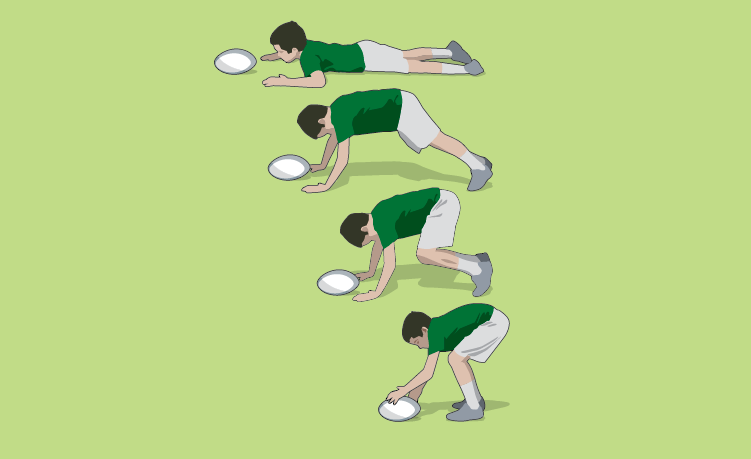
The tackler must look to get to their feet quickly (see Surfer’s Jump, page 5) to play the ball or take the space at the developing tackle contest.
Be a more effective, more successful youth rugby coach
- Win more games, without sacrificing the crucial element of fun
- Develop every player, regardless of vast differences in ability
- Run a respected, professional programme - even with a full-time job and limited time
Limited time - use code WELCOME40 to save 40% on membership
or register to receive our weekly newsletter, and a free coaching e-book
Already subscribed? login

Dan Cottrell
Latest Issue
Subscribe Today
Subscribe Today
Newsletter Sign Up
Coaches Testimonials

Gerald Kearney, Downtown Las Vegas Soccer Club

Paul Butler, Florida, USA

Rick Shields, Springboro, USA

Tony Green, Pierrefonds Titans, Quebec, Canada
Subscribe Today
Latest Issue

Be a more effective, more successful rugby coach
In a recent survey 89% of subscribers said Rugby Coach Weekly makes them more confident, 91% said Rugby Coach Weekly makes them a more effective coach and 93% said Rugby Coach Weekly makes them more inspired.
Get Weekly Inspiration
All the latest techniques and approaches


Rugby Coach Weekly offers proven and easy to use rugby drills, coaching sessions, practice plans, small-sided games, warm-ups, training tips and advice.
We've been at the cutting edge of rugby coaching since we launched in 2005, creating resources for the grassroots youth coach, following best practice from around the world and insights from the professional game.
