
 close
close


 LOGIN
LOGINFitting in the fight
Editor Dan Cottrell adds further context to two sessions.



Scott ’Razor’ Robertson, the breakdancing All Blacks head coach, is a shrewd operator.
As an uncompromising New Zealand back-rower, he knew how to win possession as a player.
Now, as one of the premier coaches in world rugby, he also knows a thing or two about keeping his players fit.
One of his mantras, when he coached in the club game, was that you need to "save your ammo for the weekend". In other words, he doesn’t do much contact training during the week before a match.
This is for two reasons. Firstly, it keeps players fit – less bone-on-bone contact certainly reduces injuries.
Secondly, it keeps the players hungry. Their contact ammunition hasn’t been used up in a Tuesday contact session.
I’m sure he would be the first to admit that he was using this with a professional and well-motivated team, that would happily knock seven bells out of each other during the week.
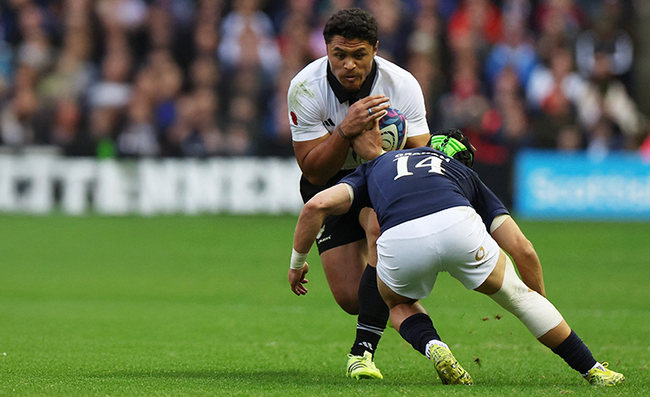
With the sort of teams most of us coach, it’s a lot different. They need to spend time ’fighting’, and learning how to operate in more physical situations.
In my days of playing at a good level of rugby, a Tuesday session after a defeat was often very physical. And, even for a winger like me, extremely enjoyable.
I’m not sure how much skill was involved, but there was plenty of frustration vented. It wasn’t unusual for the hookers to end up having a scuffle (why is it always them?!).
A ’fight’ is a good way to think about the contest, although I would advise you to keep that language to yourself.
Instead, create an environment where the players are keen to win contests, which then pushes them to use the right skills to overcome their opponent.
It’s a ’fight’ because, often, the initial contact skill doesn’t land the decisive blow. It might gain the advantage, but it still needs to be finished.
For example, at the ruck, a defender might get their hands on the ball. They need to be strong and sturdy, so that they aren’t driven off.
Alternatively, a tackler makes a good shoulder contact with the ball carrier. Continuing to drive their legs, tightening the grip, and then twisting in the finish gives the rest of the team a chance to turn over the ball.
The same is true when the situation is not so positive. Continued resilience can reduce the outcomes for the opposition, and, sometimes, even reverse the outcome in the favour of the better ’fighter’.
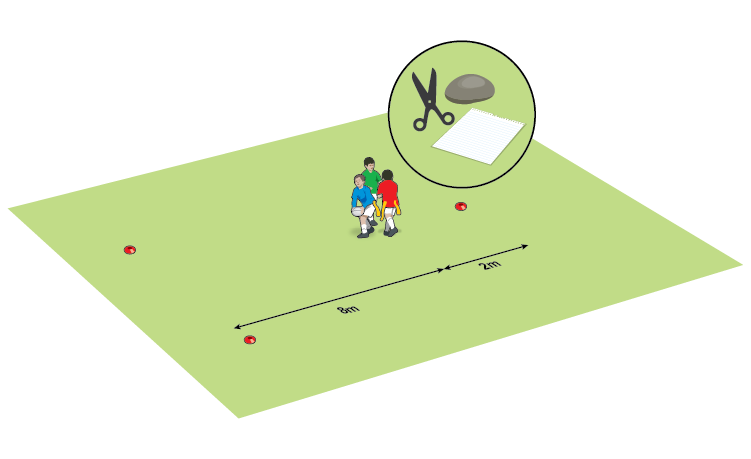
Instil this attitude in sessions like Stop defences spoiling.
The session and techniques are not all about ’blood and guts’, but do help reveal resilience.
Two games to change the picture
Twenty years of writing in RCW makes you reflective.
I’ve used plenty of games from these pages. I invented some. You’d think, by now, I would have seen them all.
Thankfully, no! Here are two games I’ve ’stolen’ from football and made into rugby games. They might be out there already in some form, but you can see my versions on here and here.
When you use them, as I discovered myself, you must adjust the pitch sizes to suit the circumstances.
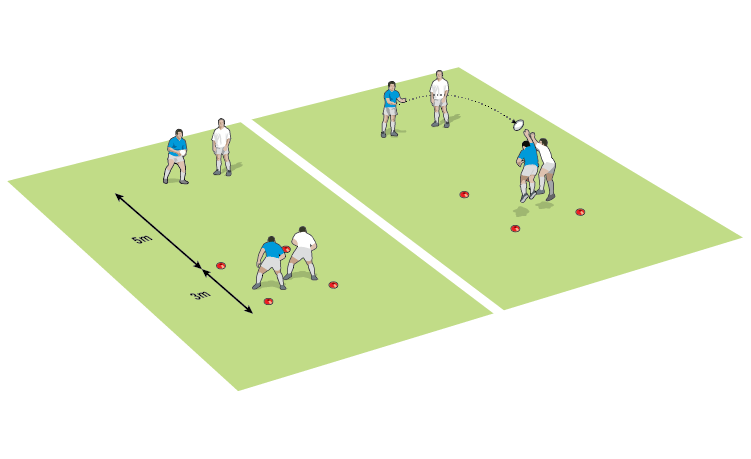
In the kick-and-catch game, I started with 10m boxes, but made them a bit bigger because the players were quick enough to move into position.
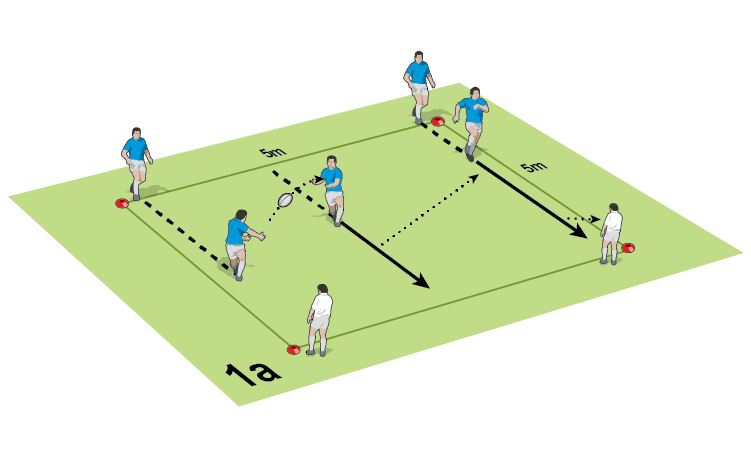
With the handling decision-making game, I originally didn’t have the cones inside the box. The defenders were just covering around the outside and, in the end, just cut corners.
Instead of shouting at them, I allowed them to run anywhere they liked. However, they couldn’t intercept passes, and could only make a touch two steps from the try lines.
It was a sort of ’player-coach solution’, as the players were breaking the rules so much.
The key was that it was a rule that didn’t have much impact on behaviour. How many players have to run around a box in a match situation? So, I relaxed this rule and the game became more fluid.
Thanks to football (how often can you say that?!) for providing new ways to coach decision-making.
Remember, real decision-making is not what you think is the best way to achieve an outcome. The players select from a number of solutions, some of which will be better than others.
They will then really understand when to use their techniques and how to do so.
Related Files

Dan Cottrell
Latest Issue
Subscribe Today
Subscribe Today


Newsletter Sign Up
Coaches Testimonials

Gerald Kearney, Downtown Las Vegas Soccer Club

Paul Butler, Florida, USA

Rick Shields, Springboro, USA

Tony Green, Pierrefonds Titans, Quebec, Canada
Subscribe Today
Latest Issue

Be a more effective, more successful rugby coach
In a recent survey 89% of subscribers said Rugby Coach Weekly makes them more confident, 91% said Rugby Coach Weekly makes them a more effective coach and 93% said Rugby Coach Weekly makes them more inspired.
Get Weekly Inspiration
All the latest techniques and approaches


Rugby Coach Weekly offers proven and easy to use rugby drills, coaching sessions, practice plans, small-sided games, warm-ups, training tips and advice.
We've been at the cutting edge of rugby coaching since we launched in 2005, creating resources for the grassroots youth coach, following best practice from around the world and insights from the professional game.
