
 close
close


 LOGIN
LOGINRugby Coach Weekly is the largest digital resource for youth coaches, trusted by 15,000+ coaches, teachers and parents every month.
-
Coach with confidence
-
Improve your teams faster
-
Run great sessions with less effort
- Expert coaching advice from TOP Coaches
- Training sessions for players from U6 to U17+.
Evasive games to suit low numbers
Editor Dan Cottrell adds further context to two sessions.


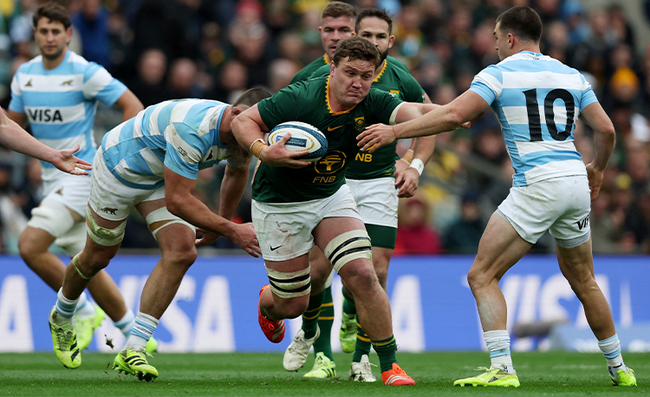
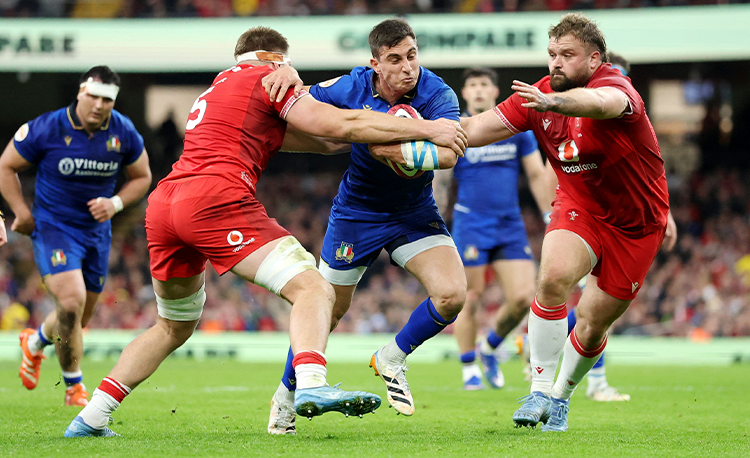
Evasion is the ability of an attacker to avoid a defender. The opposite of evasion is interception. True evasive skills are tested when the defenders are moving too. Therefore, though there is some value in players dodging in and out of poles, or stepping nimbly through ladders, these are essentially static objects.
If you can create some form of game, then both the defenders and the attackers are working on the most effective footwork and decision-making to win. Many of these games are either a form of touch rugby or a variation on playground games, like “bulldogs”.
This leads to a coaching challenge: the evasive ability of different players. Each player brings their own strengths to rugby, but the larger lifters and shifters aren’t going to prosper in a game where total avoidance wins.
That’s not to say that they don’t need to have better evasive skills. Any movement which takes a player a little further away from a tackler is better than none. Plus, in defence, the closer a player can get to making a tackle, the more effective the tackle.
Let’s make these adjustments to our training:
- Matching up
- Handicapping
- Adapting the outcomes
- Being realistic
Matching up
In an evasive game, simply split the groups up into appropriate speeds, so quick player against quick. This form of differentiation helps build confidence in one sense, though if you are identified by a coach as “slow” you might feel hard done by.
Handicapping
A form of adaption, but you can start different types of players from different starting points. This could be simply a distance or being allow to set off at a different time.
Adapting the outcomes
You can give extra credit to certain players if they can make a “touch” on an attacker. For example, any prop who makes a two-handed touch on a backline player is rewarded with a turnover ball to their team.
Being realistic
Sometimes, the game has to match the real circumstances. The players have to adapt and make the best of their ability. However, you can make the players work together to adjust their roles in defence, just like they would in a match.
For example, in a game situation, it should be that a slower player would stand closer to their defensive partners.
Mix up your approaches, so sometimes the slower players have more of a chance, and sometimes they need to adapt. They shouldn’t feel special, but they do need a chance to develop too.
On page 4 we have some opportunities to try out some of these ideas.
Why do players run sideways?
The first principle of attacking rugby is to gain possession. Then it’s to go forward. Yet, and even amongst more experienced players, plenty of attackers still run sideways.
There is some sense in this. When the ball carrier is faced with a line of defenders, the space is on the end of the line, not between the defenders. Going forward would mean just running into the defenders. Even if the ball carrier can make a pass, the next player might well be faced with the same scenario.
However, there is space between defenders and if the ball carrier is clever enough, they can create even more space with good evasive skills. That’s the main theme of what we are talking about in the article above and why we suggest you use the activity on page four to develop more awareness of where the space is.
But what happens when the ball carrier is outnumbered. They can’t run backwards, though you will know some players who will try! We should give them the confidence to run forwards and create the best outcome, even if it does mean being tackled.
You can adapt the tag exercise on page 8 to do just that. The ball carrier will probably get tackled. But they do have a chance of crossing the line out of the box, and that’s increased if they get to the edges of the defenders.
Tell the players to expect to fail more than they will succeed. Also match up the player’s sizes because there’s no point to a large size mismatch in this particular exercise.
From experience, this session can get quite rough. Make sure gumshields are in place and players are physically prepared.
Related Files

Dan Cottrell
Latest Issue

Subscribe Today
Subscribe Today

Newsletter Sign Up
Coaches Testimonials

Colin Shaw

Gary Lee Heavner
Subscribe Today
Latest Issue
Be a more effective, more successful rugby coach
In a recent survey 89% of subscribers said Rugby Coach Weekly makes them more confident, 91% said Rugby Coach Weekly makes them a more effective coach and 93% said Rugby Coach Weekly makes them more inspired.
Get Weekly Inspiration
All the latest techniques and approaches


Rugby Coach Weekly offers proven and easy to use rugby drills, coaching sessions, practice plans, small-sided games, warm-ups, training tips and advice.
We've been at the cutting edge of rugby coaching since we launched in 2005, creating resources for the grassroots youth coach, following best practice from around the world and insights from the professional game.
