
 close
close


 LOGIN
LOGINRugby Coach Weekly is the largest digital resource for youth coaches, trusted by 15,000+ coaches, teachers and parents every month.
-
Coach with confidence
-
Improve your teams faster
-
Run great sessions with less effort
- Expert coaching advice from TOP Coaches
- Training sessions for players from U6 to U17+.
Attack with no pace – tough ask
Editor Dan Cottrell adds further context to two sessions.


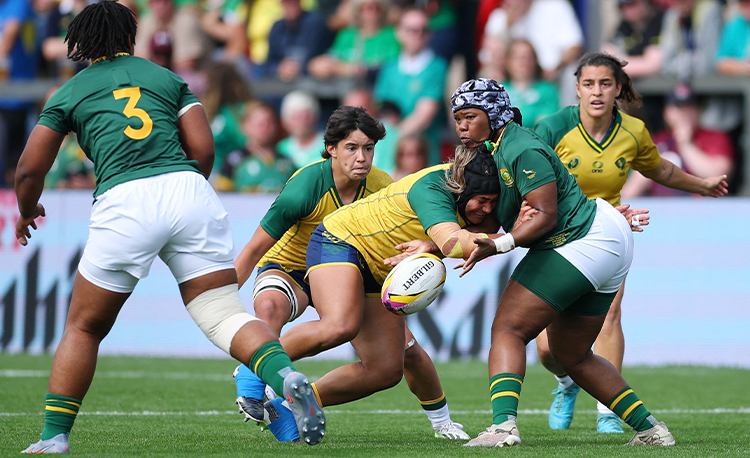
When I first used the tough attacking challenge on page 4 over ten years ago, it was with a group of talented senior players.
We arrived at the session to find that the floodlights were only functioning on one side of the pitch. A rapid rearrangement of the plan meant that this decision-making exercise moved to the side of the pitch.
We played a game where the pitch was only 5m long. In other words, we played between the touchline and the 5m line.
Because we were working in a carousel, the first group (of three groups) got it. When I say got it, they quickly understood the problems they faced, adjusted their tactics and began to become successful. I was particularly pleased that they communicated positively.
The second and third groups were less successful, and one of the groups were quite grumpy. Their communication was not very positive and mostly complained about the point of the game.
Afterwards, my reflections were that it differentiated between players who were up for a challenge and those who just happy to be told how to play the game.
I also realised that if you take away “pace”, the game of rugby is extremely hard. That’s because you normally advance the ball by going forward. If you can’t go forwards, you pass backwards. With no run-up possible, there’s little or no momentum at the tackle. Overall, the challenge is to find some form of go-forward.
To win this game, in a 5m area, the players should use lots of different passes, lateral movement and quick steps. But also, they can exert their physicality, bump off tackles and manipulate defenders in the contact area.
Essentially, they must work a lot harder in support. Once they have passed the ball, it’s likely they will have to move backwards first. And, they will need to communicate more accurately.
Sometimes a player might find themselves in space, but a simple pass is blocked by defenders. A simple “pass” or “yes” won’t help the ball carrier thread or loop pass through to that attacker.
These are challenges that the players find hard to solve. There’s no room for lazy skills. There’s plenty of room for inventive thought. On a cold November evening after a day at work, that’s not always what they want to do.
Reflection for new sessions
My realisation on “pace” didn’t come for another few seasons. That’s experience for you. However, what I’ve changed for these sessions is the way I communicate the potential outcomes.
First, I say this is going to be a tough game. Any team that scores a try will have done well.
Second, I ask the players to recalibrate their success criteria after a few turns in the game. They might say that retaining possession is important or they need to go forward. It’s up to them to action what they suggest.
Lineout session lessons
After speaking to Neil Harris about lineouts, whose article is on page 6, I found myself covering an emergency lineout session. The forwards coach was tied up in a work meeting, so I had a WhatsApp list of lineouts to cover.
Arriving at training, it turned out that about four of the players who were important to these plays were not available either. Does this sound like a familiar problem? That meant I had 11 players.
This was my emergency session.
Game to warm up
We split into two attacking pods, A and B, with a thrower each, and a defending pod. The three pods wandered around 10m box, while the throwers circled outside.
When I shouted a letter, that attacking pod received a ball from their hooker, while the defending pod tried to stop them. We played a couple of turns, and then rotated the defenders.
Contest and game
I split the players into four groups, A, B, C and D. A and B played C and D in a game of touch, where the touched player had to go to ground to pop the ball. There was no offside, so though the players had to pass the backwards, they could also kick. These forwards sort of enjoyed that.
After about 30 seconds of play, I shouted a pair of letters. They went into a lineout area, where they had about 15 seconds to decide on their lineout and then set up to receive the ball. The other pair of letters defended.
It was all pretty chaotic, with some success. I think the forwards didn’t know what to expect, so it may be a bit smoother next time.
Related Files

Dan Cottrell
Latest Issue

Subscribe Today
Subscribe Today
Newsletter Sign Up
Coaches Testimonials

Colin Shaw

Gary Lee Heavner
Subscribe Today
Latest Issue
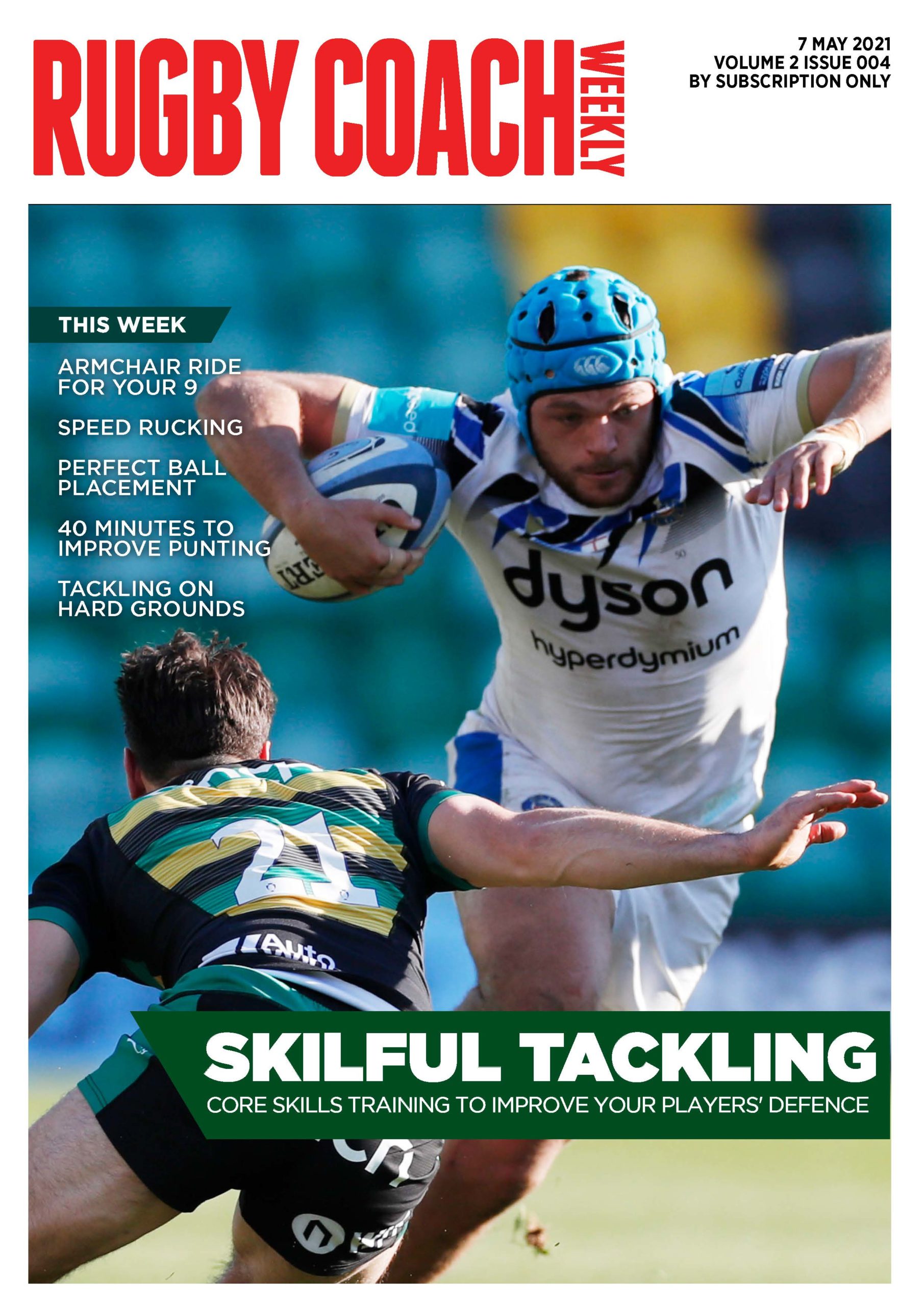
Be a more effective, more successful rugby coach
In a recent survey 89% of subscribers said Rugby Coach Weekly makes them more confident, 91% said Rugby Coach Weekly makes them a more effective coach and 93% said Rugby Coach Weekly makes them more inspired.
Get Weekly Inspiration
All the latest techniques and approaches


Rugby Coach Weekly offers proven and easy to use rugby drills, coaching sessions, practice plans, small-sided games, warm-ups, training tips and advice.
We've been at the cutting edge of rugby coaching since we launched in 2005, creating resources for the grassroots youth coach, following best practice from around the world and insights from the professional game.
