
 close
close


 LOGIN
LOGINA medical trick to improve skills
Editor Dan Cottrell adds further context to two sessions.


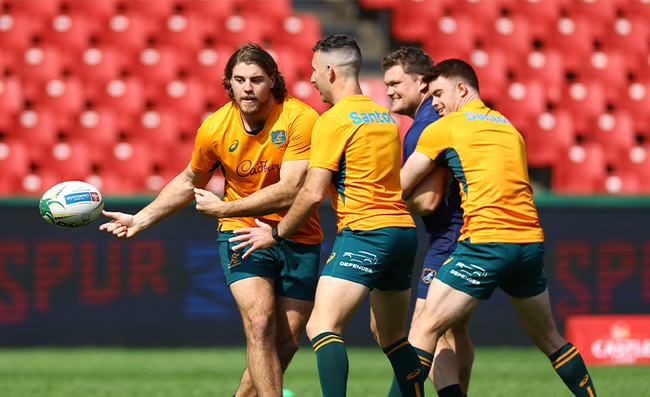
I love messy training. I didn’t but, now, I’m far more confident in what I’m looking for in a training session. I can identify what I need before the session and then adjust my objectives as the session unfolds.
That’s my preference, and some of you out there will also enjoy that approach. Others will prefer a more ordered method, leading to more pressure and chaos by the end. I really don’t think one way is significantly better than the other.
I also think I need to make sure that some of my practices are less chaotic. That’s because the players prefer it that way. I’m not trying to make them too comfortable. Instead, I want to make them confident.
Confidence is a key factor in motivating players to be more daring. However, as you will see from the following development of a practice, the technique at the start of the practice isn’t the one makes the difference when you are working on the final piece of the training jigsaw.
It’s a trick that the medical profession use. Remember the times you’ve gone to the surgery for a minor ailment that requires some sort of injection. The medic engages you with some light conversation which is nothing to do with the fact they are going to stick a sharp object into your body. The anaesthetic does dull the pain a little, but it’s still a shock. Because your mind is elsewhere, you are confident enough to brace yourself when they suddenly say: “You will feel a small scratch”. In the next moment, the needle breaks the skin and in goes the fluid.
Let’s put that into a rugby context. You work on something the players find easy to improve upon. You do it in a controlled environment, perhaps picking out one specific technical point. The players develop, or feel they have developed at least. In a couple of weeks’ time, you will be returning to it to make sure they are continuing to improve.
Now, you develop the practice, ostensibly to put the technique under pressure. The developments become ever more chaotic. Mistakes are made and the technique suffers. That doesn’t matter. You should encourage and praise effort.
The real outcome is decision-making, not the technique. The players will be making numerous decisions where the new technique is only one small part of it. Because they have been focusing on the technique, they won’t fear the enormity of the task in front of them.
If you had started with the decision, then given them some techniques, they may well have struggled to get going and make any progress. The trick is the change of focus.
On page 4, the passing exercise at the start is the confidence builder. It gives the players some sense of success before they are under pressure to make decisions.
By the end of the session, there’s plenty of chaos. Skills will be tested to the full. Sometimes they will use the techniques from earlier. Don’t expect it. The real learning comes from their decision-making efforts.
Blind passes: a risk worth taking
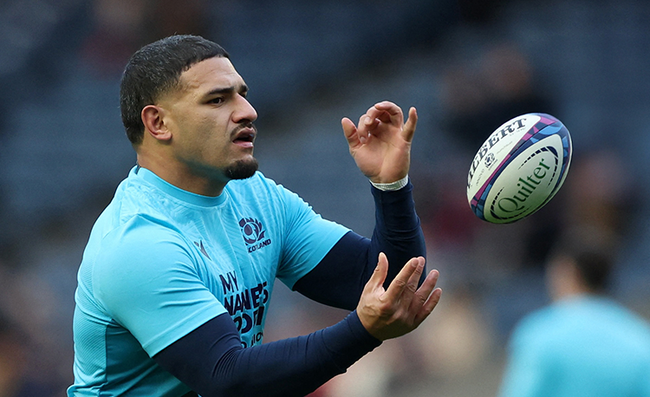
A blind pass, a pass where the passer doesn’t look at where the pass is going, is real crowd pleaser. It’s not always a coach pleaser though. But we should encourage our players to practise them in as many different circumstances to understand when to use them.
There are two reasons why a player might pass without looking at the potential receiver. The first is a deception. A defender often reads the attack from where the passer is looking. A pass and catch close to the tackle line can often lead to a line break if the tackler is slightly off-balance. A late pass to an unexpected receiver might just do that.
The second reason is the nature of the play. A loop, where the receiver is running behind the passer before straightening up, means it’s almost impossible for the passer to look around to find where the target is.
In both cases, there needs to be a degree of trust mixed with a sympathetic pass. The pass itself is left in the space where the receiver is likely to be. To do that, it must be lifted rather than pushed into that space.
The receiver needs to know where the pass is going, timing their run to meet the pass. That comes from plenty of attempts with their team-mates, learning and sensing how they turn their shoulders to initiate the pass.
Try out our session on page 7 to see how your players might develop this pass, and gain a sense of when to use it. Also, challenge the players to play this at game speed. Of course there will be mistakes. You might see improvements in this session, but I would guess it would a few sessions more before they become significantly better.
Related Files

Dan Cottrell
Latest Issue
Subscribe Today
Subscribe Today

Newsletter Sign Up

Coaches Testimonials

Gerald Kearney, Downtown Las Vegas Soccer Club

Paul Butler, Florida, USA

Rick Shields, Springboro, USA

Tony Green, Pierrefonds Titans, Quebec, Canada
Subscribe Today
Latest Issue

Be a more effective, more successful rugby coach
In a recent survey 89% of subscribers said Rugby Coach Weekly makes them more confident, 91% said Rugby Coach Weekly makes them a more effective coach and 93% said Rugby Coach Weekly makes them more inspired.
Get Weekly Inspiration
All the latest techniques and approaches


Rugby Coach Weekly offers proven and easy to use rugby drills, coaching sessions, practice plans, small-sided games, warm-ups, training tips and advice.
We've been at the cutting edge of rugby coaching since we launched in 2005, creating resources for the grassroots youth coach, following best practice from around the world and insights from the professional game.
