
 close
close


 LOGIN
LOGINTwo-pass-away
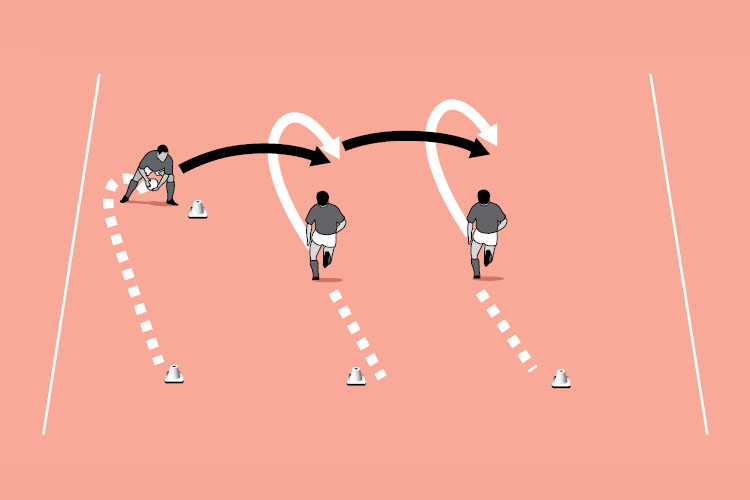
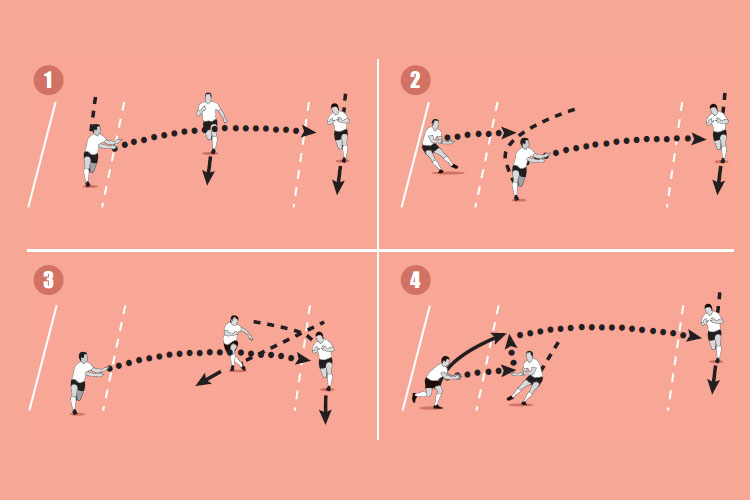
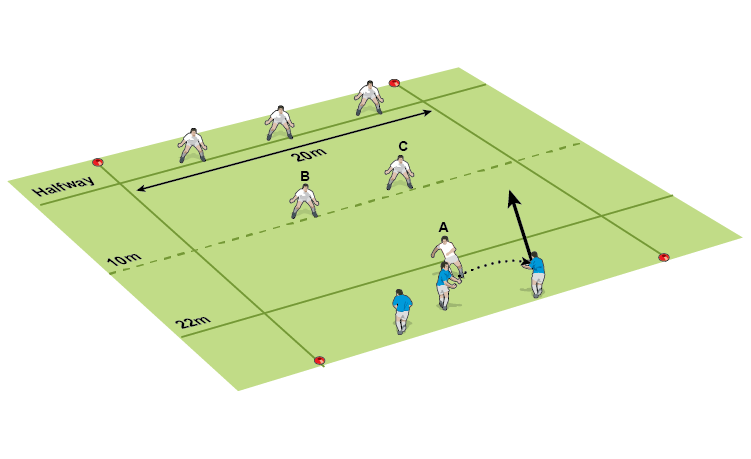
Turnover ball can be as important an attacking weapon as clean set piece ball. Quick use of the turnover ball can make it even more potent. This session builds on the tactic of clearing the ball from the danger area with two passes. The final game situation adds in the key factor of not knowing exactly when the turnover is going to occur.
Warm up time: 5-7
Session time: 5-8
Development time: 5-8
Game time: 15-20
Warm down time: 5-7
What to think about
Your tactics after winning turnover ball. For instance, in your own 22 you might want to clear the ball upfield as far as possible. The opposition probably won’t be in position to field such a kick. Outside your 22 you may want to hold on to the ball more than kick it. Two-pass-away allows your players time to see what is on and then run or kick. Some teams are more comfortable having a set plan from the turnover and others to let the players see what is front of them and play. This decision is very much part of the game plan.set-up
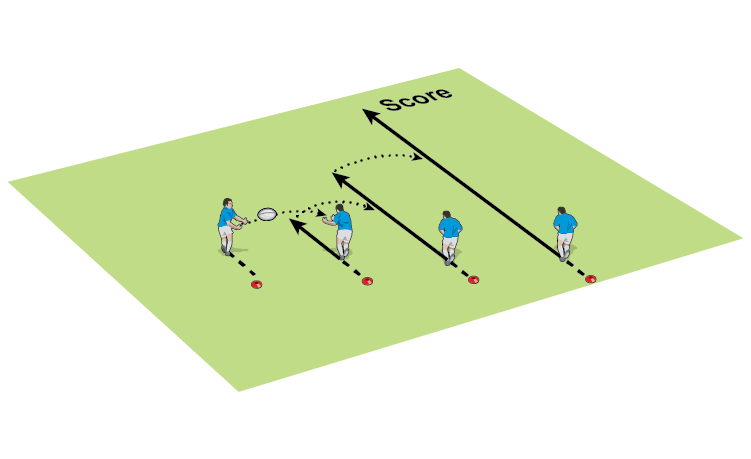
- The first player to the turnover ball must clear it away from the contact area immediately.
- The first receiver must pass it on again quickly.
- The second receiver then weighs up options – run, pass or kick.
What you get your players to do
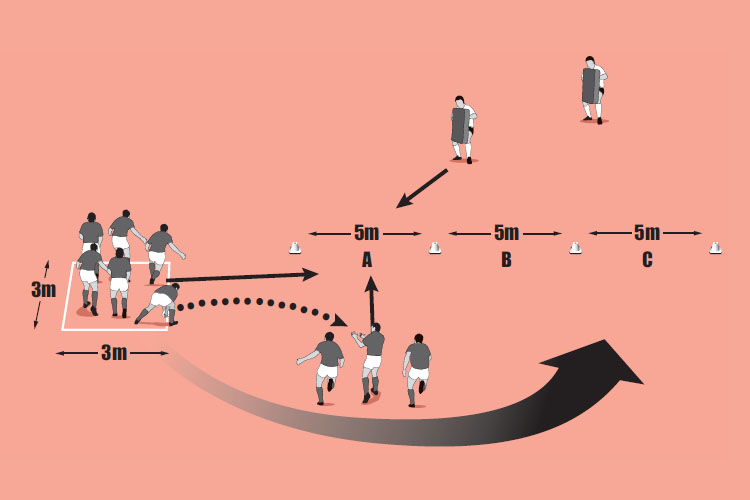
Start three players by some cones. Place a ball about three metres in front of them beside another cone. This represents the point of a turnover. Shout “GO” and one player runs to the ball. The other two run forward and to one side of the ball and then turn to face back towards their original cones. The player at the ball passes to the nearest player who passes on to the furthest player. This last player runs back to his starting cone, with the other two players in support. Check that the two passes happen before the last receiver has run back in front of the original ball position.Be a more effective, more successful youth rugby coach
- Win more games, without sacrificing the crucial element of fun
- Develop every player, regardless of vast differences in ability
- Run a respected, professional programme - even with a full-time job and limited time
Subscribe for full access
Or register and unlock 2 free articles,
receive our weekly newsletter, and
get a FREE coaching e-book.
Or if you are already a subscriber login for full access.

Dan Cottrell

Latest Issue

Subscribe Today
Subscribe Today
Newsletter Sign Up

Coaches Testimonials

Colin Shaw

Gary Lee Heavner
Subscribe Today
Latest Issue
Be a more effective, more successful rugby coach
In a recent survey 89% of subscribers said Rugby Coach Weekly makes them more confident, 91% said Rugby Coach Weekly makes them a more effective coach and 93% said Rugby Coach Weekly makes them more inspired.
Get Weekly Inspiration
All the latest techniques and approaches


Rugby Coach Weekly offers proven and easy to use rugby drills, coaching sessions, practice plans, small-sided games, warm-ups, training tips and advice.
We've been at the cutting edge of rugby coaching since we launched in 2005, creating resources for the grassroots youth coach, following best practice from around the world and insights from the professional game.
