
 close
close


 LOGIN
LOGINThree point stance
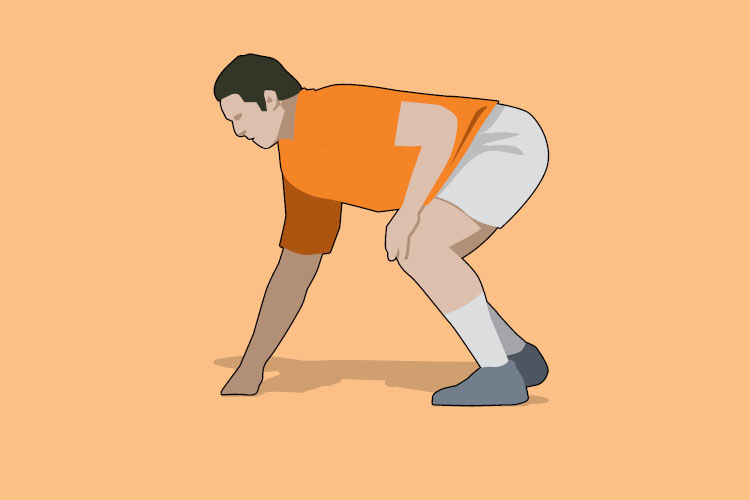
The three point stance is used in American Football, where getting low and exploding forward is essential for players in the front line. Defending the channels close to a ruck is very similar. Players need to be ready to go but patient, waiting for the ball to be played. It’s then a race to get to the gain line and stop the attack.
Warm up time: 7-10
Session time: 9-12
Development time: 9-12
Game time: 15-20
Warm down time: 7-10
What to think about
Slow possession from rucks is difficult for teams to attack from. Generally teams will try to speed up slow ball by picking and driving close to the breakdown with close support players. Tackling offensively at the sides of the ruck can prevent teams from turning slow ball into quick ball. To do this the defenders close to the ruck have to get low and explode forward as soon as the ball is played. The defenders’ role is to knock back runners who come into their channels. They have to stop the runner getting over the gain line so his support players don’t have forward momentum.set-up
- Get in low powerful positions when defending close to the ruck.
- Watch the ball closely and move forward quickly as soon as it is played.
- Tackle the ball carrier in pairs with strong offensive tackles.
What you get your players to do
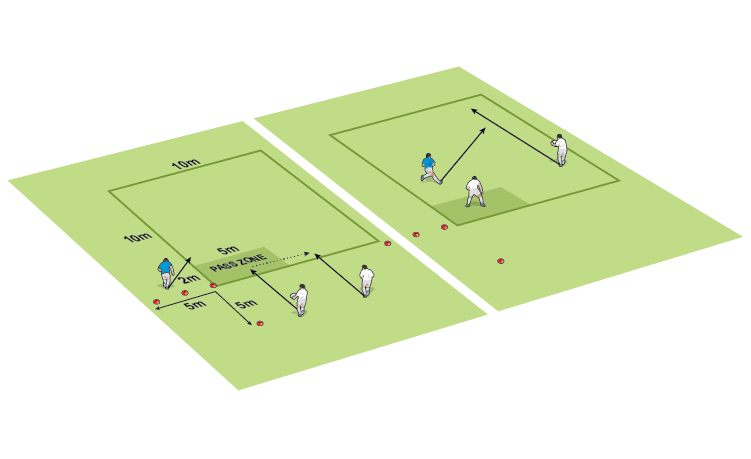
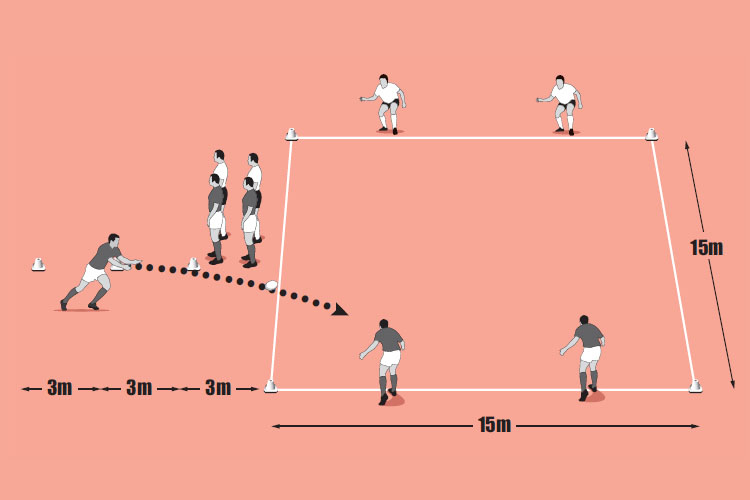
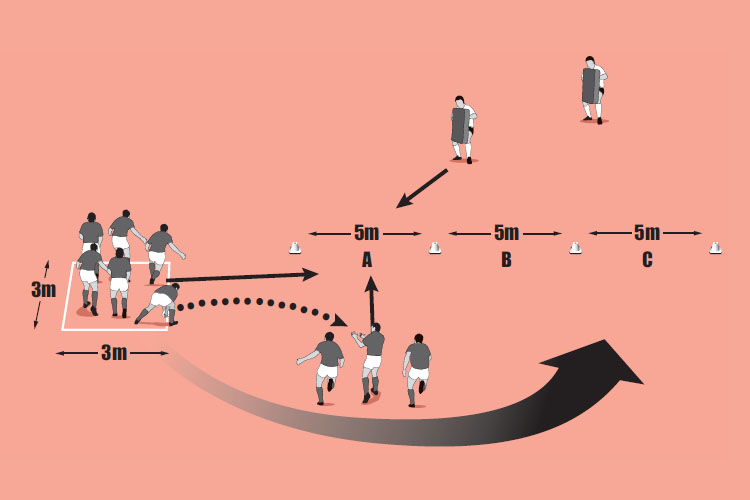
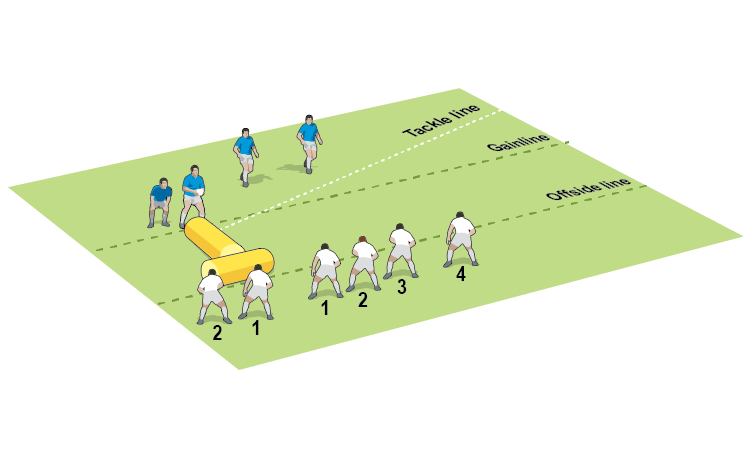
Put four defenders on the fringes of a ruck represented by four cones. Stand three attackers directly behind the ruck holding ruck pads. On your signal (from behind the defenders) the first attacker chooses a side and runs at the defenders. They knock him back as a pair. The defenders then reset as quickly as possible and the next attacker goes. The same four players defend six attacks and then swap over.Be a more effective, more successful youth rugby coach
- Win more games, without sacrificing the crucial element of fun
- Develop every player, regardless of vast differences in ability
- Run a respected, professional programme - even with a full-time job and limited time
Subscribe for full access
Or register and unlock 2 free articles,
receive our weekly newsletter, and
get a FREE coaching e-book.
Or if you are already a subscriber login for full access.

Dan Cottrell
Latest Issue

Subscribe Today
Subscribe Today
Newsletter Sign Up

Coaches Testimonials

Colin Shaw

Gary Lee Heavner
Subscribe Today
Latest Issue
Be a more effective, more successful rugby coach
In a recent survey 89% of subscribers said Rugby Coach Weekly makes them more confident, 91% said Rugby Coach Weekly makes them a more effective coach and 93% said Rugby Coach Weekly makes them more inspired.
Get Weekly Inspiration
All the latest techniques and approaches


Rugby Coach Weekly offers proven and easy to use rugby drills, coaching sessions, practice plans, small-sided games, warm-ups, training tips and advice.
We've been at the cutting edge of rugby coaching since we launched in 2005, creating resources for the grassroots youth coach, following best practice from around the world and insights from the professional game.
