
 close
close


 LOGIN
LOGINPush pass basics
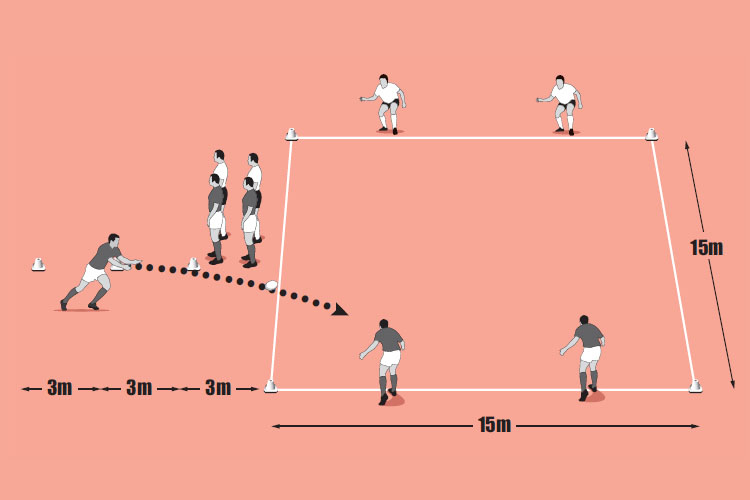
This is a great revision session because it works on core skills under pressure, especially short passing when the ball carrier is running “offline”. That means he is either running towards the intended receiver or away. This will test how much power he needs to put into the pass and highlights good timing.
Warm up time: 5-7
Session time: 8-10
Development time: 10-15
Game time: 10-15
Warm down time: 5-8
What to think about
This is a short passing exercise and session so passes should all be “pushed”, not spun. If the player “spins” the pass, he will have to wind it up, reducing the time available. Spin passes also require the player to turn his hands over the ball, further reducing accuracy. Make a big fuss about accurate passes. Ask players to judge for themselves whether they are improving – and what they can do differently. Answers should include: “Look where I am passing”, “Follow my hands through to the target”, “Push the ball in front of the receiver”.set-up
- Attack the gap and then pass the ball.
- Pass hard, with hands following the ball to the target.
- Look at the target!
What you get your players to do
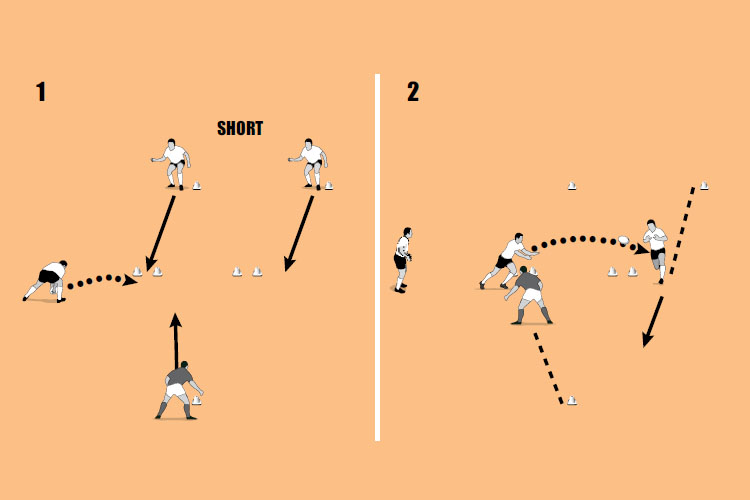
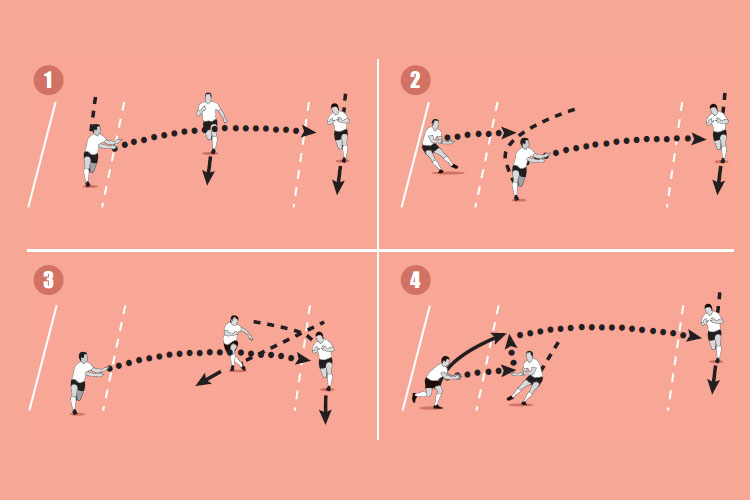
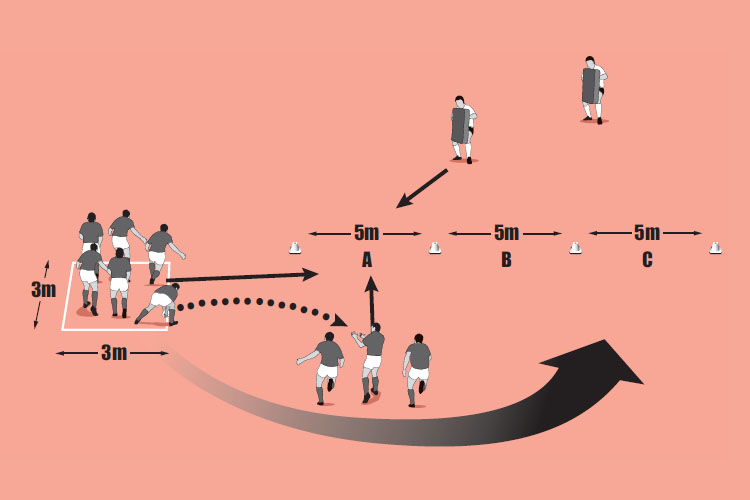
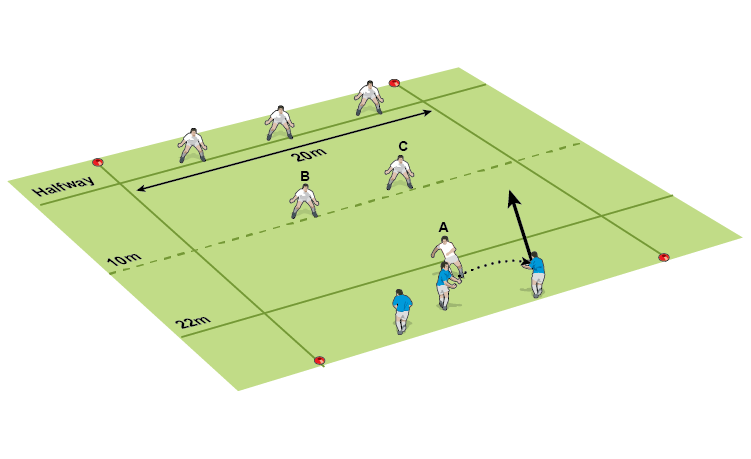
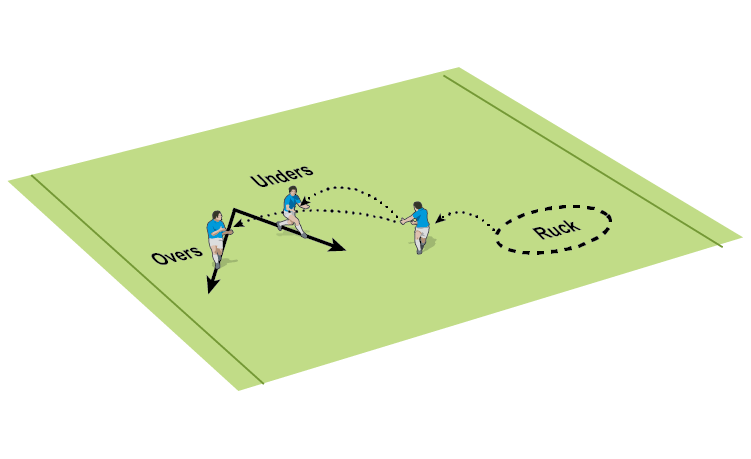
Put an attacker 5m away from two coned gates. Get him to run forward and either go “short” or “wide” through the gates. This means either nearer to the passer or further away to receive a ball from a feeder at the side. He then passes the ball to another attacker, who has to time his run to take the final pass at pace. At the same time a defender comes forward to make sure the first receiver has a reason to pass (see pictures 1 and 2).Be a more effective, more successful youth rugby coach
- Win more games, without sacrificing the crucial element of fun
- Develop every player, regardless of vast differences in ability
- Run a respected, professional programme - even with a full-time job and limited time
Subscribe for full access
Or register and unlock 2 free articles,
receive our weekly newsletter, and
get a FREE coaching e-book.
Or if you are already a subscriber login for full access.

Dan Cottrell
Latest Issue

Subscribe Today
Subscribe Today
Newsletter Sign Up
Coaches Testimonials

Colin Shaw

Gary Lee Heavner
Subscribe Today
Latest Issue
Be a more effective, more successful rugby coach
In a recent survey 89% of subscribers said Rugby Coach Weekly makes them more confident, 91% said Rugby Coach Weekly makes them a more effective coach and 93% said Rugby Coach Weekly makes them more inspired.
Get Weekly Inspiration
All the latest techniques and approaches


Rugby Coach Weekly offers proven and easy to use rugby drills, coaching sessions, practice plans, small-sided games, warm-ups, training tips and advice.
We've been at the cutting edge of rugby coaching since we launched in 2005, creating resources for the grassroots youth coach, following best practice from around the world and insights from the professional game.
