
 close
close


 LOGIN
LOGINRugby Coach Weekly is the largest digital resource for youth coaches, trusted by 15,000+ coaches, teachers and parents every month.
-
Coach with confidence
-
Improve your teams faster
-
Run great sessions with less effort
- Expert coaching advice from TOP Coaches
- Training sessions for players from U6 to U17+.
Overlap cover


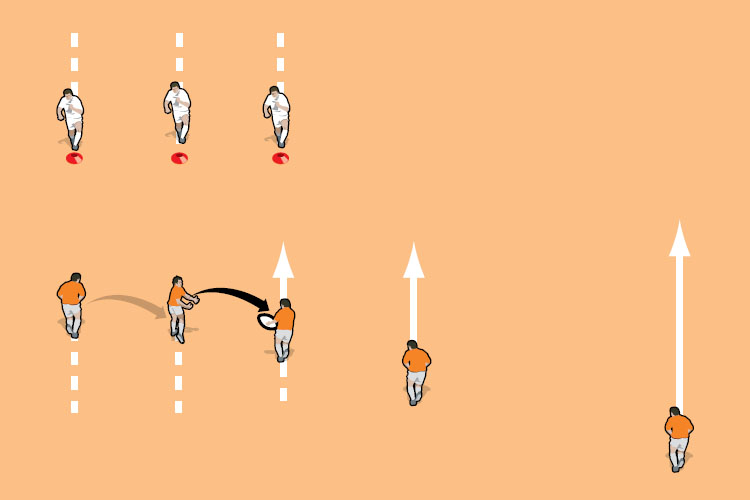
When your opponents have extra players in attack and create an overlap, it is crucial your team works hard to scramble back. Players must slide across in defence to cut down the attack’s space and tackle the ball carrier. This session outlines how to implement such an overlap cover.
Warm up time: 7-10
Session time: 10-15
Development time: 10-15
Game time: 10-15
Warm down time: 7-10
What to think about
The overlap cover is rarely practised and may seem negative as it assumes the attack has tied up a number of your players and created an overlap. You obviously don’t want this situation to occur so work on initial defensive strategies. However, your opponents will create overlaps at some point and they have to be dealt with. With many overlaps, play will be in the wider channels and it is important your team uses the touch line as an extra defender. Space for the attack will disappear as your team covers across cutting down the attackers’ options and making the tackle more straightforward.set-up
- Slide across so the widest defender covers and tackles the widest attacker.
- Defending players inside, cover space and cover the inside supporting attackers.
- Work together as a defensive group, having confidence each team mate will do his job.
What you get your players to do
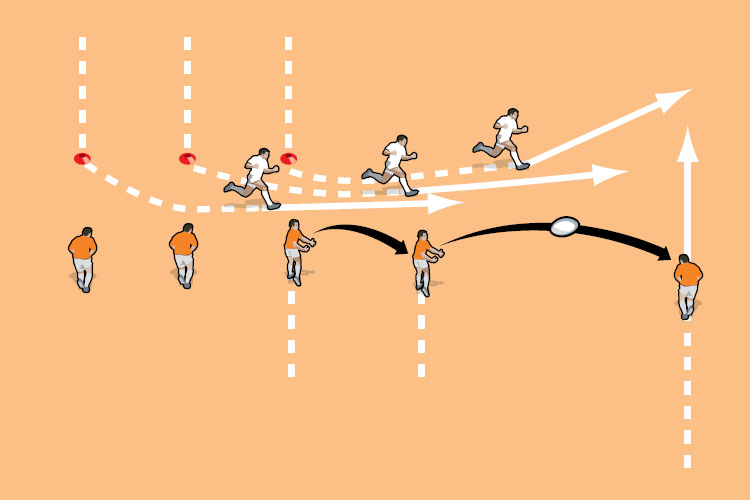
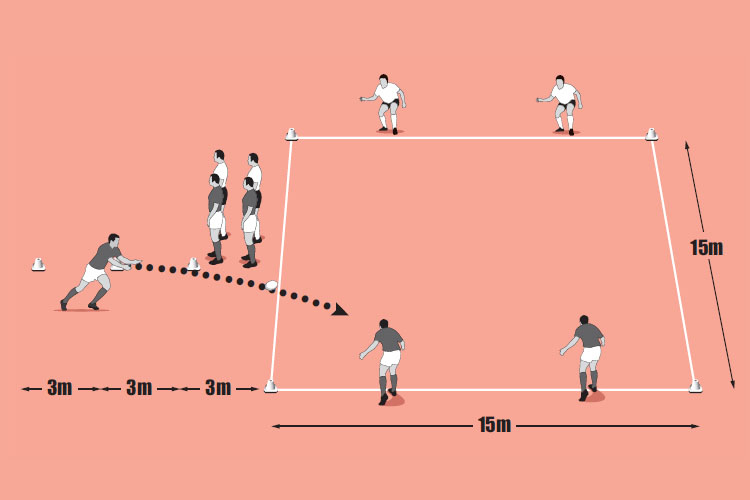
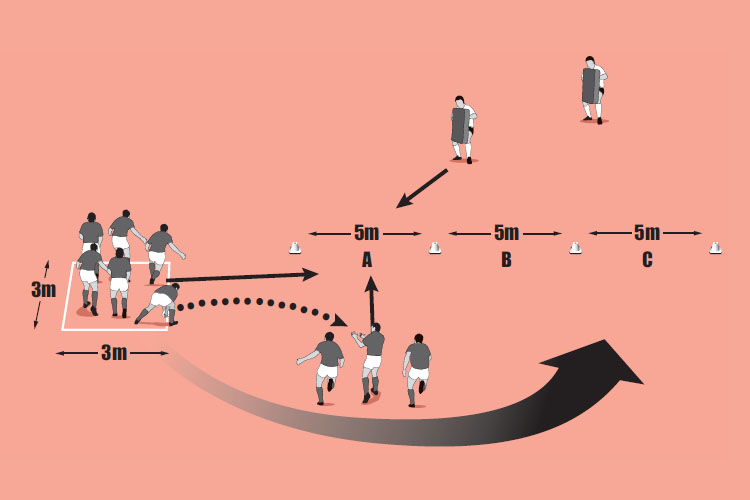
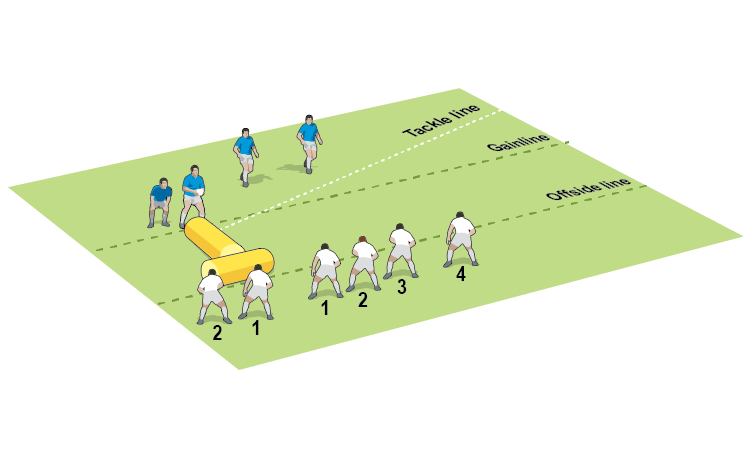
Split your players into groups of three defenders and five attackers. Form the attackers into line, with the three defenders standing opposite the first three attackers. Have the attack move forward and pass the ball along the line. The three defenders move forward to cover the first three attackers and must touch a cone in front of them before sliding across to cover the overlap. The defenders then work hard to cover the overlap and make the tackles.Development
- Vary how far the cones are set in front of the defenders. Moving them closer lets the defenders cover across quicker, while farther away puts the defenders under more pressure to cover the overlap.
- The wide cover tackles tend to be made by the same defenders. Swap your players round so they can all perform this movement and skill.
- Add a covering full back in defence.
Related Files
Game situation
Split into eight attackers and five defenders. All restarts are a tap and pass. The try line is marked out with cones. Two cones placed 10 metres in from each corner create a middle zone and two wide zones. The attacking team get two points if they score in the wider zones and one point if scoring in the middle zone. This encourages them to move the ball wide and use their extra players, forcing the defence to cover across and stifle the overlap.
What to call out
- “Move up quickly”
- “Slide as a three”
- “Get out wide fast and cut down space”
- “Force the attack to the touch line”
- “Cover the inside pass”

Dan Cottrell
Latest Issue

Subscribe Today
Subscribe Today
Newsletter Sign Up
Coaches Testimonials

Colin Shaw

Gary Lee Heavner
Subscribe Today
Latest Issue
Be a more effective, more successful rugby coach
In a recent survey 89% of subscribers said Rugby Coach Weekly makes them more confident, 91% said Rugby Coach Weekly makes them a more effective coach and 93% said Rugby Coach Weekly makes them more inspired.
Get Weekly Inspiration
All the latest techniques and approaches


Rugby Coach Weekly offers proven and easy to use rugby drills, coaching sessions, practice plans, small-sided games, warm-ups, training tips and advice.
We've been at the cutting edge of rugby coaching since we launched in 2005, creating resources for the grassroots youth coach, following best practice from around the world and insights from the professional game.
