
 close
close


 LOGIN
LOGINB' defender at rucks: Stop the 9
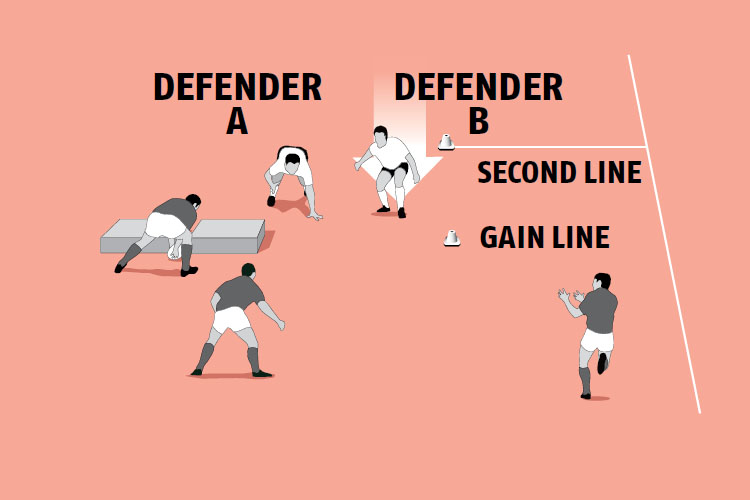
When Mike Phillips scooted through the French defence to score in the 2011 World Cup semi-final, it was not the fault of the first ruck defender. The second ruck defender, known as the “B” defender is supposed to pick up this player. This session concentrates on the “B” defender, the one who is second out from the side of a defensive ruck. His role is to either stop the 9 running or, if the 9 passes, close down the space inside the 10. It is a key role that requires good vision and decision making.
Warm up time: 5
Session time: 6-9
Development time: 6-9
Game time: 15-20
Warm down time: 7
What to think about
There are a number of options on the distance of spacing between defenders at the side of the ruck. It is important that they do not bunch. Otherwise one long pass can cut out five or six players. It is probably best to have two arms’ length between the close ruck defenders and then the third player out marks the first receiver. The “B” defender should have a good sight of the ruck and the potential options. He will be wary of the darting 9.set-up
- Make sure that the first ruck defender is in place before setting up the “B” defender.
- Be dynamic and on your toes, ready to move forward and take on the 9, or move out to mark inside the first receiver.
- Keep onside – you will be in the referee’s eyeline.
What you get your players to do
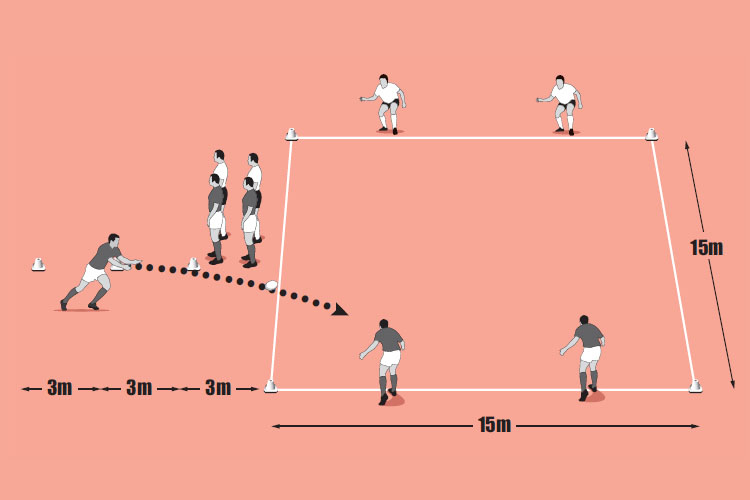
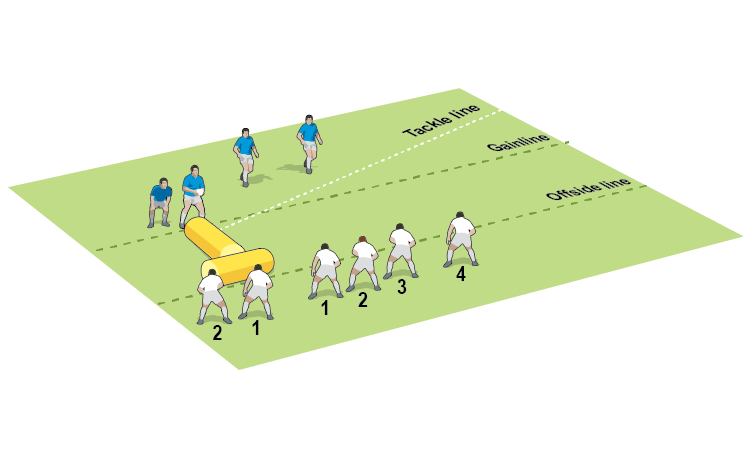
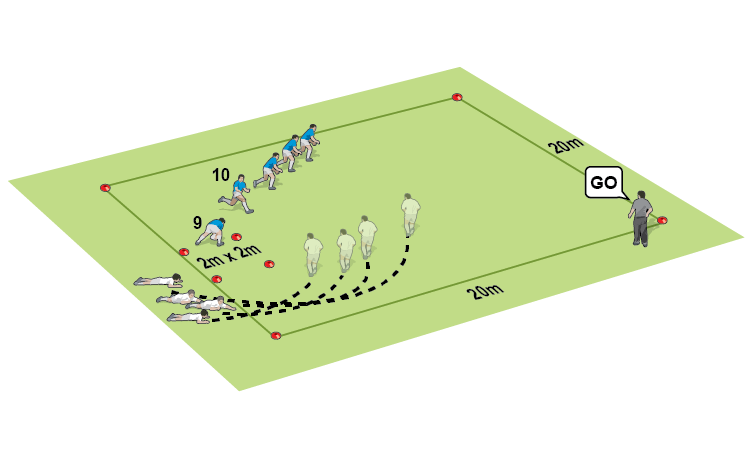
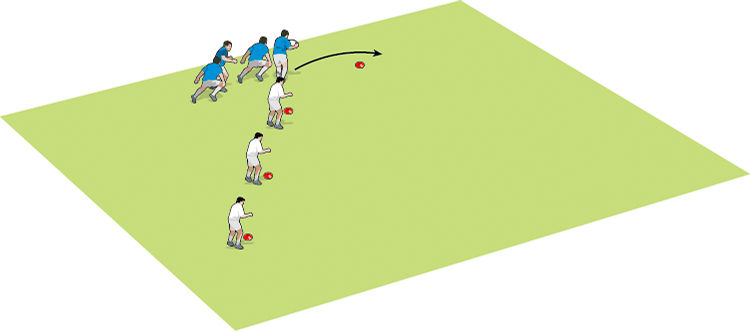
Set up two ruck pads and a ball as in picture 1. They should be no more than 10m from a touchline. Mark out a gain line and then another line which will be an acceptable distance to allow the first receiver to run (given that the “B” defender will have to move up and out). Put two defenders in the “A” and “B” positions beside a ruck. Have a 9, inside player and first receiver, try to beat the ruck defence (picture 2). Note that the ball is in between the ruck pads, so the 9 has to dig the ball out. Ideally, use full tackling.Be a more effective, more successful youth rugby coach
- Win more games, without sacrificing the crucial element of fun
- Develop every player, regardless of vast differences in ability
- Run a respected, professional programme - even with a full-time job and limited time
Subscribe for full access
Or register and unlock 2 free articles,
receive our weekly newsletter, and
get a FREE coaching e-book.
Or if you are already a subscriber login for full access.

Dan Cottrell

Latest Issue

Subscribe Today
Subscribe Today
Newsletter Sign Up
Coaches Testimonials

Colin Shaw

Gary Lee Heavner
Subscribe Today
Latest Issue
Be a more effective, more successful rugby coach
In a recent survey 89% of subscribers said Rugby Coach Weekly makes them more confident, 91% said Rugby Coach Weekly makes them a more effective coach and 93% said Rugby Coach Weekly makes them more inspired.
Get Weekly Inspiration
All the latest techniques and approaches


Rugby Coach Weekly offers proven and easy to use rugby drills, coaching sessions, practice plans, small-sided games, warm-ups, training tips and advice.
We've been at the cutting edge of rugby coaching since we launched in 2005, creating resources for the grassroots youth coach, following best practice from around the world and insights from the professional game.
