
 close
close


 LOGIN
LOGINRugby Coach Weekly is the largest digital resource for youth coaches, trusted by 15,000+ coaches, teachers and parents every month.
-
Coach with confidence
-
Improve your teams faster
-
Run great sessions with less effort
- Expert coaching advice from TOP Coaches
- Training sessions for players from U6 to U17+.
After the lineout


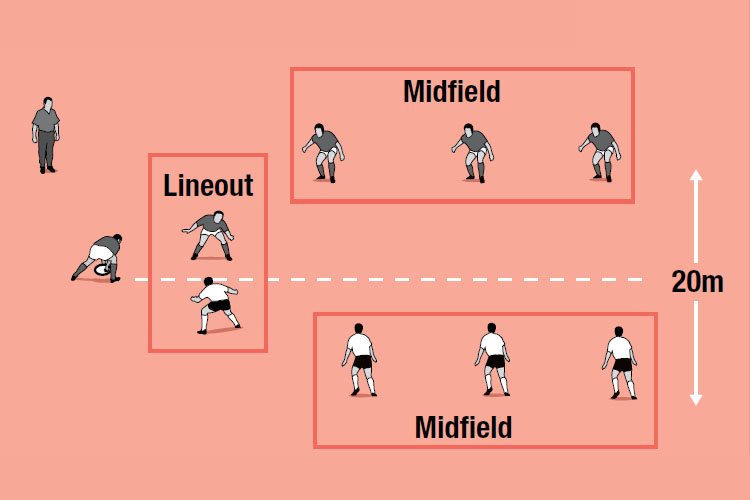
This is a tactical situation based on what happens after winning (or losing) lineout ball. The session fits neatly into in-season training, and as part of the pre-season programme to get players into game mode.
Warm up time: 5-7
Session time: 8-10
Development time: 8-10
Game time: 10-15
Warm down time: 5-7
What to think about
In the lineout you have a better chance than in the scrum of winning opposition ball. So, your team should have a move up their sleeves, even if it is more likely that they will lose the lineout. When players realign from a flat line to create some depth, it can mean taking a few steps backwards. They can instead delay their run onto the ball to maintain that depth. A few steps back is probably preferable, because it is unlikely that the excited player will be able to contain himself if he knows he might receive the ball!set-up
- Adjust your alignment based on whether you have won the lineout ball or not.
- Attack the gain line by running straight forward with the ball.
- In defence, cut down the space quickly, but don’t get drawn out of the line.
What you get your players to do
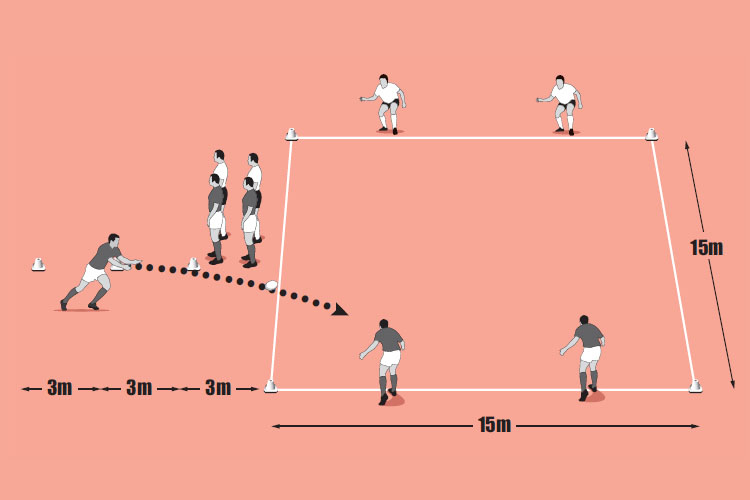
Set up eight players as in the top picture, with a 9 holding the ball. This is the rough shape of the back of a lineout and midfield, though both sets of midfield players must stand flat. Shout which team is going to attack and the 9 moves towards the attacking team and releases the ball. In the meantime, the sets of midfield players realign. The game then becomes live, with the attacking team aiming to get beyond the midpoint (as marked by the dashed line). Ideally, use full tackling.Development
- Swap around the players so the ball is delivered from both sides of the pitch.
- Add more players into the lineout area.
- Change the timings of the delivery from 9.
- Let the teams know the match situation so they can decide whether to kick, pass or run.
Related Files
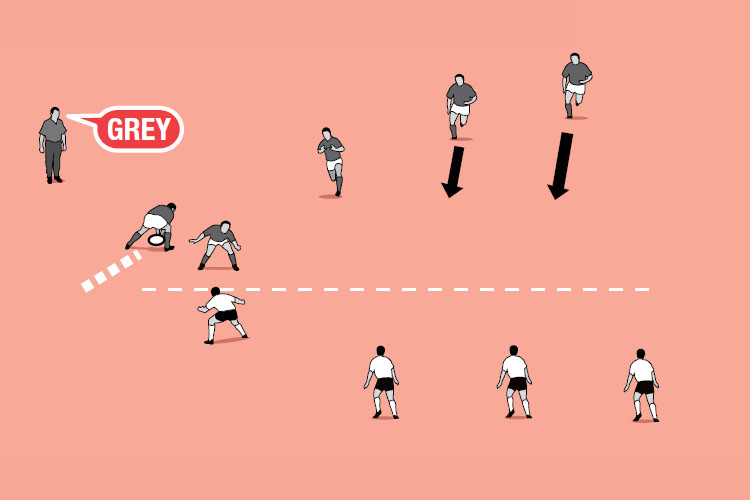
Game situation
Set up the players as in the bottom picture. Have the ball thrown to the two jumpers, who contest for it. The winner passes the ball to his 9 to initiate play. Inevitably, the quality of this pass will vary. Play as in the main session. Develop the game by adding players to the lineout and by asking your team to work on the plays they might employ in a match.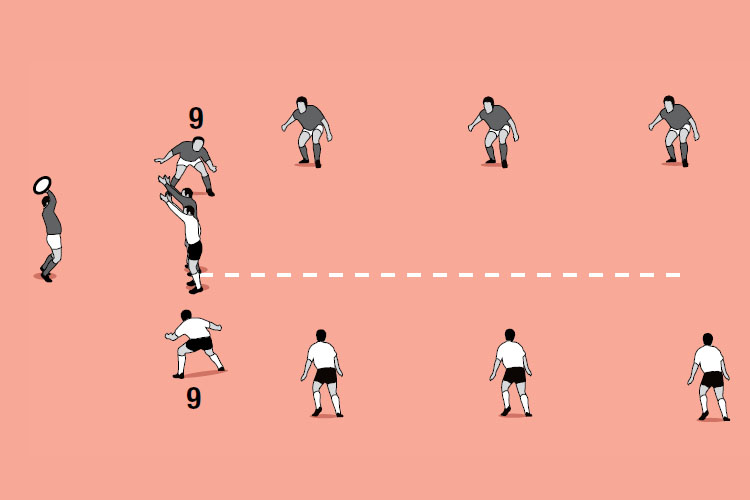
What to call out
- “Realign quickly. Scan as you do so”
- “Pass out to a target player in space”
- “Defenders: communicate as you move up”
- “Defenders: don’t lose your shape”

Dan Cottrell

Latest Issue

Subscribe Today
Subscribe Today
Newsletter Sign Up
Coaches Testimonials

Colin Shaw

Gary Lee Heavner
Subscribe Today
Latest Issue
Be a more effective, more successful rugby coach
In a recent survey 89% of subscribers said Rugby Coach Weekly makes them more confident, 91% said Rugby Coach Weekly makes them a more effective coach and 93% said Rugby Coach Weekly makes them more inspired.
Get Weekly Inspiration
All the latest techniques and approaches


Rugby Coach Weekly offers proven and easy to use rugby drills, coaching sessions, practice plans, small-sided games, warm-ups, training tips and advice.
We've been at the cutting edge of rugby coaching since we launched in 2005, creating resources for the grassroots youth coach, following best practice from around the world and insights from the professional game.
