
 close
close


 LOGIN
LOGINRugby Coach Weekly is the largest digital resource for youth coaches, trusted by 15,000+ coaches, teachers and parents every month.
-
Coach with confidence
-
Improve your teams faster
-
Run great sessions with less effort
- Expert coaching advice from TOP Coaches
- Training sessions for players from U6 to U17+.
8 steps to perfect goal kicking


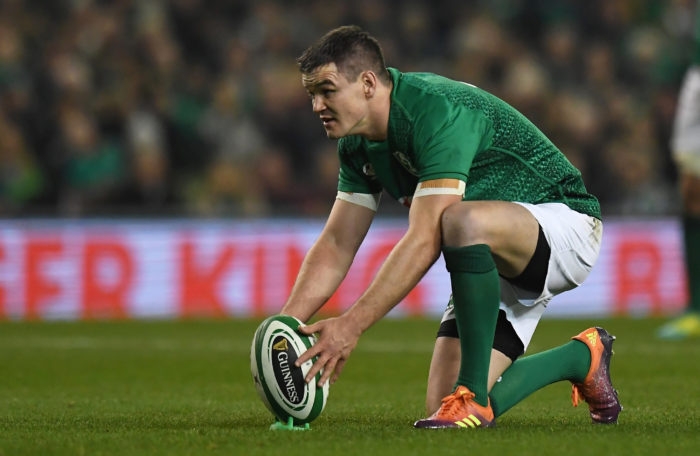
1 Placing the ball
When setting up the ball, point the seam at the target (posts). That’s because when you kick it’s the ball you look at and the seam tells you where the target is.
2 Visualisation
Mental rehearsal is a key part of place-kicking. Jonny Wilkinson visualizes a woman sitting between the posts holding a Coke can. He imagines a blue line attaching the ball to the can and then pictures knocking the can out of her hand.
3 The run-up
Approach the ball at a 45-degree angle. Some kickers get front-on early on impact, which can help with accuracy but limits power.
It’s about managing two actions – rotation of the body into impact, and leg flexion into the ball. Leigh Halfpenny has excellent flexion but little rotation, which is why he can struggle with longer kicks.
4 Foot placement
When you plant your non-kicking foot, the ankle should be next to the ball.
If you put it behind the ball it causes a right-to-left draw that makes kicking from the right of the posts more difficult.
5 The strike
Strike the inside back panel and drive through the ball. The “sweet spot” is three or four inches from the tip of the ball, so aim to hit that with the hardened ball of your big toe.
The body should point towards the posts on and straight after impact.
Keep your head down – a common mistake is for players to lift it too early. To rectify that, make the ball – not the posts – the target.
6 Whole-body power
Many kickers rely solely on leg power. Instead, the body should go through the ball. It’s like golf: there, the power comes from rotation of the waist. In rugby, the power comes from rotation of the hips.
If your pillar (shoulder to hip) goes towards the target, the chances are that the ball will too.
7 Follow-through
Some kickers follow through round the corner and across the body, causing them to hook the ball. Once you’ve connected, stay straight – just as you would with a golf swing. Aim to follow along rather than through.
8 Landing
The kicking foot should land on the ground straight after hitting the ball.
This helps get your body through the ball and prevents hyperextension of the knee – which can lead to injury.

Dan Cottrell
Latest Issue
Subscribe Today
Subscribe Today
Newsletter Sign Up
Coaches Testimonials

Colin Shaw
Gary Lee Heavner
Subscribe Today
Latest Issue
Be a more effective, more successful rugby coach
In a recent survey 89% of subscribers said Rugby Coach Weekly makes them more confident, 91% said Rugby Coach Weekly makes them a more effective coach and 93% said Rugby Coach Weekly makes them more inspired.
Get Weekly Inspiration
All the latest techniques and approaches


Rugby Coach Weekly offers proven and easy to use rugby drills, coaching sessions, practice plans, small-sided games, warm-ups, training tips and advice.
We've been at the cutting edge of rugby coaching since we launched in 2005, creating resources for the grassroots youth coach, following best practice from around the world and insights from the professional game.
