
 close
close


 LOGIN
LOGINGuard the gate touch
What you need for this game
- 12 players
- 1 ball
- 12 cones
Set-up
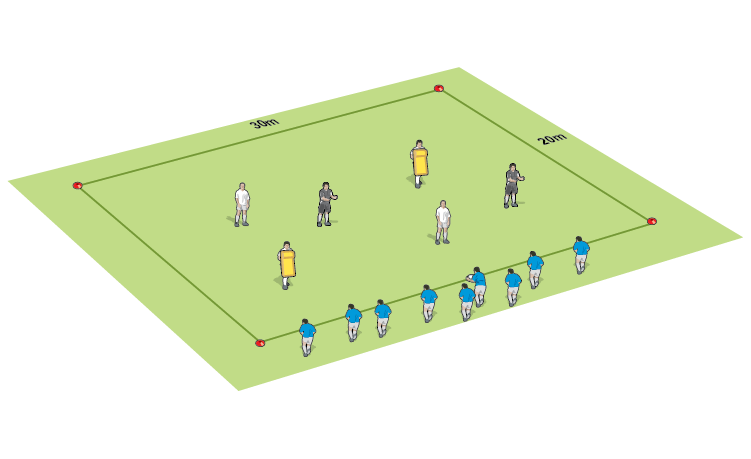
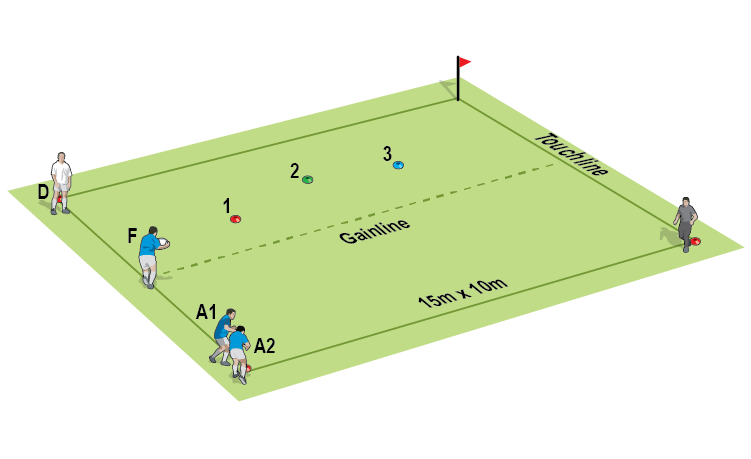
Use the cones to mark out a playing area measuring 40m x 30m. Both long sides of the area are try lines. Use more cones to mark out three 5m gates on each try line, as shown 1.
Rules
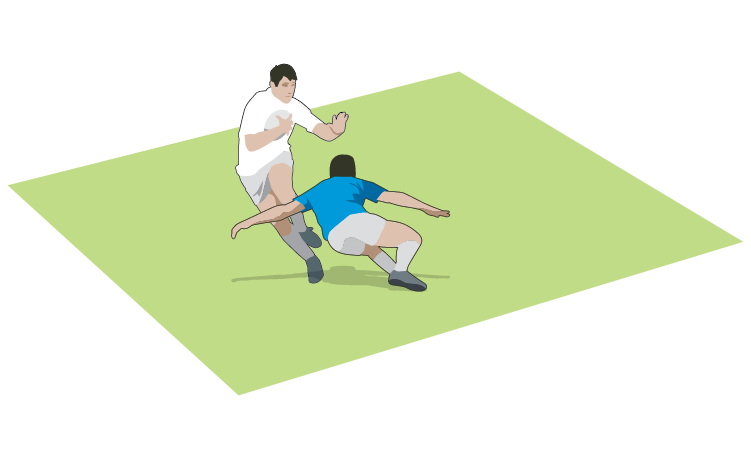
Play two-handed touch rugby.
Each play ends when either a try is scored or the defenders take possession of the ball.
Teams reverse roles after six tackles.
What you do as coach
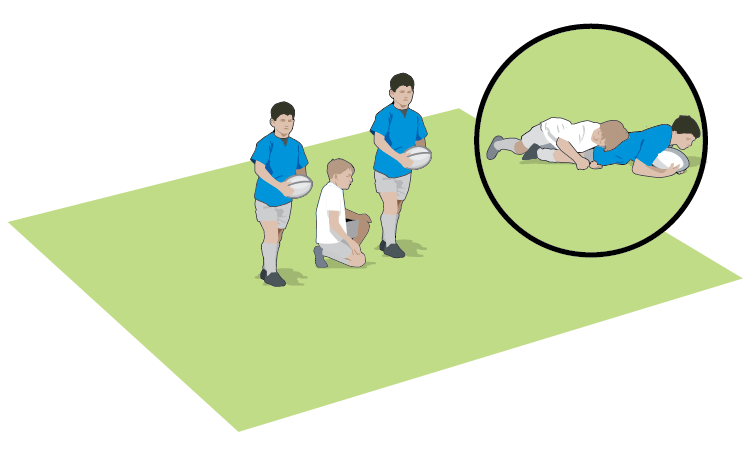
1. Divide your players into two teams of six attackers and six defenders. The attackers line up with the ball on one side of the playing area and are faced by four of the defenders. The other two defenders drop off to the side of the field, but return when it’s their turn to attack.
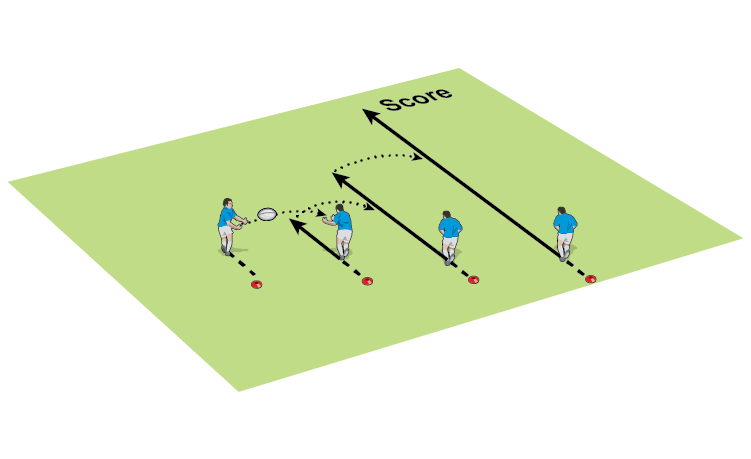
2. On your whistle, the attackers attempt to score a try at the opposite line: they have six tackles (two-handed touch) to make their score. A try scored over the line in the usual way is worth one point, but if the team can score through the gates they score extra points – gates 1 and 3 are worth 3 points, while gate 2 is worth 6 points.
3. It is up to the four defenders to decide whether to protect the gates or just ignore them – they cannot just stand in front of the gates!
When a try is scored or after six tackles, the teams swap roles and attack the opposite try line.
How you can progress the game
Make play tighter or more open by changing the size of the playing area.
Add a bit more incentive by changing the value of the gates. For example, make gate 2 worth 10 points and the other gates just 2 points.


- Six attackers and four defenders line up.
- Two defenders wait at the side.
- Explain: Let the attackers know that they must be decisive about the gate they’re going to attack and communicate this within the team.

- Attackers attempt to score.
- Attackers get more points for scoring through gates.
- Call it: Remind the attackers they should be looking to support the ball carrier from depth and be moving into space to receive a pass.

- Defenders must decide to protect gates or not – they can’t stand in front of them.
- Observe: Speed of thought, movement and pass are key in attack, while defenders must nominate and commit. Are these things evident?
Be a more effective, more successful youth rugby coach
- Win more games, without sacrificing the crucial element of fun
- Develop every player, regardless of vast differences in ability
- Run a respected, professional programme - even with a full-time job and limited time
Subscribe for full access
Or register and unlock 2 free articles,
receive our weekly newsletter, and
get a FREE coaching e-book.
Or if you are already a subscriber login for full access.
Latest Issue

Subscribe Today
Subscribe Today

Newsletter Sign Up
Coaches Testimonials

Colin Shaw

Gary Lee Heavner
Subscribe Today
Latest Issue
Be a more effective, more successful rugby coach
In a recent survey 89% of subscribers said Rugby Coach Weekly makes them more confident, 91% said Rugby Coach Weekly makes them a more effective coach and 93% said Rugby Coach Weekly makes them more inspired.
Get Weekly Inspiration
All the latest techniques and approaches


Rugby Coach Weekly offers proven and easy to use rugby drills, coaching sessions, practice plans, small-sided games, warm-ups, training tips and advice.
We've been at the cutting edge of rugby coaching since we launched in 2005, creating resources for the grassroots youth coach, following best practice from around the world and insights from the professional game.
