
 close
close


 LOGIN
LOGINRugby Coach Weekly is the largest digital resource for youth coaches, trusted by 15,000+ coaches, teachers and parents every month.
-
Coach with confidence
-
Improve your teams faster
-
Run great sessions with less effort
- Expert coaching advice from TOP Coaches
- Training sessions for players from U6 to U17+.
A session plan for defence


A four-part plan for a defence session. It keeps the players active through lots of games, while still focussing on good technique.
1 WARM UP
GRAB A GROUP
Players run around inside a coned area. When the coach shouts a number they must get into that group size.
The game progresses so that when a number is shouted the players must get into groups of that number and then build a pyramid. First team to build their pyramid is the winner.
As the game continues, the coach can add the “battle” call. If this is called, players must get a partner and get into a piggy back position. Players then move around and must try to dislodge other players from their partners backs.
For safety there should be two rules.
1. You can only “battle” against one other pair at a time.
2. Players cannot be pulled to the ground over their partners head.
2 GAME
CONTROL THE TEMPO
This game is about the defence recognising the importance of controlling the tempo of the opposition play and creating lots of time to become organised.
Game is played with equal numbers.
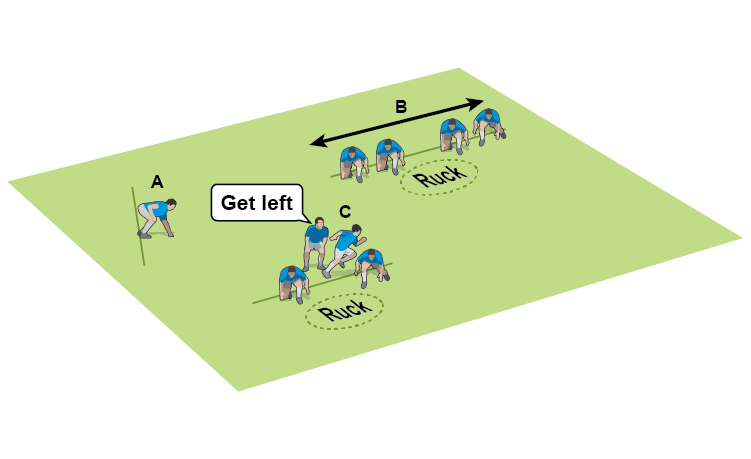
I use what I consider to be a “Transition Tackle” similar to U9s where a three-second grab and hold results in a tackle call and the player in possession goes to ground. In this game I would make it a five-second count before the tackle is called.
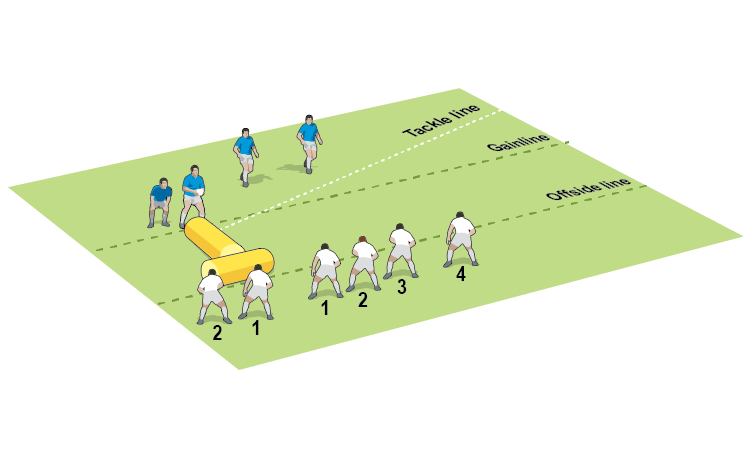
If the defence can make two consecutive five-second grab-and-holds beyond the gainline then they are rewarded with possession (likely to be the introduction of a second ball).
Coaching points
- The defence should work out that 2 man tackles will help them to slow the opposition attack down. Get them to talk about how they do this most effectively.
- Get them to think about where the tackle occurs and the opportunities or challenges that provides e.g. if it is a center field ruck how can we effectively apply pressure on both sides?
- Can you use simple principles (mine would be appropriate spacing, appropriate line speed, stay square and connected) to reinforce good behaviours and challenge decision making?
3 PRACTICE
HOLD THE LINE
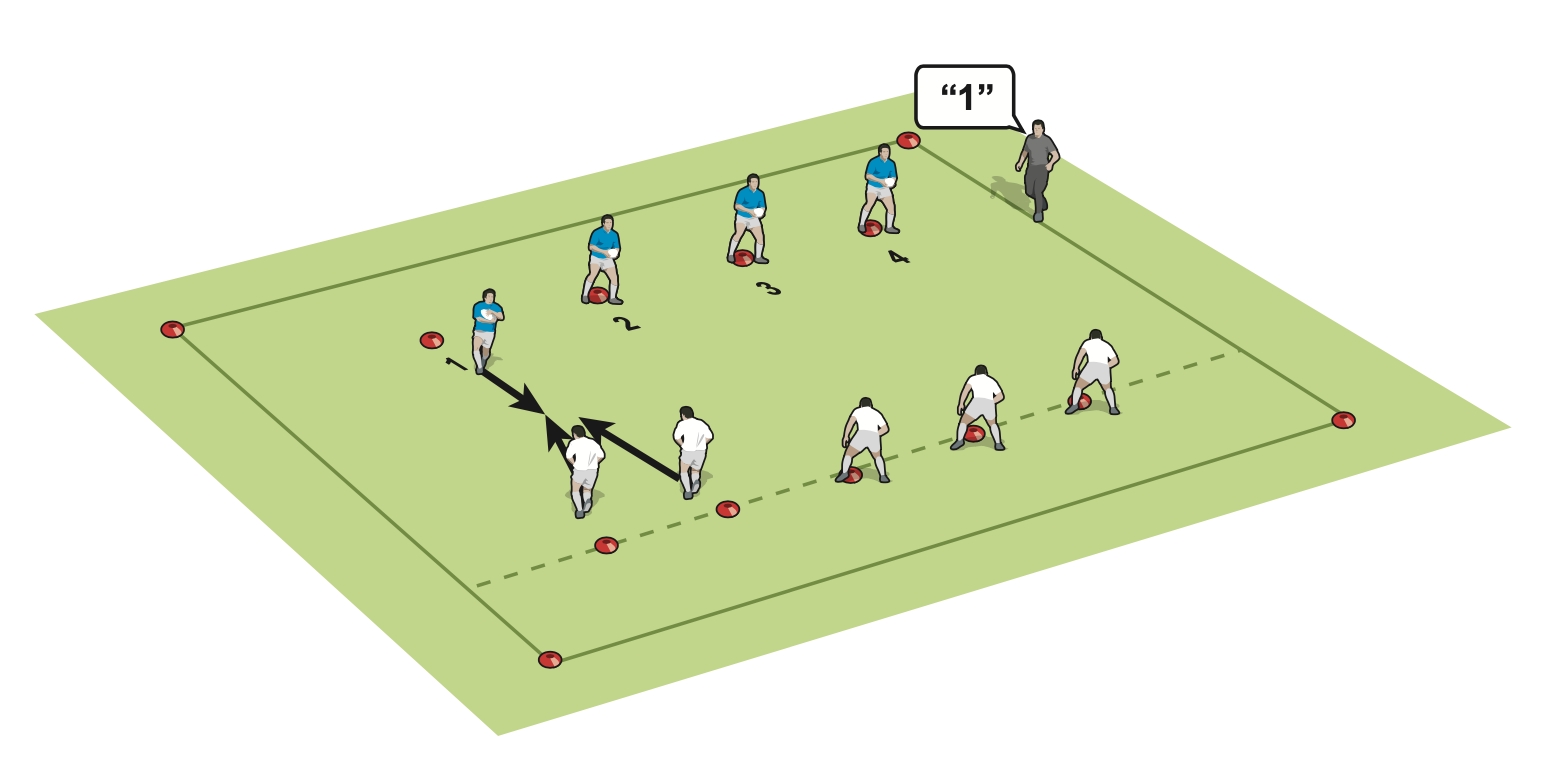
The aim of this practice is to help players understand how to make effective two-player tackles.
Across a try-line set out five evenly spaced cones.
A defender takes up position on each of the five cones.
In the channel between each cone place an attacker (approximately 10m away from the try line).
Label each attacker 1-4
On your call of a number, that attacker tries to score in their channel over the tryline.
The two defenders covering that channel must work together to stop them scoring. Once the attacker is tackled or they score, the defence re-set and a new number is called.
You may want to use a system to record each attempted tackle. For example, use a green cone on the ground to represent a positive tackle where the defence has made ground. An orange cone for a neutral tackle if the player is stopped where they meet and a red cone for a negative tackle if the attacker gains ground or scores. This can then be used to help feedback to the players on how they have done.
Coaching points
- What is the communication like between the two defenders? Who is going low and who is going high?
- What is the role of the assisting tackler? Are they looking to control the tempo of play or to win the ball?
- What is the ideal positioning of each player if they want to win ground in the tackle?
4 GAME
DEFENCE WINS GAMES
The aim of this game is to switch the scoring system to only reward the defence. The longer you’re defending, the more points you get.
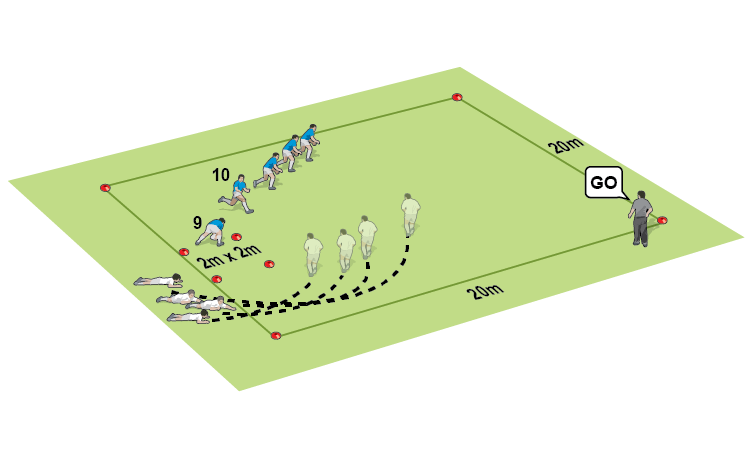
Split into two even teams. Change the space of your pitch to create the right level of challenge for your defence.
The defence gets a point for every phase of play the attack goes through before they score.
They get two points for any time they can gain possession of the ball.
If the defence does get possession then they roll the ball behind the attack and keep on defending.
Once the attack score they then get the chance to defend and score points themselves (there are no points for the try itself).
Coaching points
- This is a highly attritional game. Make sure there are plenty of opportunities for rest between sets. This could be through team huddles or it could be through having a third team that can rest when not in the game.
- You might want to use the game to teach patience in defence. Being comfortable defending for long periods will have an effect on the opposition.
- Can your team recognise the right moments to try and get the ball back?
- How long can your team keep to their defensive principles? Does it break down when they are tired or frustrated? Does it have a direct effect on when tries are scored against them?
Related Files

Russell Bolton
Latest Issue

Subscribe Today
Subscribe Today
Newsletter Sign Up
Coaches Testimonials

Colin Shaw

Gary Lee Heavner
Subscribe Today
Latest Issue
Be a more effective, more successful rugby coach
In a recent survey 89% of subscribers said Rugby Coach Weekly makes them more confident, 91% said Rugby Coach Weekly makes them a more effective coach and 93% said Rugby Coach Weekly makes them more inspired.
Get Weekly Inspiration
All the latest techniques and approaches


Rugby Coach Weekly offers proven and easy to use rugby drills, coaching sessions, practice plans, small-sided games, warm-ups, training tips and advice.
We've been at the cutting edge of rugby coaching since we launched in 2005, creating resources for the grassroots youth coach, following best practice from around the world and insights from the professional game.
