
 close
close


 LOGIN
LOGINUnlocking dominance and reducing misses
Defence coach OLI BISHOP uses his experience with the Ealing Trailfinders and RFU Level 4 courses to give a comprehensive breakdown of the tackle phases.
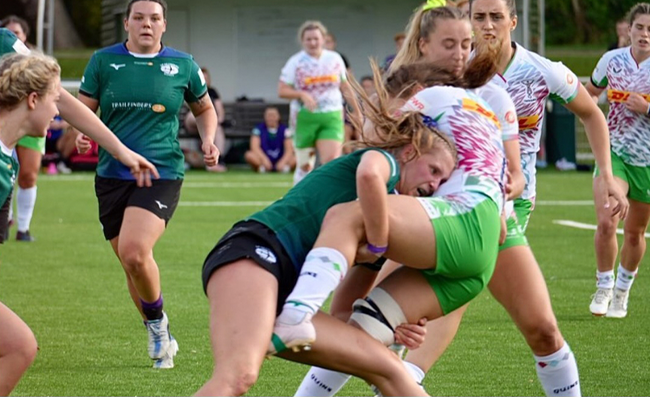
Tackling is a critical skill that not only halts the opponent’s progress, but can also shape the momentum of the game, writes DAN COTTRELL.
Understanding the three phases of a tackle – pre-contact, initial contact, and post-contact – will help achieve dominance and minimise missed tackles.
I spoke to Oli Bishop, who – through his extensive research and experience coaching the Ealing Trailfinders women and RFU Level 4 courses – offered his valuable insights in this crucial area.
1. Pre-contact: setting the stage
The pre-contact phase begins in the engagement zone, typically about five metres between the defender and the ball carrier.
According to Oli, this phase is crucial, as it lays the foundation for the success or failure of the tackle.
He emphasises balance, momentum, and adaptability in this stage, explaining that many tackles are missed due to poor pre-contact preparation.
“For a defender to maintain balance and momentum, their reaction time is critical,” Oli notes.
A balanced stance, often described as a ‘boxer’s stance’, involves keeping feet shoulder-width apart, elbows close to the body and weight distributed forwards to allow quick changes in direction.
“If their hips are behind their feet, their balance is compromised,” Oli adds.
He also highlights the importance of being within two metres of the ball carrier when they receive the ball.
“Your likelihood of dominance or tackle success increases significantly when you’re within that range,” he explains.
This proximity limits the ball carrier’s ability to use footwork or hand-offs effectively, two of the primary causes of missed tackles.
2. Initial contact: the moment of impact
The initial contact phase marks the initial engagement between the defender and the ball carrier.
Oli identifies shoulder placement as a decisive factor. “Aim small, miss small,” he advises, urging defenders to target the top part of their shoulder, just below the neck. This position generates maximum resistance and minimises the risk of high tackles.
The positioning of the defender’s hands also plays a pivotal role. Oli suggests two approaches:
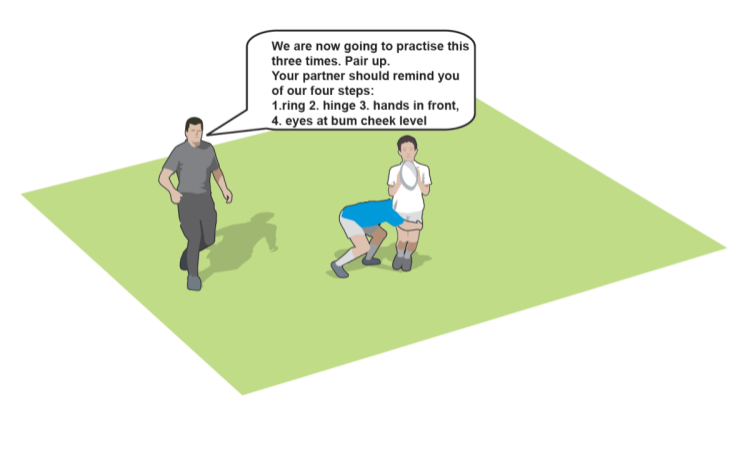
1. Hands behind the knees: This technique destabilises the ball carrier by altering their base of support, making it easier to bring them down. “By pulling behind the knees, you neutralise leg drive, a key contributor to missed tackles,” Oli explains.
2. Hands behind the lower back: This approach, often paired with the ‘ring of steel’ wrap, focuses on controlling the ball carrier’s centre of mass and limiting forward momentum.
Foot placement is equally important. Oli emphasises the ‘same foot, same shoulder’ principle to maintain alignment and prevent the hips from being pushed out during the tackle.
“If your left shoulder hits, and your right foot leads, you’re more likely to push your hips around the ball carrier and lose dominance or miss the tackle,” he warns.
Be a more effective, more successful youth rugby coach
- Win more games, without sacrificing the crucial element of fun
- Develop every player, regardless of vast differences in ability
- Run a respected, professional programme - even with a full-time job and limited time
Subscribe for full access
Or register and unlock 2 free articles,
receive our weekly newsletter, and
get a FREE coaching e-book.
Or if you are already a subscriber login for full access.

Dan Cottrell
Latest Issue
Subscribe Today
Subscribe Today
Newsletter Sign Up

Coaches Testimonials

Colin Shaw

Gary Lee Heavner
Subscribe Today
Latest Issue
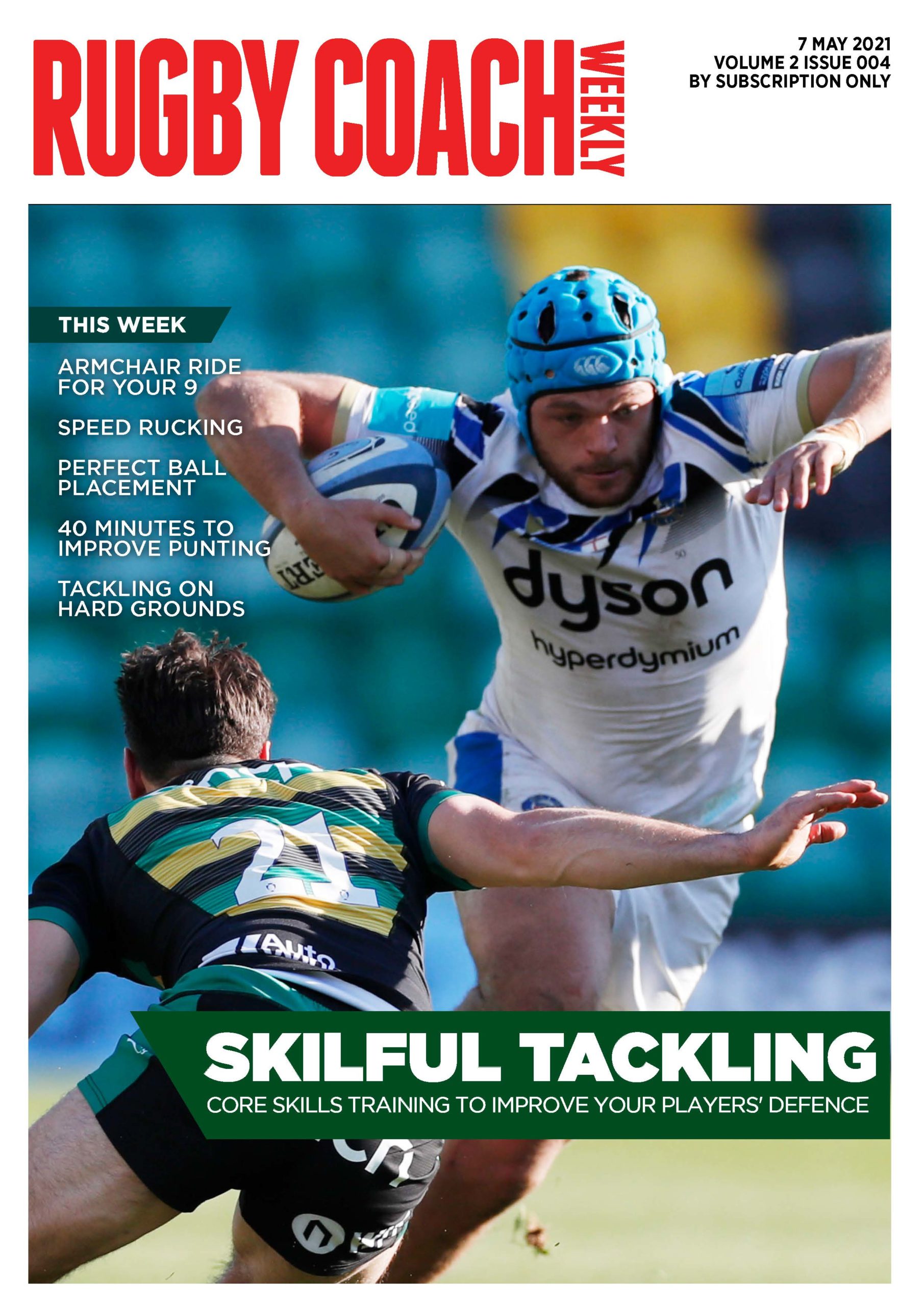
Be a more effective, more successful rugby coach
In a recent survey 89% of subscribers said Rugby Coach Weekly makes them more confident, 91% said Rugby Coach Weekly makes them a more effective coach and 93% said Rugby Coach Weekly makes them more inspired.
Get Weekly Inspiration
All the latest techniques and approaches


Rugby Coach Weekly offers proven and easy to use rugby drills, coaching sessions, practice plans, small-sided games, warm-ups, training tips and advice.
We've been at the cutting edge of rugby coaching since we launched in 2005, creating resources for the grassroots youth coach, following best practice from around the world and insights from the professional game.
