
 close
close


 LOGIN
LOGINRugby Coach Weekly is the largest digital resource for youth coaches, trusted by 15,000+ coaches, teachers and parents every month.
-
Coach with confidence
-
Improve your teams faster
-
Run great sessions with less effort
- Expert coaching advice from TOP Coaches
- Training sessions for players from U6 to U17+.
Understand the whole of defence when you practise
Editor Dan Cottrell adds further context to two sessions.


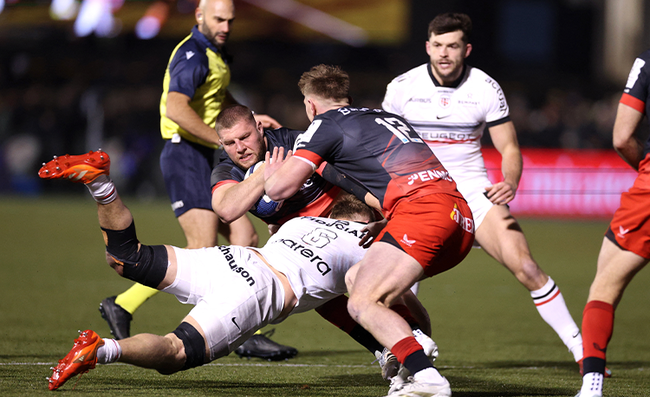
Defensive line speed exercises can end up with lots of speed but poor end results. Let’s break that down into what we are trying to achieve.
1. We want to put pressure on the opposition attack.
2. We want to tackle them well behind the gain line.
3. We want to stop the opposition from executing their plays effectively.
These are not discrete outcomes. They are interwoven and, if they are all done accurately, we might force turnovers.
The interwoven nature means that we should not forget one element in pursuit of another. So, when a coach is asking for line speed, the players must know why and how it fits into their whole defensive approach.
It’s like just practising tackling, but not organisation. The team might be great at putting attackers on the ground, but aren’t in the right alignments enough times to stem the tide of good passing and support play.
Luckily in training, we can isolate parts of the defence process in a way we can’t with a movement skill.
Therefore, we can:
1. Set out the best position to start from in defence.
2. Develop the appropriate angle and speed to go forward when the attack starts.
3. Further develop the right connections with team-mates to ensure there are no gaps between defenders (though there may be gaps to the side or behind).
4. Help the players discover the best type of tackle to use, based on the relative speed, size and angles of the opposition players.
5. Decide on the best reaction post-tackle.
When you are running the training session and focusing on the tackle, the players need to understand where they are on this continuum, so they can connect it all together.
That’s why, when we say we are working on defensive speed, the players should be aware of the position they are starting from, their connectivity and the type of tackle they might be using. You must mix up both sides of this process, while still concentrating on creating the best speed.
Use the session on page 4 to develop this piece of the jigsaw.
Pads work players
We are under increasing pressure as coaches to reduce contact in training, so using ruck pads to replicate attackers does make some sense. You are practising everything up to the completion of the tackle. To be the most effective, this requires the pad holder to give the tackler the right target. That means the pad should be held tightly into the body, so the tackle can’t be a glancing blow.
A tight pad to the body also allows the tackler to make at least at attempt to wrap their arms around the whole player. Don’t encourage lifting of the legs. Just look for arms going beyond the target, so they at least have a chance of grabbing the pad and player.
In-play coaches in attack
When an attacker is taking the ball close to the defence, say from a slow ruck ball, they will be faced with a wall of defenders. Slow ruck ball is defined as the time it takes for a defence to reset. At the top level that can be less than three seconds in some cases, while lower down, you might have a little more time.
However, if the defence is in place, then it’s likely that the ball carrier will have to do something slightly different when they reach the defence to give them and the team the best chance of recovering the ball from an advantageous position.
One method is the tip pass, which is a short pass just before contact. Another method is to have another player “latch” onto the ball carrier to double up through the tackle. And if the ball carrier is feeling a bit more confident, they might use some evasive skills to half break the tackle and perhaps offload to a support player.
Some bigger players, or foolish smaller players, will try to bash their way through the defence. That’s always an option, and if you have a big ball-carrying-type player in your team, why not.
Whichever your players choose, the support player is more than an option for an offload or to protect the ball carrier in contact. They are a coach too. They can pass in vital information, either to encourage the ball carrier or give them options to consider.
Use the session on page 6 to develop not only the skills, but the communication needed from the support players. Don’t expect the players to choose the right options or even right language to start with. That’s no excuse though. Have them constantly reviewing why it helps them and their teams so they buy in.
Related Files

Dan Cottrell
Latest Issue

Subscribe Today
Subscribe Today
Newsletter Sign Up
Coaches Testimonials

Colin Shaw

Gary Lee Heavner
Subscribe Today
Latest Issue
Be a more effective, more successful rugby coach
In a recent survey 89% of subscribers said Rugby Coach Weekly makes them more confident, 91% said Rugby Coach Weekly makes them a more effective coach and 93% said Rugby Coach Weekly makes them more inspired.
Get Weekly Inspiration
All the latest techniques and approaches


Rugby Coach Weekly offers proven and easy to use rugby drills, coaching sessions, practice plans, small-sided games, warm-ups, training tips and advice.
We've been at the cutting edge of rugby coaching since we launched in 2005, creating resources for the grassroots youth coach, following best practice from around the world and insights from the professional game.
