
 close
close


 LOGIN
LOGINRugby Coach Weekly is the largest digital resource for youth coaches, trusted by 15,000+ coaches, teachers and parents every month.
-
Coach with confidence
-
Improve your teams faster
-
Run great sessions with less effort
- Expert coaching advice from TOP Coaches
- Training sessions for players from U6 to U17+.
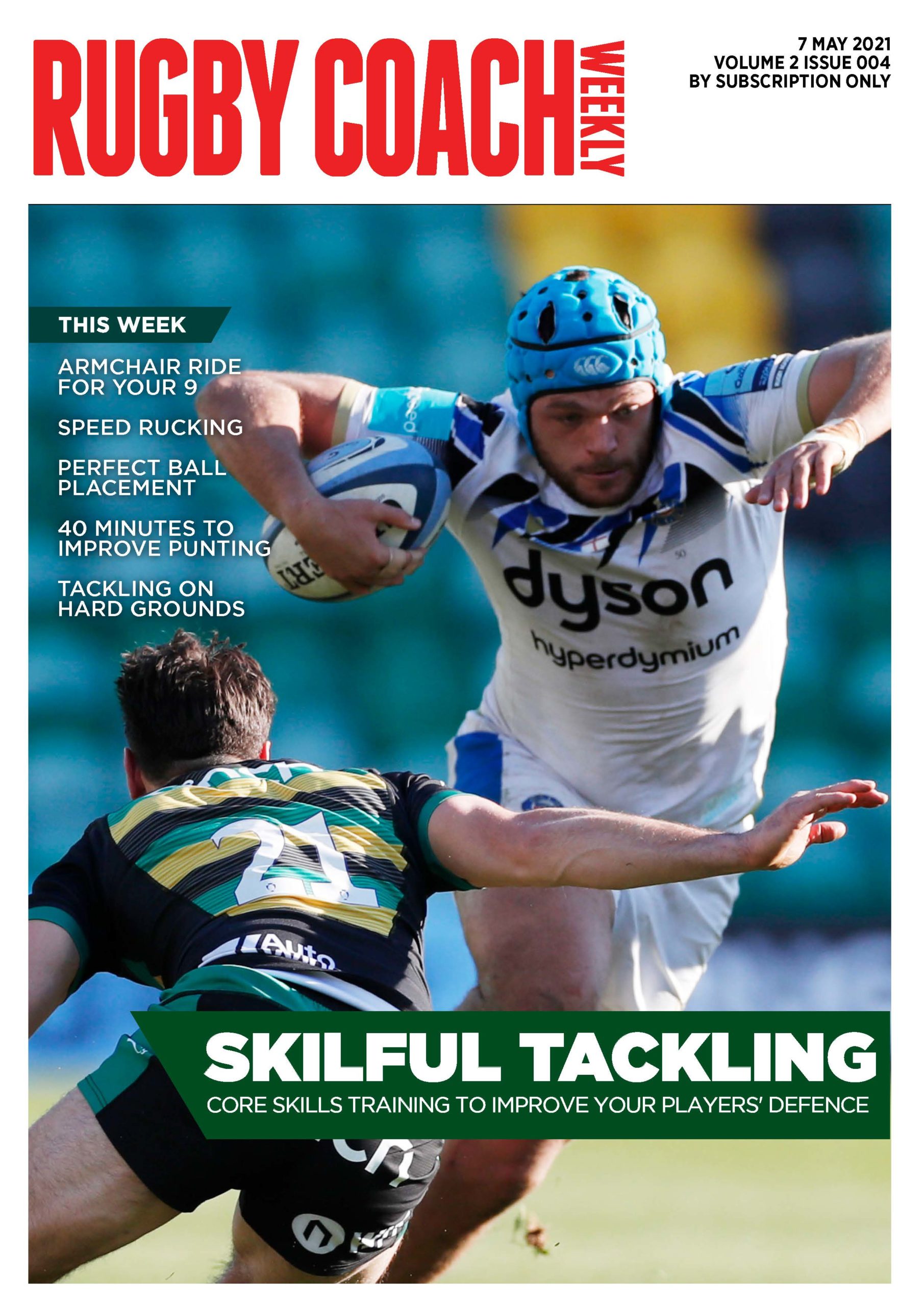
Tackle space is important in the modern game
Editor Dan Cottrell adds further context to two sessions.


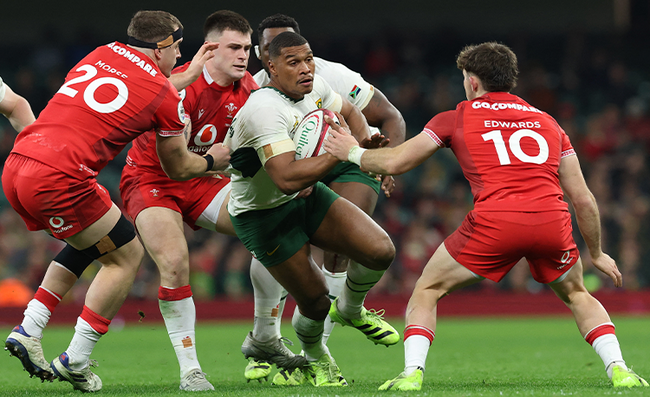
When attacking teams lose a lot of ball in the tackle area, it crushes momentum and players fear being creative and probably kick more than they would in normal circumstances.
Whether you think that’s down to referee interpretation or poor skills, it certainly highlights the need for attackers to engage properly after the tackle and clear out the threats. But we are going to concentrate here on the other side of the ball. That is, the role of the second defender at the tackle area.
The attacking problem often occurs because of a proactive defender more than lazy attackers. We have a solution to that attacking problem on page 7. And you can read more about the theory in the article below.
Proactive second defender
I’m sure we could come up with a good name for the second defender. Possibly we could call them “jackler 2”. But, for me, it’s not an automatic contest. It’s a decision when to go in, and went to leave alone.
That’s why they are proactive. They aim to cause the most damage based on the situation, not just go for the ball.
They have a menu of choices to work to after a tackle is made:
- No attacker nearby: go through the tackle gate and pick up the ball.
- An attacker close by but not over the ball: clamp on the ball, lifting if possible, but making it clear to the referee that they are legal.
- A 50:50 with an attacker: based on relative sizes, either drive over the ball or force the attacker to protect the ball.
- Less than 50:50: threaten but don’t enter the contest, and then push out into the defensive line.
The best turnover players bide their time. They do this by not committing to one ruck, looking at the possible points of the next attack and arriving as that tackle is made.
Training to be proactive
In training, it’s hard sometimes to replicate the full speed of the game, so we should create scenarios where the second defender can choose to enter the contest.
Once the choice is made, it is important that they commit to that decision. Their mindset should be to own the space over the ball. In that sense, they must be strong, with a wide base. They need to enter the space with a wide stance, ready to move forward to meet an oncoming attacker, rather than flopping over the ball.
You can work on the exact movements in slow motion first, so the players have a sense of the right techniques. Then you can increase the pressure.
Use the exercise on page 4 to work on these techniques.
Rocket touch for quicker play
On page 6, we have a touch game which is aimed at speeding up your play. For the attacking side to retain possession, they must recycle the ball extremely quickly.
It works on the principle that some of your training should be faster than the real game. But the question might be, would this version be faster than you would expect in a match situation?
There is a sort of unwritten coaching rule that quick ball from breakdowns comes within three seconds. Any longer and the defence is likely to be reset.
What happens if we can get this down to one second? That is one second from the tackler getting to ground and presenting the ball. In other words, it is away from the tackle almost as soon as the ball is on the ground.
Your team can practise the mechanics of this in Rocket Touch. The further implications are for the attacking team. They need to be realigned faster than before. In fact, so fast that they must realign almost before the tackle is made.
So, they must anticipate when the tackle is going to be made, look at the possible options and call into the potential clearing passer where they might be.
The clearing passer, that is the player who is passing the ball off the ground, shouldn’t hesitate with his or her pass. They just pass away as they crouch and then touch the ball.
To be successful, that clearing passer won’t always be the scrum half. It can be any player. If the 9 does make it to the ball first, your players will have anticipated that and adjusted their distances accordingly.
Expect chaos! By this I mean lots of mistakes. You need to warn the players that they need to find solutions and that might take some time. Give the players short breaks to allow them time to come up with some tactics.
By short breaks, I mean only 10 seconds though, so they have to talk on the run.
Related Files

Dan Cottrell
Latest Issue

Subscribe Today
Subscribe Today
Newsletter Sign Up
Coaches Testimonials

Colin Shaw

Gary Lee Heavner
Subscribe Today
Latest Issue
Be a more effective, more successful rugby coach
In a recent survey 89% of subscribers said Rugby Coach Weekly makes them more confident, 91% said Rugby Coach Weekly makes them a more effective coach and 93% said Rugby Coach Weekly makes them more inspired.
Get Weekly Inspiration
All the latest techniques and approaches


Rugby Coach Weekly offers proven and easy to use rugby drills, coaching sessions, practice plans, small-sided games, warm-ups, training tips and advice.
We've been at the cutting edge of rugby coaching since we launched in 2005, creating resources for the grassroots youth coach, following best practice from around the world and insights from the professional game.
