
 close
close


 LOGIN
LOGINRugby Coach Weekly is the largest digital resource for youth coaches, trusted by 15,000+ coaches, teachers and parents every month.
Get access to
- 2000+ drills and games
- 350+ ready-made practice plans
- Expert coaching advice
- Training sessions for players from U6 to U17+.
Super rucks to win quick ball
Editor Dan Cottrell adds further context to two sessions.


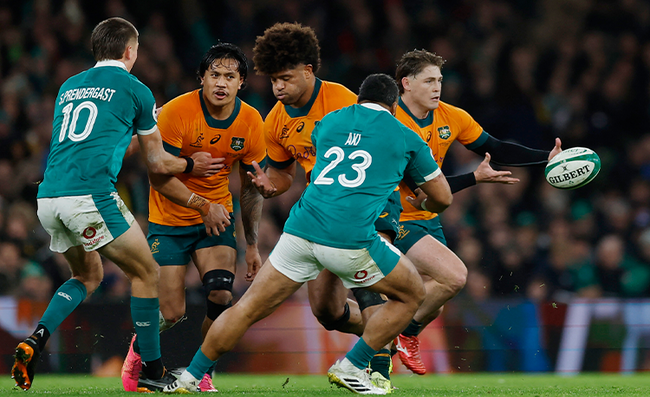
The best teams in rugby recycle the ball so quickly the opposition are struggling to get back into position to defend. Those recycling skills are well-coached and executed across the world. It would be therefore wrong to say that the exhilarating Super Rugby tournament, starting in just a month’s time, has a monopoly on top players or coaches in that sense.
However, it’s clear that the top teams in that competition can play a fast brand of rugby because they are able to reproduce these skills more often. And we can replicate these in our rugby.
Remember, it is all relative. We must react faster than what’s in front of us.
Three key moments
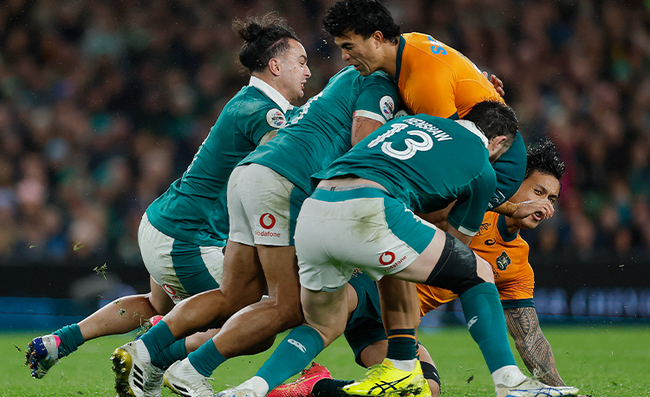
Good coaches and players know that there are three key moments at the tackle collision that allow any subsequent collision by an attacking support player to be more effective.
But let’s think about “effective” first. We’ve assumed that all the other continuity options have been used up. In other words, the ball can’t be popped out of the tackle or the support player can simply pick up the ball and pass or run.
Here, there is a real threat that a defender will win the space over the ball and create the chance for a turnover. An effective play not only removes that threat, it does so quickly enough for a clearing passer, like the 9, to weave their magic without hesitation.
The body shapes for a collision victory are for another time. This is what needs to happen first, second and third:
1. Ball carrier edges
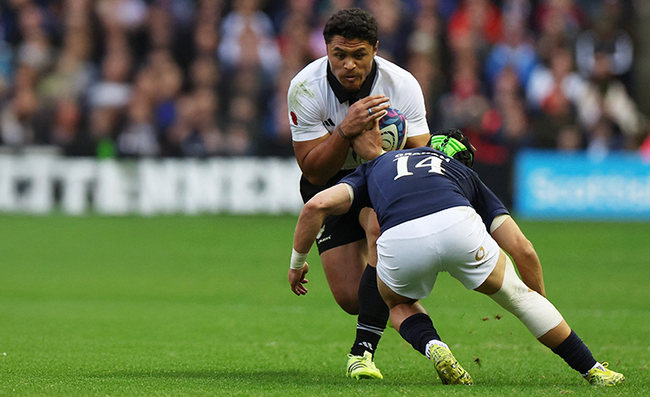
The ball carrier must win the collision edge. Edge has two meanings here. The first is the edge of the defender, which is away from their centre. There are lots of analogies here, such as attacking the branches not the trunk.
The other edge is all about control. Running between two defenders can mean a chance for two defenders to make the tackle.
Therefore, the ball carrier facing a tight line of defenders might want to pick out just one of them.
Whichever choice they make, they should be committed and in control so they can power through.
2. Ball carrier knifes
Though I’ve not been in any knife fights, I do know that you must take the knife out after you’ve made the stab. First, to get the opponent to bleed, second to be able to attack again (or defend yourself).
Once the ball carrier has made their own stab, they need to twist, turn and place the ball back to their team mates quickly.
3. Clearer ball focus
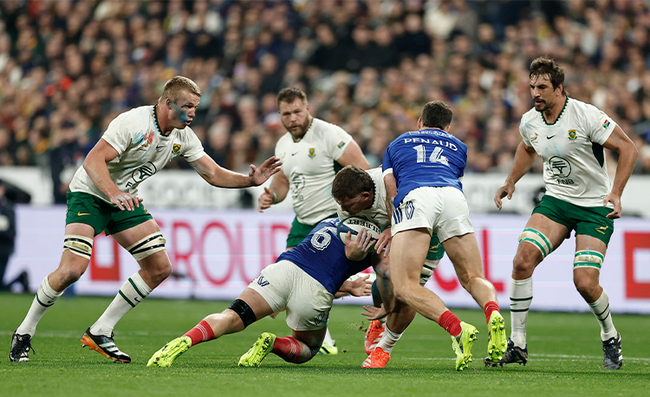
Once that ball is on the ground, that’s where the support player goes over. Not from the side or next to it. Over it.
Use the exercise on page 5 to develop this culture and skillset.
Decoy players to engage defenders
Nowadays, sometimes it’s no longer enough to have accurate passers and runners on your set moves to create line-breaks and tries. You also need accurate running by decoys ahead of the ball, to give [legal] protection to the people running the move.
The idea of a decoy runner is to interfere with both the defence’s reading of the play and their natural running lines to get to it.
The decoy will
- Try to persuade the defender opposite them that there are a legitimate threat
- Attempt to get in between the defender and the target area for the attacking play
- Create a ‘lane’ for the striker to run into.
Key points are:
- Fix your player. Angle on to the inside shoulder of the defender opposite. The ball carrier should almost over emphasise this aspect as well.
- Get into the space between the defender and the target area. The decoy runner doesn’t run into the defender. That would be obstruction. Instead, they aim to get into the space to the side of them if they can.
- The striker must read, and “use the lane”. The strike runner is attacking the lane that’s been created, not the space that the defender would have stepped into. That might mean running an arc rather than a straight line.
- So much depends on timing that the players have to react to the space given rather than assume that the space will be created. This comes from plenty of scenario work in training.
Sean Holley builds up the use of decoy runners and receivers on page 6 and 7.
Related Files

Dan Cottrell
Latest Issue
Subscribe Today
Subscribe Today
Newsletter Sign Up
Coaches Testimonials

Gerald Kearney, Downtown Las Vegas Soccer Club

Paul Butler, Florida, USA

Rick Shields, Springboro, USA

Tony Green, Pierrefonds Titans, Quebec, Canada
Subscribe Today
Latest Issue

Be a more effective, more successful rugby coach
In a recent survey 89% of subscribers said Rugby Coach Weekly makes them more confident, 91% said Rugby Coach Weekly makes them a more effective coach and 93% said Rugby Coach Weekly makes them more inspired.
Get Weekly Inspiration
All the latest techniques and approaches


Rugby Coach Weekly offers proven and easy to use rugby drills, coaching sessions, practice plans, small-sided games, warm-ups, training tips and advice.
We've been at the cutting edge of rugby coaching since we launched in 2005, creating resources for the grassroots youth coach, following best practice from around the world and insights from the professional game.
