
 close
close


 LOGIN
LOGINRugby Coach Weekly is the largest digital resource for youth coaches, trusted by 15,000+ coaches, teachers and parents every month.
-
Coach with confidence
-
Improve your teams faster
-
Run great sessions with less effort
- Expert coaching advice from TOP Coaches
- Training sessions for players from U6 to U17+.
Keep an activity ticking over
Editor Dan Cottrell adds further context to two sessions.


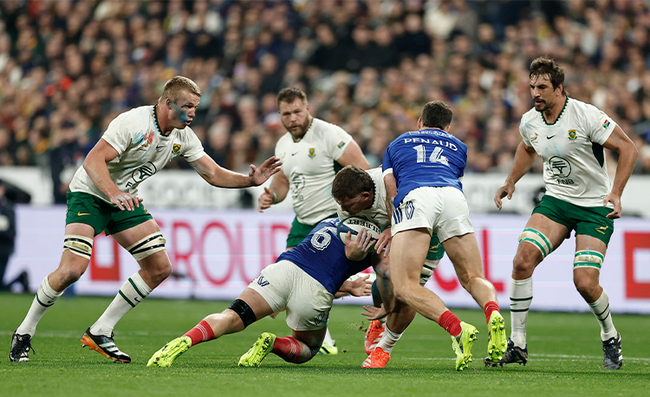
In a game of 5v5 touch rugby, you are working on lots of different skills, including evasion, passing, defensive footwork, communication and decision-making. Players generally prefer games to drills and therefore put a lot more energy into the game.
However, there are some downsides.
A game can be dominated by one or two players. Even with 5v5, some players can rest or push themselves out onto the periphery. Though there may be plenty of “touches” on the ball, that tends to be for the more confident players.
To a certain extent, that’s always going to be the case. So, you need to give the players a skills booster. Many of you will be familiar with the whole-part-whole system and will use a break-out activity from the main game for this very purpose.
There is a potential problem that the energy from the game doesn’t translate into the activity. That’s not to say that you shouldn’t slow down a bit in the activity to concentrate on upskilling, but you don’t want the players standing around too long.
Here’s how to maintain the momentum.
1. Nothing new
The break-out activity should be something the players are familiar with. You shouldn’t need much time to explain it.
If you are going to use a new activity, trial it in the warm-up section of the session. That’s an ideal time to allow the players to work through the various starting and finishing points and gain an understanding of the techniques involved.
2. Lots of stations
Because the players are familiar with the exercise, you shouldn’t have to be babysitting each group. That means you can have a more than one station of players exercising at one time, even if you are the only coach.
Wander around the stations, reminding the players of the key points if necessary.
3. On the run feedback
Try not to stop the exercises too often. Instead pass in feedback as they are running around or waiting for their next turn. Immediate, individualised feedback like this should be more powerful than general feedback to the whole group.
The waiting game
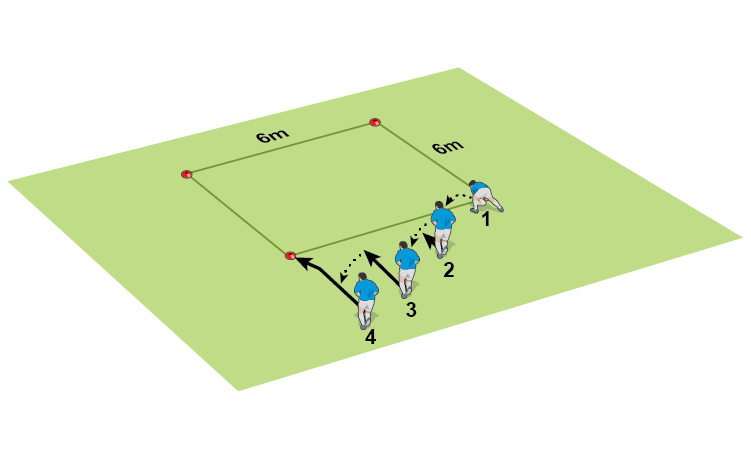
In the exercise on page 4, you will see one group works, the other group waits. The waiting group has a chance to learn from the working group. They can also catch their breath, so they can concentrate on the skill. Well, to start with.
Rattle through the rounds, so that the wait isn’t long and the players do becoming partially fatigued. That’s your role too. Not only will you be feeding back on the run, you will be energizing the groups to speed up their turnarounds.
Then, after a couple of minutes, it’s back into the game.
Winning and losing the break down
It is not usual for commentators to say that a game was won and lost at the break down. This is another way of saying that, after the tackle, continuity has broken down and needs to be fixed. Most teams will contest the ball in the tackle if they have a chance.
And that’s the crucial part. “They will contest if they have a chance.” If they don’t have an opportunity to win the ball back, why bother. Tactically, attacking teams must reduce the chance to contest.
First, avoid being tackled and second, if tackled, get rid of the ball before there’s a chance to contest. We all recognise those skills as evasion, support, handling and offloading.
Watching matches at the top level some teams don’t offload that much and it is clear that they have big runners driving into the heart of the opposition defence.
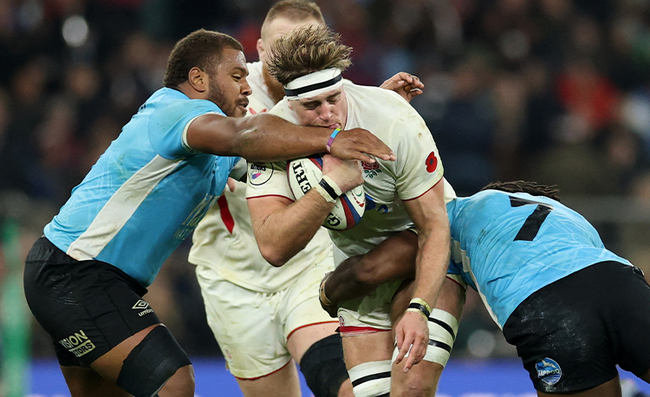
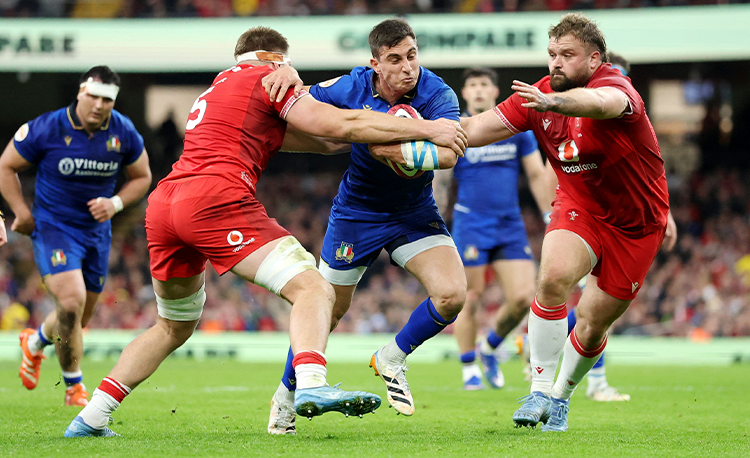
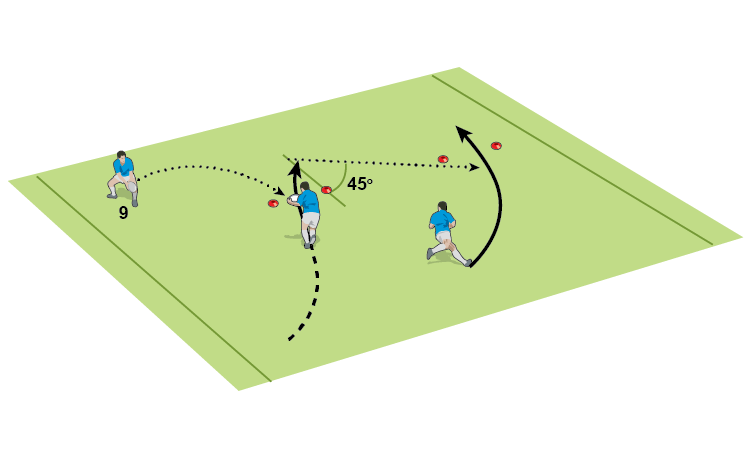
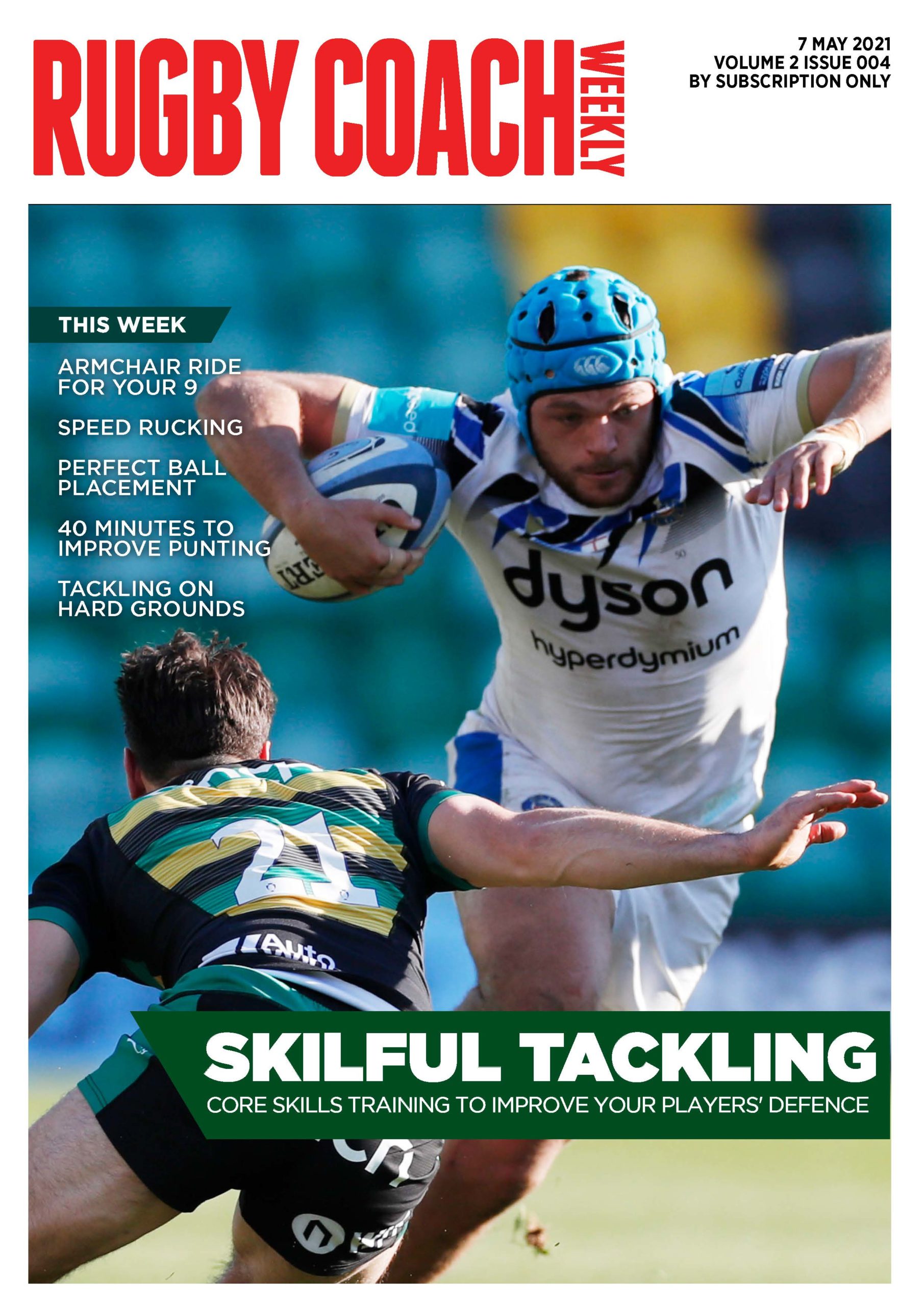
Now, look at the picture of Alex Coles. He has taken on the two defenders, yet has managed to use his evasion skills to get beyond the tackle line. He’s facing up the pitch, so can use his leg drive to gain even more advantages.
Those advantages are that the two defenders will have to come from further back to challenge for the ball. Plus, because the ball is now out of the grasp of the standing tackler, he can keep it busy. That means, he can place it effectively with a constant flow of jerky movements which make it difficult for another defender to clamp into the ball.
These are small things that make a difference. Try them out in our exercise on page 5.
Related Files

Dan Cottrell
Latest Issue

Subscribe Today
Subscribe Today
Newsletter Sign Up
Coaches Testimonials

Colin Shaw

Gary Lee Heavner
Subscribe Today
Latest Issue
Be a more effective, more successful rugby coach
In a recent survey 89% of subscribers said Rugby Coach Weekly makes them more confident, 91% said Rugby Coach Weekly makes them a more effective coach and 93% said Rugby Coach Weekly makes them more inspired.
Get Weekly Inspiration
All the latest techniques and approaches


Rugby Coach Weekly offers proven and easy to use rugby drills, coaching sessions, practice plans, small-sided games, warm-ups, training tips and advice.
We've been at the cutting edge of rugby coaching since we launched in 2005, creating resources for the grassroots youth coach, following best practice from around the world and insights from the professional game.
