
 close
close


 LOGIN
LOGINRugby Coach Weekly is the largest digital resource for youth coaches, trusted by 15,000+ coaches, teachers and parents every month.
-
Coach with confidence
-
Improve your teams faster
-
Run great sessions with less effort
- Expert coaching advice from TOP Coaches
- Training sessions for players from U6 to U17+.
Break through organised defences with smaller players
Apart from good running lines, try using short passes at the gain line and, with more experienced players, look to use switch plays with the runner cutting back after they break the line.


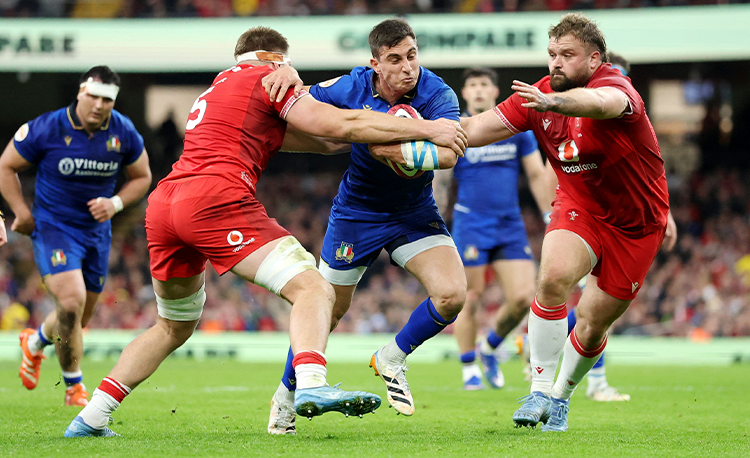
Opposition defences are not always disorganised and full of gaps (worse luck). But you can cut through them with simple plays that both forwards and backs can use.
Let’s make sure we know what we mean by the gain line. This is an imaginary line across the pitch which comes from the middle of the last set piece, ruck or maul. Get beyond the gain line in the next phase of play and you are at an advantage.
Defences will be keen to stop your attack before it reaches the gain line. In fact, a good defence will be able to tackle your ball carrier in front of the gain line.
Therefore, we can say there is a tackle line in front of the gain line.
To reach the gain line you have to do one of three things with ball in hand:
- Win the race to the gain line (only really possible from a scrum or lineout).
- Create a gap in their defensive line.
- Run over their defensive line - in other words, break a tackle.
Now look at some of the massive ball carriers that some teams possess. If you are blessed with these athletic monsters, then great. But most teams aren’t AND you cannot always give them the ball, because defences will concentrate their forces to stop them.
Instead, you can do three things. You can use great running lines. You don’t need to have big players but lovely timers of runs onto the ball.
A great running line is where the player accelerates between defenders, probably by changing their angles late on.
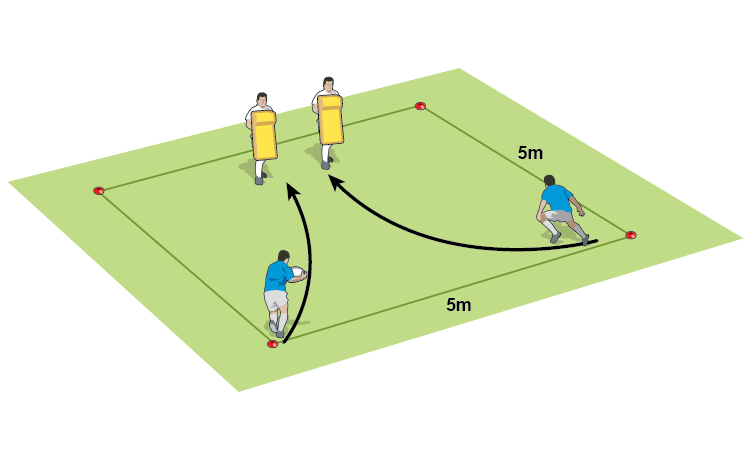
A simpler play is to do what top sides have been doing plenty of. They use a “plus one” play (see Ian Diddams activity on page 6) where a player takes the ball right up the defence and then feeds one of their team-mates at the last moment.
This pop play, sometimes known as a tip-on pass, requires timing, but can also be used as the ball carrier to distract the defence. They can dummy the pass to their team-mate and try to break the line.
You can also use Sean Holley’s page 7 activity to make switching, straightening and getting the ball back to become a natural aspect of your players’ game.
Switch plays are more complicated and probably best used with older, more experienced teams.
|
PIANO SHIFTERS STILL NEED TO KNOW HOW TO PLAY Some of your players can be known as the piano players (artists like 9 and 10), others the piano shifters (labourers like 1, 3, 8 and big 12s).
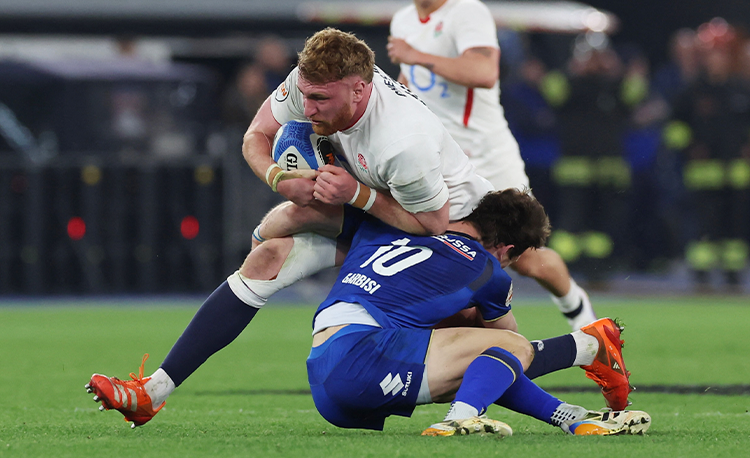
But in the modern game, the shifters in attack know they will meet shifters in defence, so they will use good footwork before contact to unbalance the opposition. They only need a slight change of angle to bust an arm tackle rather than hit a shoulder of a defender.
Even a dummy pass might give the defender a different picture which might lead to a less effective tackle. |
Related Files

Dan Cottrell
Latest Issue
Subscribe Today
Subscribe Today




Newsletter Sign Up


Coaches Testimonials

Colin Shaw

Gary Lee Heavner
Subscribe Today
Latest Issue
Be a more effective, more successful rugby coach
In a recent survey 89% of subscribers said Rugby Coach Weekly makes them more confident, 91% said Rugby Coach Weekly makes them a more effective coach and 93% said Rugby Coach Weekly makes them more inspired.
Get Weekly Inspiration
All the latest techniques and approaches


Rugby Coach Weekly offers proven and easy to use rugby drills, coaching sessions, practice plans, small-sided games, warm-ups, training tips and advice.
We've been at the cutting edge of rugby coaching since we launched in 2005, creating resources for the grassroots youth coach, following best practice from around the world and insights from the professional game.
