
 close
close


 LOGIN
LOGINAdapting tag sessions into full rugby sessions
Editor Dan Cottrell adds further context to two sessions.


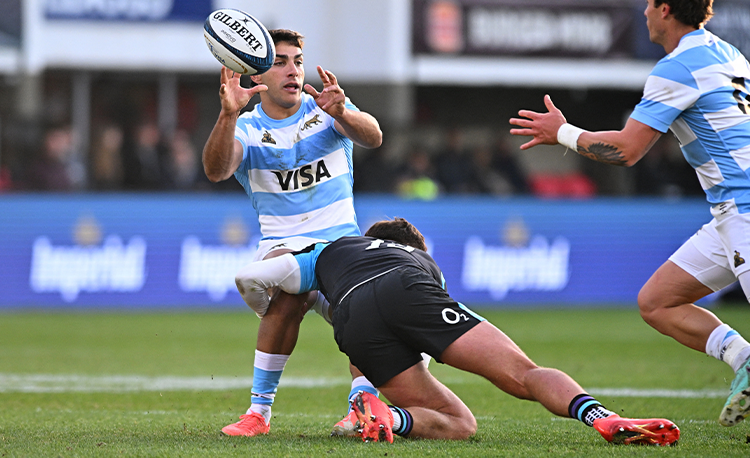
Most kids’ coaches are pleased to see the back of tag rugby. I’m not sure whether it’s a corollary of having to herd kids who don’t concentrate, or the fiddly nature of managing tags and tag tackles.
However, there’s plenty of good things we can learn from tag rugby and quickly adapt them for older players, even if they’re not wearing a tag belt. First, we must understand what the players need. Second, what the players can reasonably achieve.
Finally, we should see where a session for seven year olds might lead to when they are five years or even 10 years older.
It’s that last fact which is a little scary. Are the players technically much better 10 years on from their first introduction to catch-pass and evasion? Or, thinking the other way around, are our expectations too high for what they can achieve at the age of seven.
Needs
Tag players need to be able to:
- Catch when they are standing still.
- Pass when they are standing still.
- Avoid being tagged by a player who isn’t as agile as they are.
Better tag players will be able to do the first two skills when they are moving, perhaps even running. And, they should have a better chance of not being tagged by a player of the same ability.
We would expect non-taggers to do all those skills, and we would be then looking at the length of pass.
Achieve
While the needs are technical, we want the players to achieve some skill outcomes. That is, they know when to pass, how to support the ball carrier, how to close down a ball carrier in defence and how to connect with other defenders to tag a more agile ball carrier.
Though some players may have some tactical understanding, I wouldn’t expect players to execute a 2v1, recognise an overlap or come up as a line of more than three in defence. That doesn’t mean you don’t practise skills that would help achieve these outcomes. You are merely planting the seeds.
Tag session upgrade
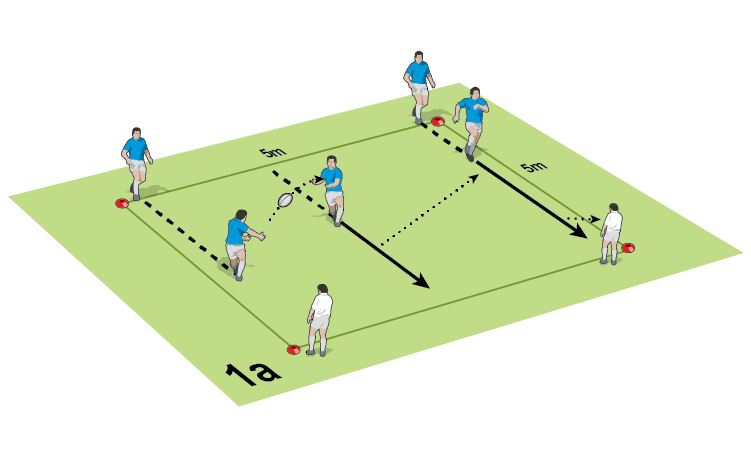
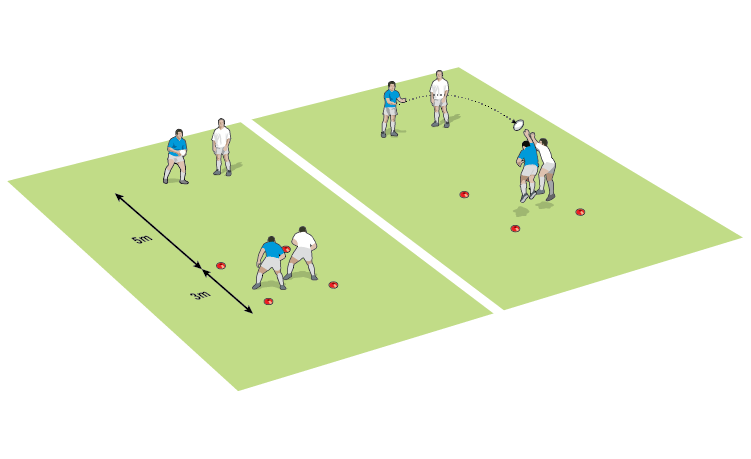
In this issue, the session on page 8 is called “Rocket launcher”. The attackers move up the pitch, avoiding defenders who are released to intercept them. Most tag players will use some form of evasive efforts, only passing if they are tagged. More experienced players will “fix” defenders, pass to space if necessary and hold their width and depth in support.
What made me rethink tackle training
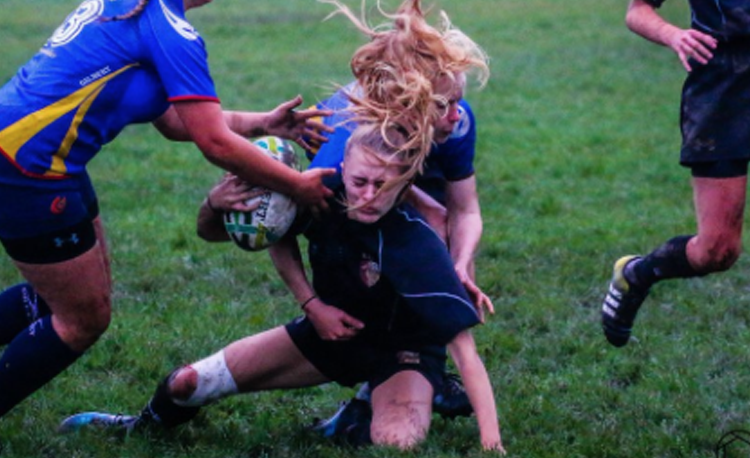
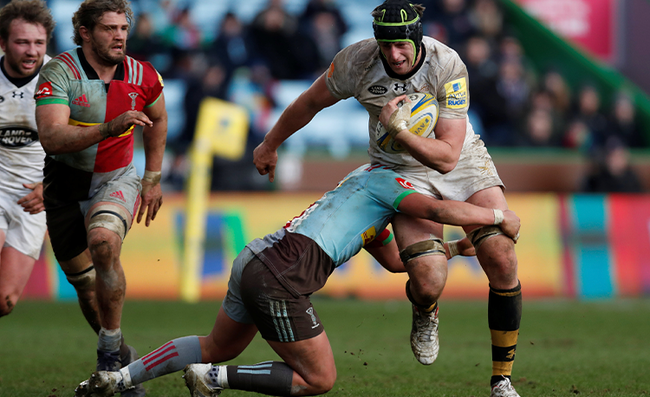
A few years ago, I was inspired by a great tackling photo I saw on Twitter.
Intrigued to understand more behind the player who made this play, I contacted Sophie, the player in question. She came back to me almost immediately and I was delighted to hear that one of her coaches was “Treacle”. Known to the non-rugby world as Jenny Davies, Treacle was one of the stalwarts of the Welsh Women’s international team. She was also not afraid to speak her mind when I was her coach, so I was even more delighted to find she was involved in developing women’s rugby in North Wales.
Sophie had been fortunate enough to have the likes of Treacle and Cenin Eifion guide her through her first four years of rugby. She talked me through how she learned to tackle and the key factors she felt were important.
While these factors are not disputed, there has been some debate about the effectiveness of the more traditional methods of tackle learning and development. I’m certainly one of those who thinks it needs to be more dynamic, with far less emphasis on bag/tube work.
However, Sophie’s traditional path has been one which many players have followed. And she’s one of the best in her age group in the teams she represents.
What makes her so good? I believe it’s the confidence she has in her ability, the understanding she has about how the tackle works and that it’s one of her strengths.
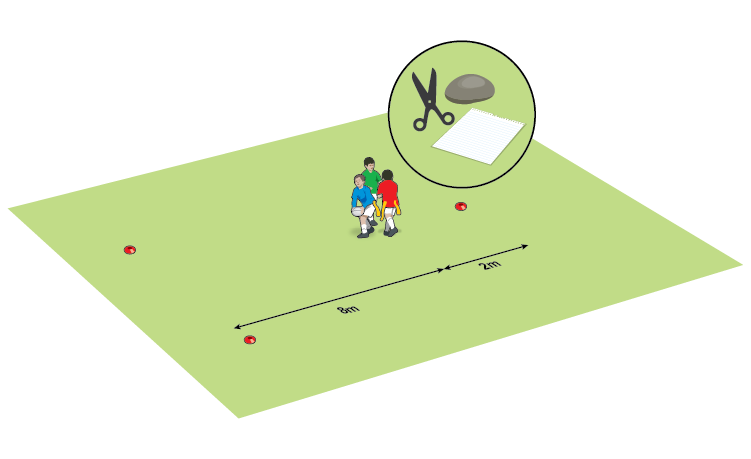
Speaking to her, you know that her mind is in the right place and that’s so important when it comes to tackling. Jim Love, the former Maori All Black player and coach, once said to me that tackling was 90% in the head, 10% technique. Let’s not forget that we must work on the mind as well as the body. Sometimes, it’s the simplest exercises that work the best.
Related Files

Dan Cottrell
Latest Issue
Subscribe Today
Subscribe Today


Newsletter Sign Up
Coaches Testimonials

Gerald Kearney, Downtown Las Vegas Soccer Club

Paul Butler, Florida, USA

Rick Shields, Springboro, USA
Tony Green, Pierrefonds Titans, Quebec, Canada
Subscribe Today
Latest Issue

Be a more effective, more successful rugby coach
In a recent survey 89% of subscribers said Rugby Coach Weekly makes them more confident, 91% said Rugby Coach Weekly makes them a more effective coach and 93% said Rugby Coach Weekly makes them more inspired.
Get Weekly Inspiration
All the latest techniques and approaches


Rugby Coach Weekly offers proven and easy to use rugby drills, coaching sessions, practice plans, small-sided games, warm-ups, training tips and advice.
We've been at the cutting edge of rugby coaching since we launched in 2005, creating resources for the grassroots youth coach, following best practice from around the world and insights from the professional game.
