
 close
close


 LOGIN
LOGINRugby Coach Weekly is the largest digital resource for youth coaches, trusted by 15,000+ coaches, teachers and parents every month.
-
Coach with confidence
-
Improve your teams faster
-
Run great sessions with less effort
- Expert coaching advice from TOP Coaches
- Training sessions for players from U6 to U17+.
Winning the tackle contest


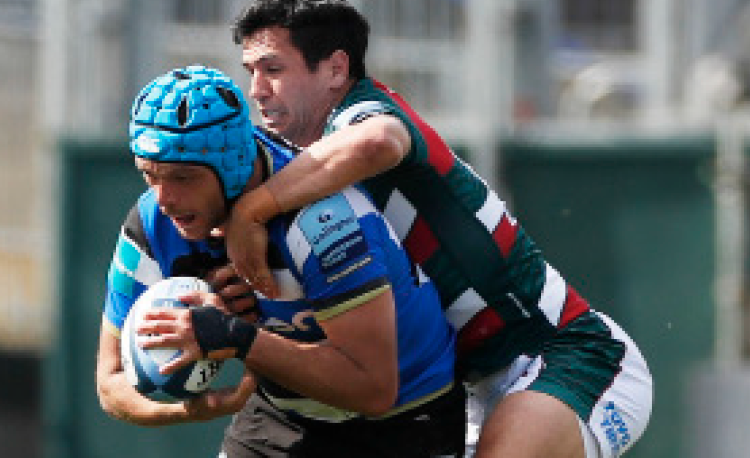
Once a tackle is made, the tackled player has to place the ball on the ground if he cannot offload it. This is a crucial moment in which the ball can be won or lost. Make your players know how to compete for the ball legally after the tackle.
Warm up time: 5
Session time: 6-9
Development time: 6-9
Game time: 15-20
Warm down time: 7
What to think about
Players need to know the laws. A tackler must release the tackled player before he can play the ball himself. With the new laws, like any other player, he must enter the tackle area through the “gate” – from his own side. Players will be penalised if they enter from any other angle. No player should go off their feet or support themselves by using the player on the ground. This makes sense anyway, because players on their feet can drive forward and compete against oncoming defenders. All players should work at this skill, though back rows and centres will be the players who will use this skill the most.set-up
- Aim for the ball first.
- Get over the ball if you cannot get your hands on the ball.
- Low man wins!
What you get your players to do
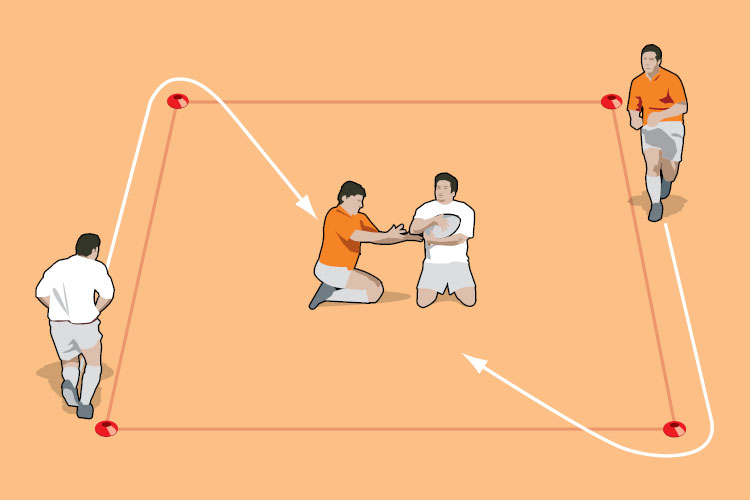
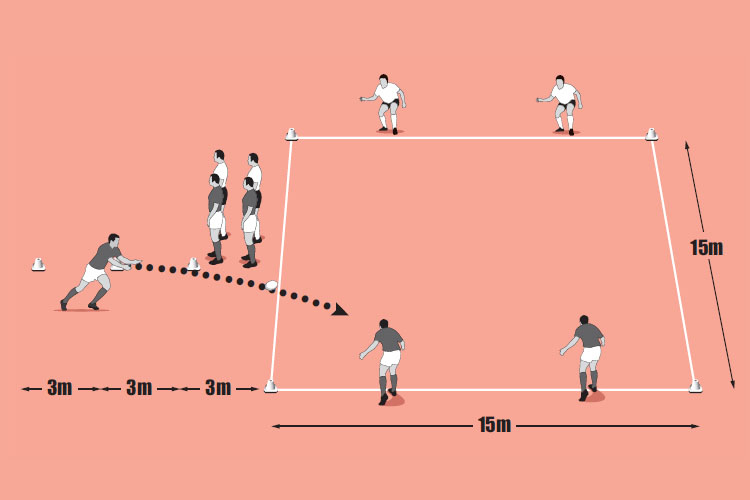
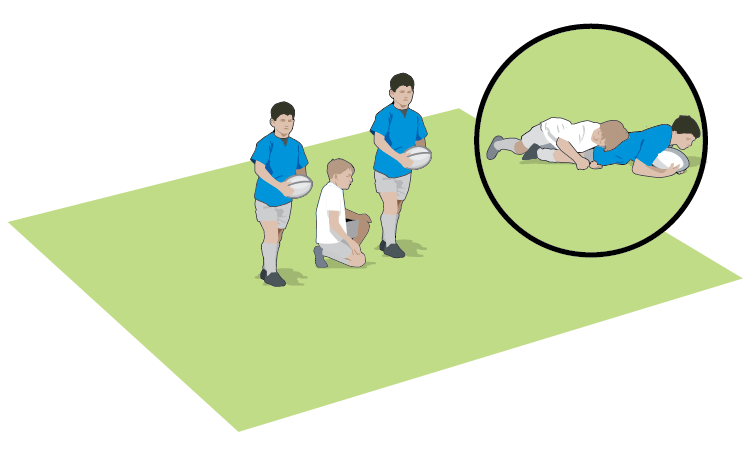
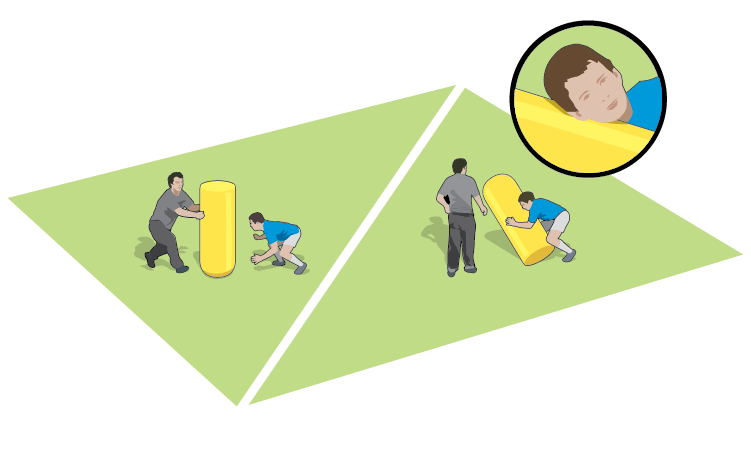
Put an attacker and defender on their knees in the middle of the box. Put another attacker and defender at the corners of the box. A tackle takes place in the box and the two players on their feet are released. They must run round the corners of the box to enter from their side of the contest. Play full contact and stop once it is clear who has “won” the contest.Development
- Start the players on their feet from differing positions, so one might have the advantage.
- Start the players on their feet at the same cone. They enter the box from any point, but must enter the tackle area legally.
- Have the two players in the box start on their feet, but an arm’s distant apart. They wrestle to the ground and as they do, release the other two players.
Related Files
Game situation
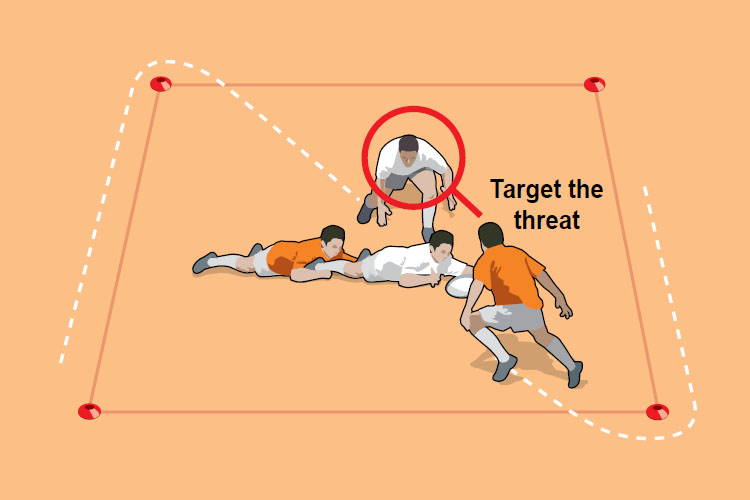
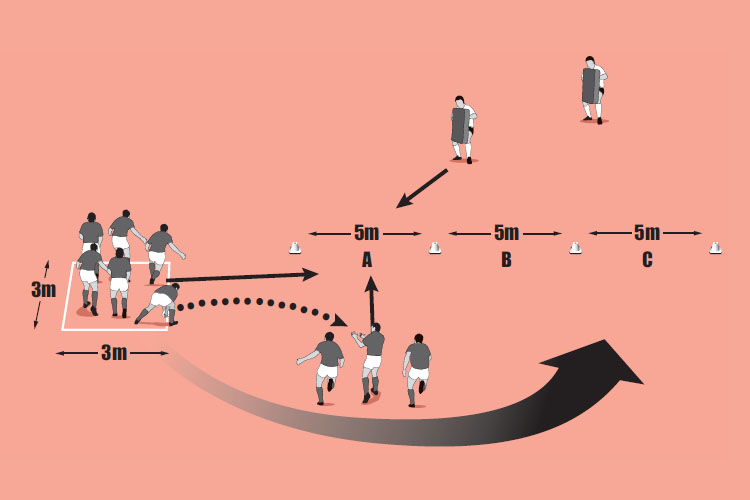
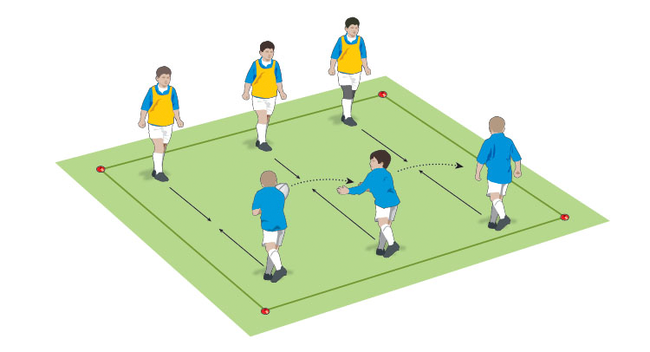
Put two attackers and two defenders at one side of the box about 3m apart. Put another attacker and defender at the two furthest corners. The attacker standing at the side of the box passes the ball to his partner, who attempts to score at the far end. Once the first pass is made, the two players at the far corners join in. The defenders attempt to stop him. Play full contact rugby, but no passing, with the emphasis being on winning the tackle contest if there is one.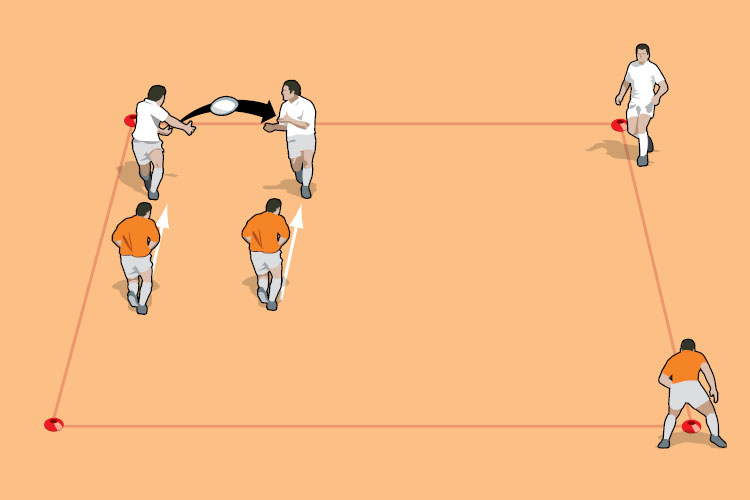
What to call out
- “Stay on your feet in the contest”
- “Ball carrier fight to place the ball back towards your team”
- “Swoop to drive into contest”

Dan Cottrell
Latest Issue

Subscribe Today
Premium Books
Subscribe Today
Newsletter Sign Up
Coaches Testimonials

Colin Shaw

Gary Lee Heavner
Subscribe Today
Latest Issue
Be a more effective, more successful rugby coach
In a recent survey 89% of subscribers said Rugby Coach Weekly makes them more confident, 91% said Rugby Coach Weekly makes them a more effective coach and 93% said Rugby Coach Weekly makes them more inspired.
Get Weekly Inspiration
All the latest techniques and approaches


Rugby Coach Weekly offers proven and easy to use rugby drills, coaching sessions, practice plans, small-sided games, warm-ups, training tips and advice.
We've been at the cutting edge of rugby coaching since we launched in 2005, creating resources for the grassroots youth coach, following best practice from around the world and insights from the professional game.
