
 close
close


 LOGIN
LOGINRugby Coach Weekly is the largest digital resource for youth coaches, trusted by 15,000+ coaches, teachers and parents every month.
-
Coach with confidence
-
Improve your teams faster
-
Run great sessions with less effort
- Expert coaching advice from TOP Coaches
- Training sessions for players from U6 to U17+.
Trapping the winger


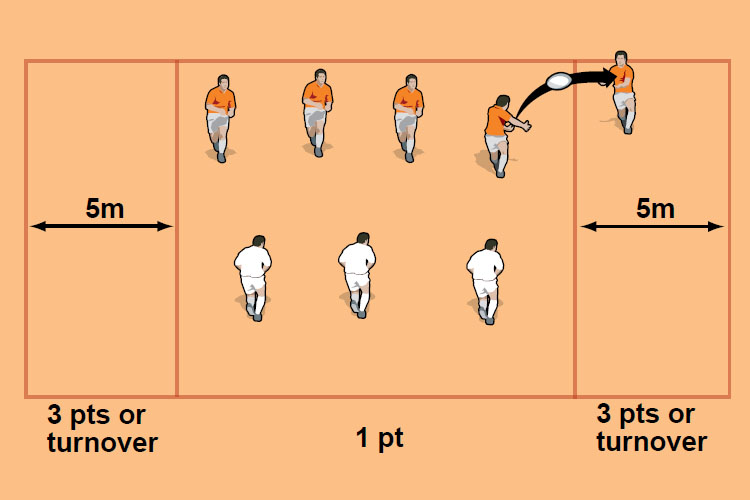
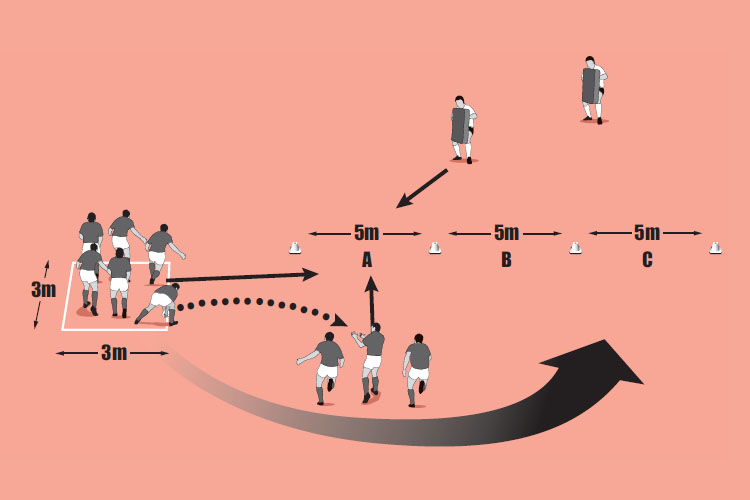
Even the slowest player can tackle a winger in the 5m channel, but only if they get their approach angle right. Once learnt, these skills can be transferred into a wider area to make sure all your players can cover the wings.
Warm up time: 5-7
Session time: 8-10
Development time: 8-10
Game time: 15-20
Warm down time: 5-7
What to think about
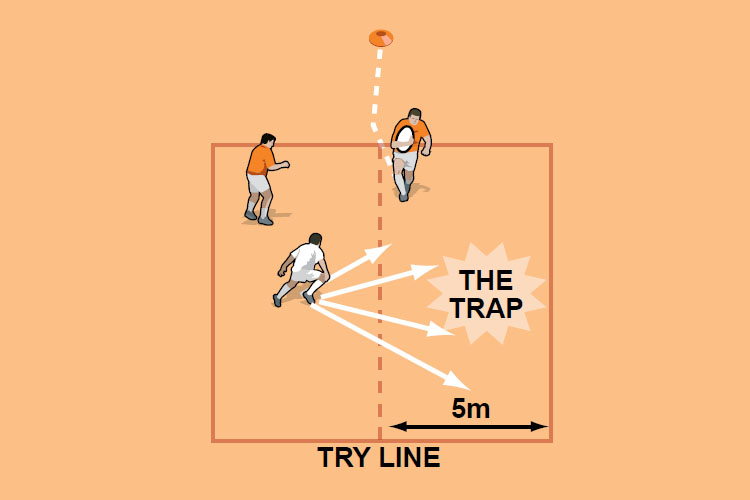
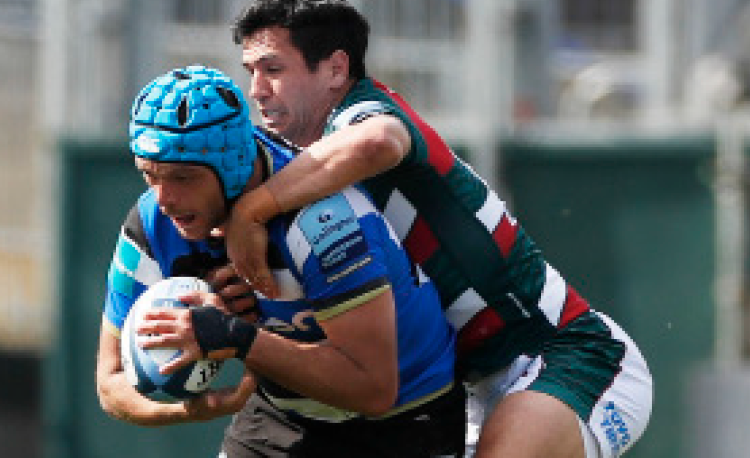
Covering the wing is about defenders approaching from the correct angles. The players need to think about intercepting the ball carrier and must, therefore, be prepared to give up some ground. They can set a trap by giving the ball carrier a chance to run towards the touch line, and then use the touch line as another defender. The defender must not push the ball carrier into touch because this is illegal. Instead, he needs to use the normal tackle technique, with the shoulder impacting as the arms reach out to grab. This will likely be a side on tackle.set-up
- Give the ball carrier space towards the touch line.
- Trap the ball carrier between you and the touch line by giving up some space, and then intercepting him.
What you get your players to do
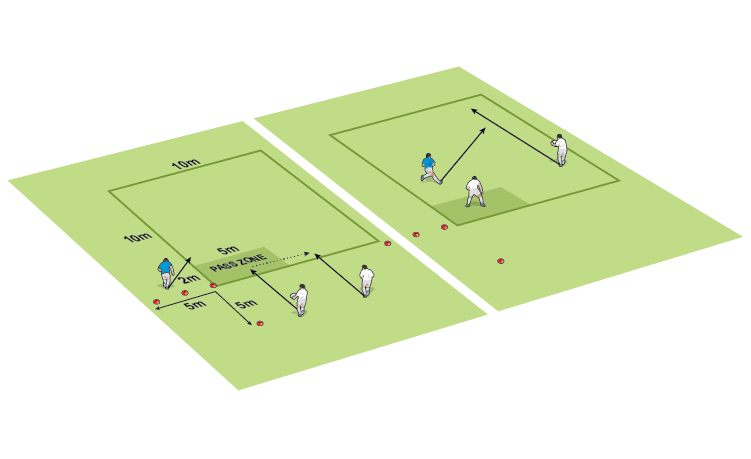
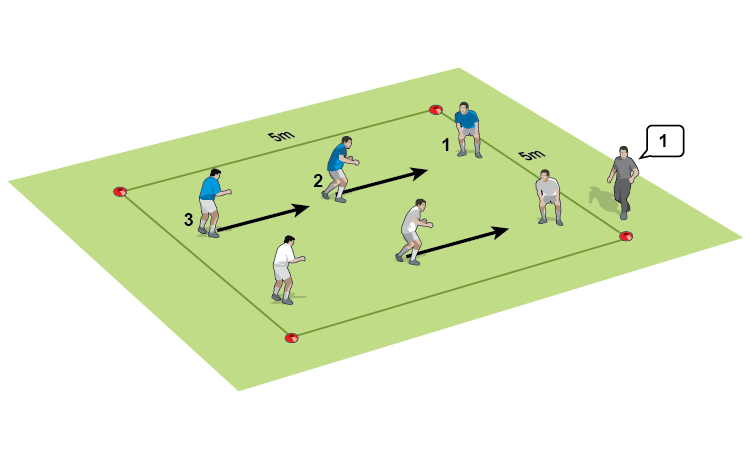
Place a feeder at the side of the box, an attacker in the middle at one end, and a defender by the side of the box about 4m away from the feeder. Have the feeder pass to the attacker, who aims to run to the far end whilst staying inside the 5m channel. The defender has to prevent him from reaching the far end by closing down the space. Start with touch tackling, with a tackle made with two hands below the waist.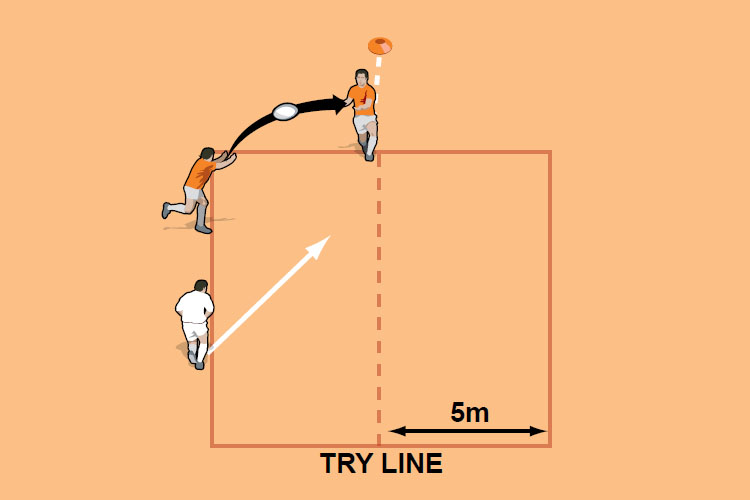
Development
- Make the running area wider for different types of players. For example, create a 10m area for centres since they cover the ground quicker.
- Give the players scores, such as one point for a tackle and two points for a tackle into touch. Or one point for a try and two points for a try if the ball carrier cuts inside the tackler.
Related Files
Game situation
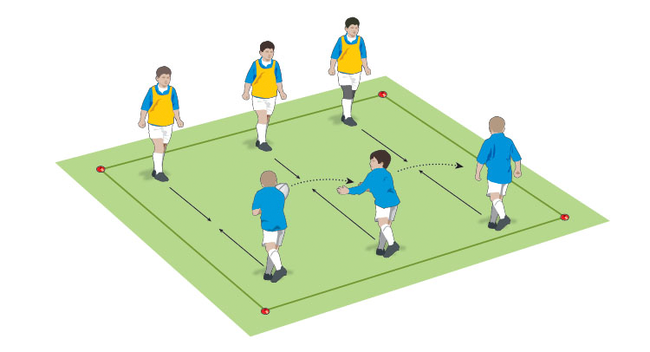
Split into teams of five. Two defenders rest. The attacking team always starts from its try line. Award three points if the attacking team scores in the wide channels and one point through the middle. Play normal two-handed touch rugby with the attacking team allowed two touch tackles before conceding a turnover. The touched player has to pass the ball immediately. However, if the ball carrier is tackled in the wide channel, the ball is turned over.What to call out
- “Don’t go forward, let the attacker move into the trap”
- “Watch out for the hand off, drive hard into the tackle”
- “The touch line is another defender”

Dan Cottrell
Latest Issue

Subscribe Today
Subscribe Today
Newsletter Sign Up
Coaches Testimonials

Colin Shaw

Gary Lee Heavner
Subscribe Today
Latest Issue
Be a more effective, more successful rugby coach
In a recent survey 89% of subscribers said Rugby Coach Weekly makes them more confident, 91% said Rugby Coach Weekly makes them a more effective coach and 93% said Rugby Coach Weekly makes them more inspired.
Get Weekly Inspiration
All the latest techniques and approaches


Rugby Coach Weekly offers proven and easy to use rugby drills, coaching sessions, practice plans, small-sided games, warm-ups, training tips and advice.
We've been at the cutting edge of rugby coaching since we launched in 2005, creating resources for the grassroots youth coach, following best practice from around the world and insights from the professional game.
