
 close
close


 LOGIN
LOGINRugby Coach Weekly is the largest digital resource for youth coaches, trusted by 15,000+ coaches, teachers and parents every month.
-
Coach with confidence
-
Improve your teams faster
-
Run great sessions with less effort
- Expert coaching advice from TOP Coaches
- Training sessions for players from U6 to U17+.
Talk the talk


This session makes oral communication a feature. It forces the players to be accurate, concise and urgent when they are without the ball – both in attack and defence. You will see the difference when you take the communication option away.
Warm up time: 5-7
Session time: 10-12
Development time: 10-12
Game time: 15-20
Warm down time: 5-7
What to think about
When players say they need to communicate more, challenge them to be specific about what they should say and when they should say it. Poor communication requires immediate feedback, just like dropped passes or missed tackles. You can do this by treating poor communication as an infringement in a game situation, leading to a turnover ball. Or you can have a communication timeout zone in training, where guilty players have to go and say the alphabet backwards before returning.set-up
- Use accurate and concise communication throughout training. Train as we play.
- Attack space and listen for support players to move the ball into space.
What you get your players to do
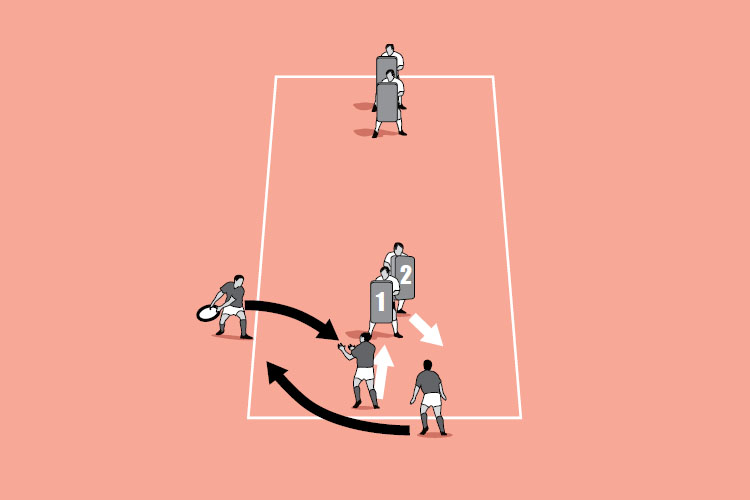
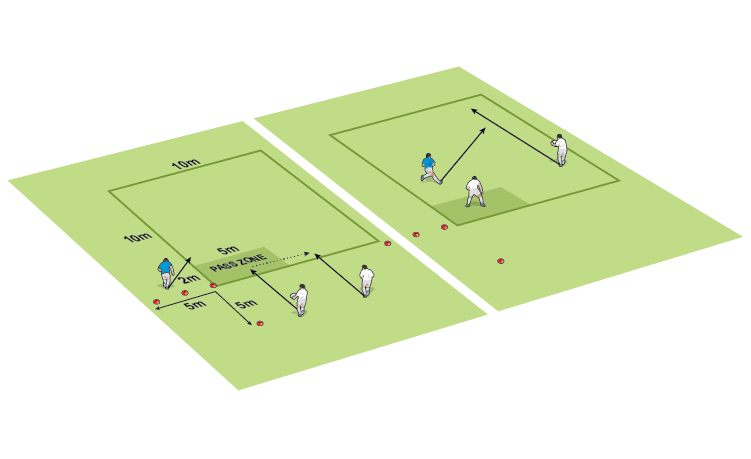
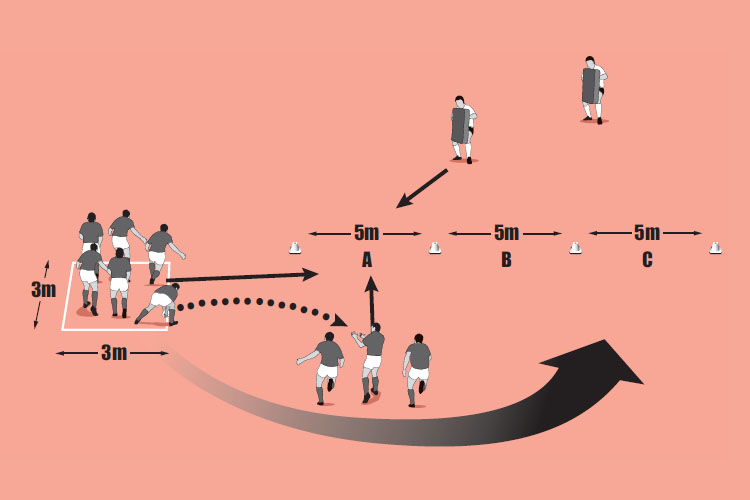
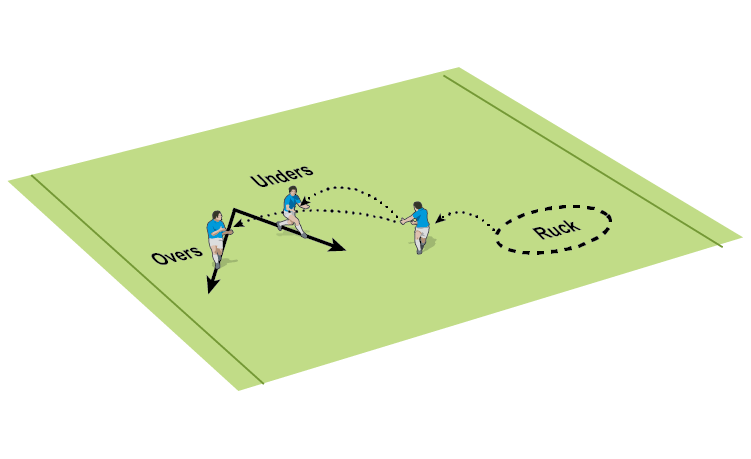
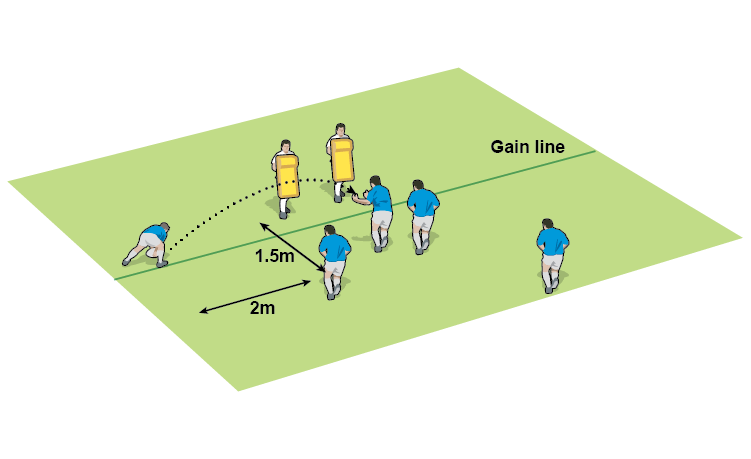
Place two pairs of ruck pad holders in the channel as in the top picture. Have a player feed two attackers who run towards the first set of pads. When the first pass is made, the ruck pad holder at the back of the first pair steps out to cover the support runner. The support runner moves into space and shouts for the ball. If the pass is successful, the three attackers advance to repeat the move with the second pair of pad holders. If there is no communication between the attackers, the attempt ends.Development
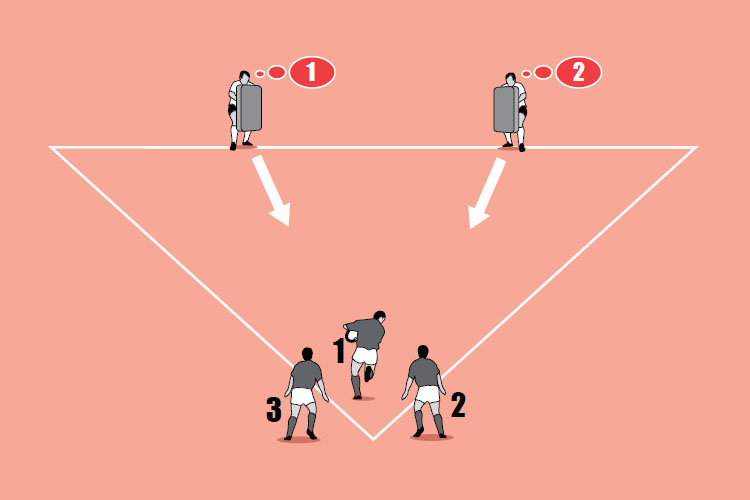
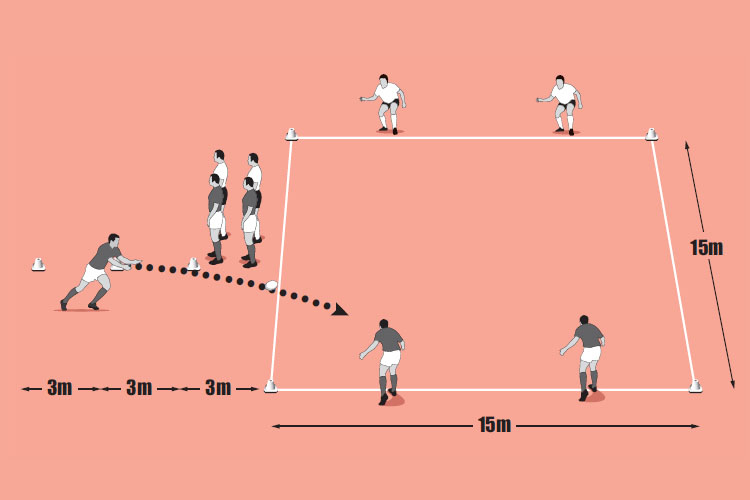
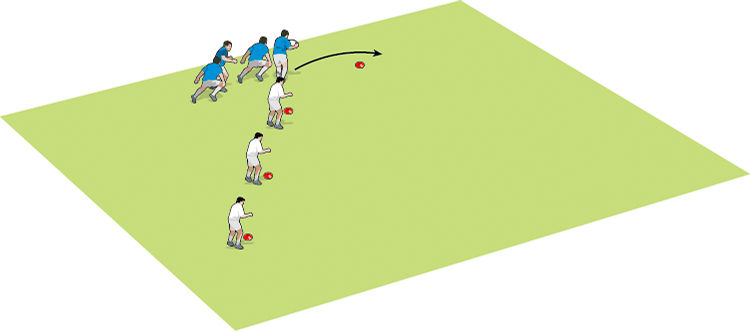
Place two ruck pad holders at the wide end of the triangle and three attackers at the point. The pad holders decide which attacker they will mark. Have both sets move forward at pace with the attackers aiming to reach the far line. At first, allow no talk between the attackers. Then introduce communication. The attempt fails if there is an infringement or the ball carrier is touched in possession of the ball.Related Files
Game situation
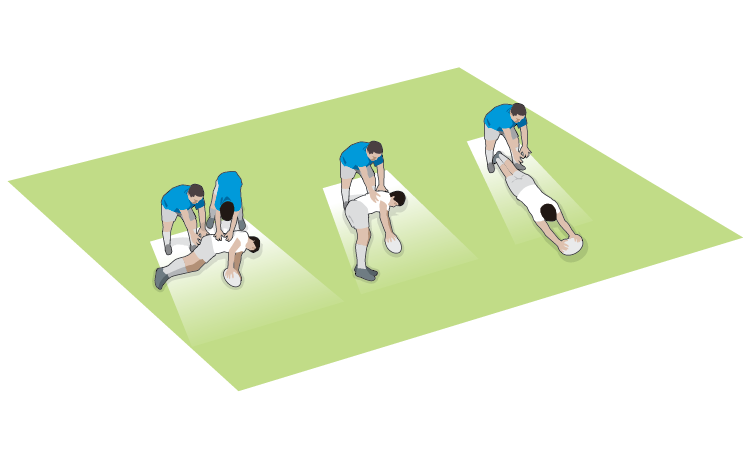
Split into two teams of seven. Start by playing “no ball” touch. An imaginary ball is given to one player. He runs forward, but if he is touched in possession it is a turnover. He can pass the ball by shouting the name of one of his team mates who must be in a position to take a pass. Develop the game by not allowing any pass to “miss” more than two players. Then add a ball and play normal rugby rules with a tap pass for a re-start. Play without any talk to start, and then make it an infringement to pass to a player who has not asked for the ball.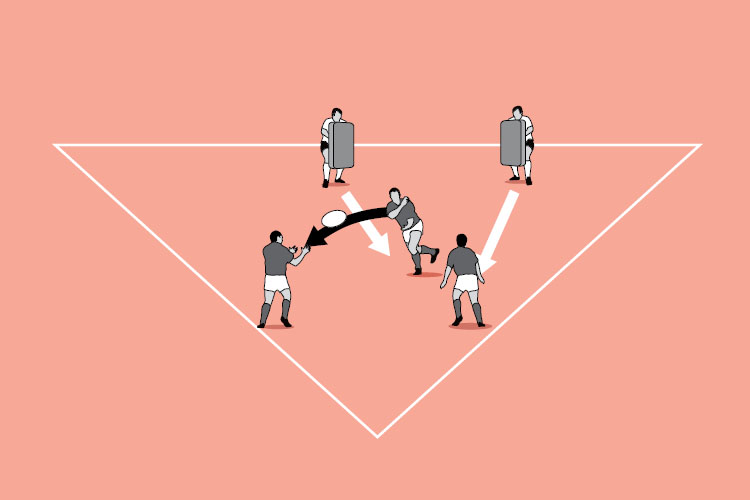
What to call out
- “Tell the ball carrier exactly what you want”
- “Look ahead and trust your support players”
- “Depth in support aids communication”

Dan Cottrell
Latest Issue

Subscribe Today
Subscribe Today
Newsletter Sign Up
Coaches Testimonials

Colin Shaw

Gary Lee Heavner
Subscribe Today
Latest Issue
Be a more effective, more successful rugby coach
In a recent survey 89% of subscribers said Rugby Coach Weekly makes them more confident, 91% said Rugby Coach Weekly makes them a more effective coach and 93% said Rugby Coach Weekly makes them more inspired.
Get Weekly Inspiration
All the latest techniques and approaches


Rugby Coach Weekly offers proven and easy to use rugby drills, coaching sessions, practice plans, small-sided games, warm-ups, training tips and advice.
We've been at the cutting edge of rugby coaching since we launched in 2005, creating resources for the grassroots youth coach, following best practice from around the world and insights from the professional game.
