
 close
close


 LOGIN
LOGINRugby Coach Weekly is the largest digital resource for youth coaches, trusted by 15,000+ coaches, teachers and parents every month.
-
Coach with confidence
-
Improve your teams faster
-
Run great sessions with less effort
- Expert coaching advice from TOP Coaches
- Training sessions for players from U6 to U17+.
Tackle match up


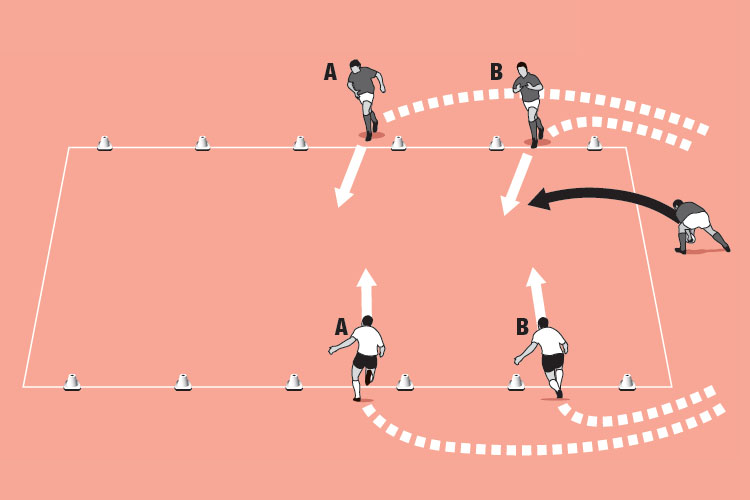
Ruck defence is becoming a very dynamic operation because of the sheer speed of rucks. Defenders who are arriving “on the fold” – coming from the far side of the ruck – have to match up against potential runners so there is no gap and if possible meet like with like.
Warm up time: 5
Session time: 6-9
Development time: 6-9
Game time: 15-20
Warm down time: 7
What to think about
A pick-and-go play or a one-pass move from the edge of the ruck can make easy metres from a quick ruck unless defenders are in position. Because of the speed of the ruck, defenders should track potential threats and aim to meet like with like. For instance, a prop should line up against a prop where possible, otherwise the ball carrier could barrel over a smaller player or sidestep a slower one. Elements of this session are excellent warm-up drills. Plenty of repetition will have players naturally flowing into position. Don’t expect great results from the outset though!set-up
- Look ahead and call where you are going to go.
- Make sure the inside is covered first.
- Come up as a line, so listen and react to your partner.
- Match up against a similar threat.
What you get your players to do
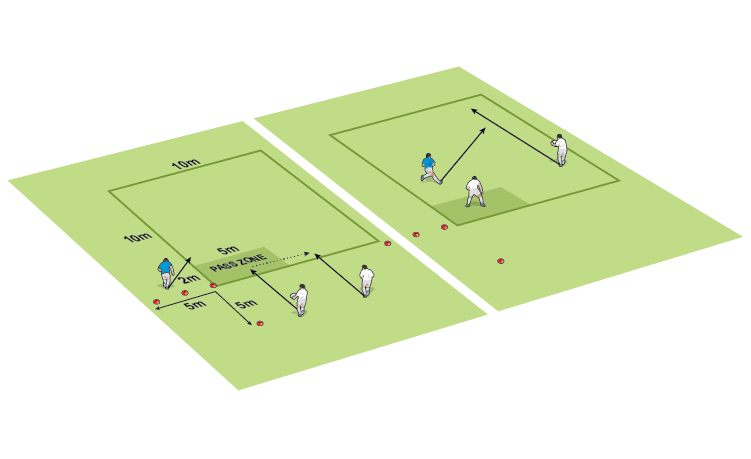
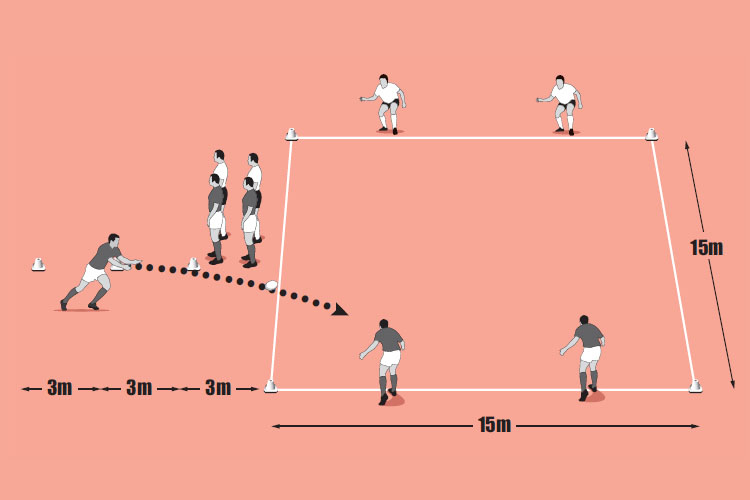
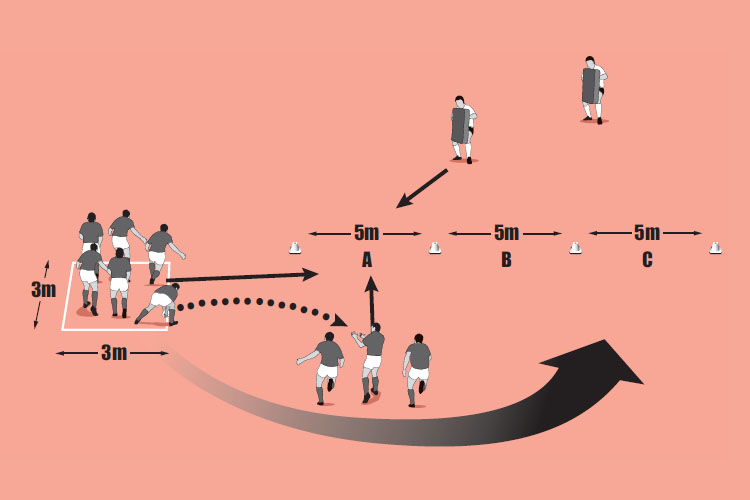
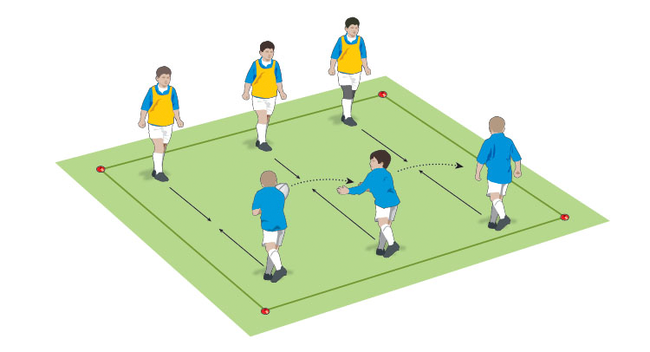
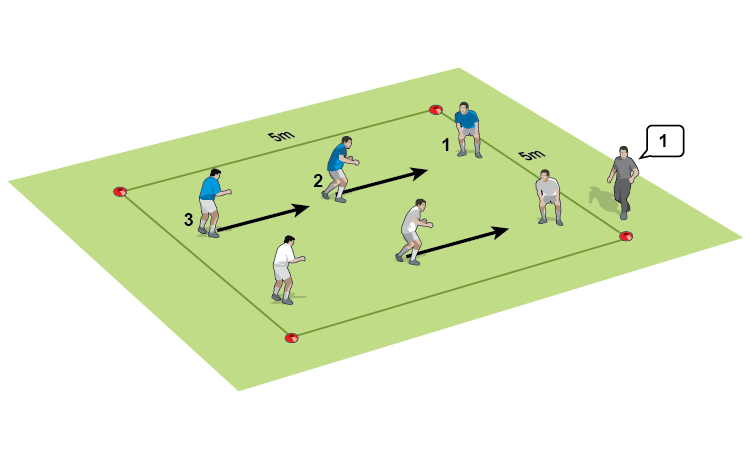
Put two attackers and two defenders at the corners of the box as in the top picture, with a feeder between them. Identify which player is marking which. Release the players. Each attacker moves through a gap in the cones and they receive a ball from the feeder. Defenders have to go through the same gap opposite the attacker they are marking. Defenders have to touch the player they are marking on the hips with both hands. Repeat, with the attackers going through different gaps.Development
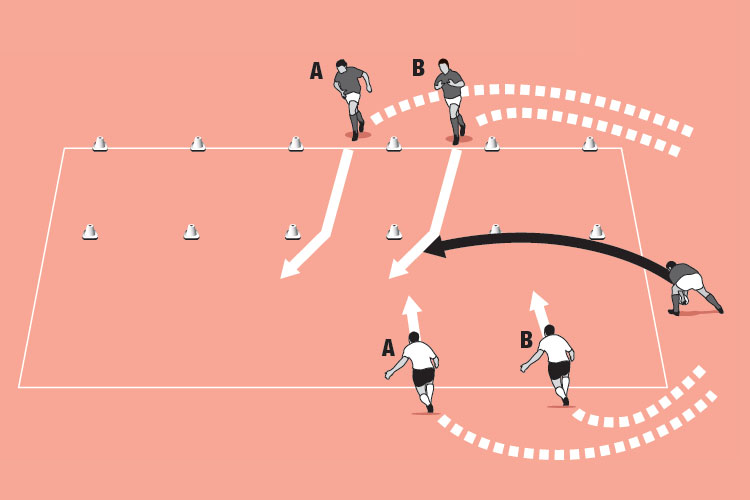
- Expand the box as in the middle picture, so defenders have to mark their opposite number but with more chances of changing angles.
- Add full contact. Add in one more attacker and one more defender.
Game situation
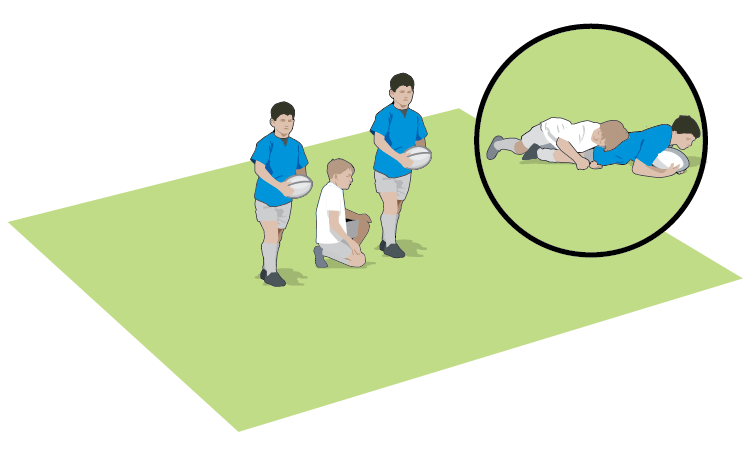
Play a game of touch rugby. Each player marks one other player. In the middle zone (see the bottom picture), only the player who is marking that attacker can “touch” tackle that player. If there is a tackle, the tackler does one press-up and the attacker has two seconds to pass the ball away. In the zones at the end of the pitch, anyone can “touch” the ball carrier.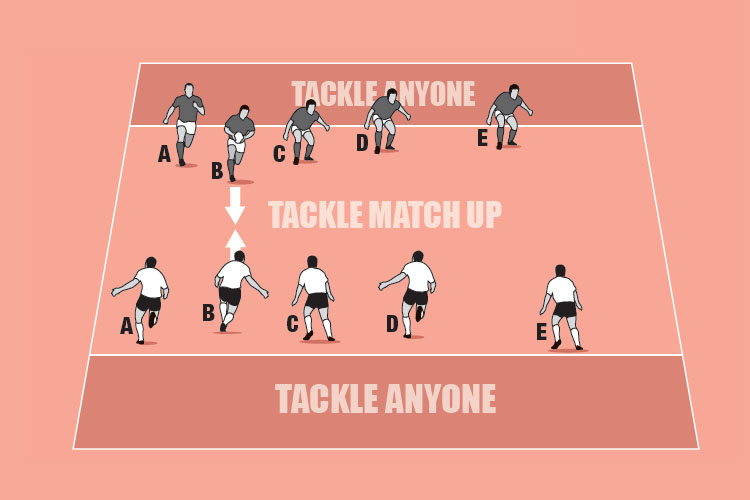
What to call out
- “Run up square, don’t turn your hips out”
- “Keep dynamic by being light on your feet and moving forward – don’t plant”
- “Elbows in, hands in front – step and punch through the tackle close to rucks”

Dan Cottrell
Latest Issue

Subscribe Today
Premium Books
Subscribe Today
Newsletter Sign Up
Coaches Testimonials

Colin Shaw

Gary Lee Heavner
Subscribe Today
Latest Issue
Be a more effective, more successful rugby coach
In a recent survey 89% of subscribers said Rugby Coach Weekly makes them more confident, 91% said Rugby Coach Weekly makes them a more effective coach and 93% said Rugby Coach Weekly makes them more inspired.
Get Weekly Inspiration
All the latest techniques and approaches


Rugby Coach Weekly offers proven and easy to use rugby drills, coaching sessions, practice plans, small-sided games, warm-ups, training tips and advice.
We've been at the cutting edge of rugby coaching since we launched in 2005, creating resources for the grassroots youth coach, following best practice from around the world and insights from the professional game.
