
 close
close


 LOGIN
LOGINSlide pass
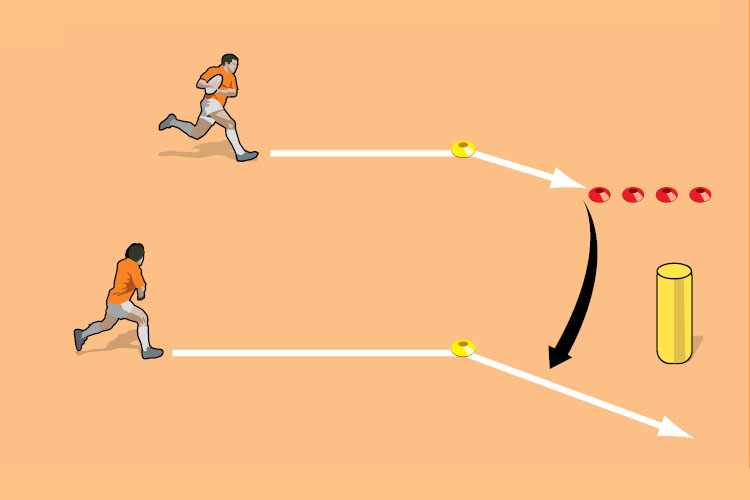
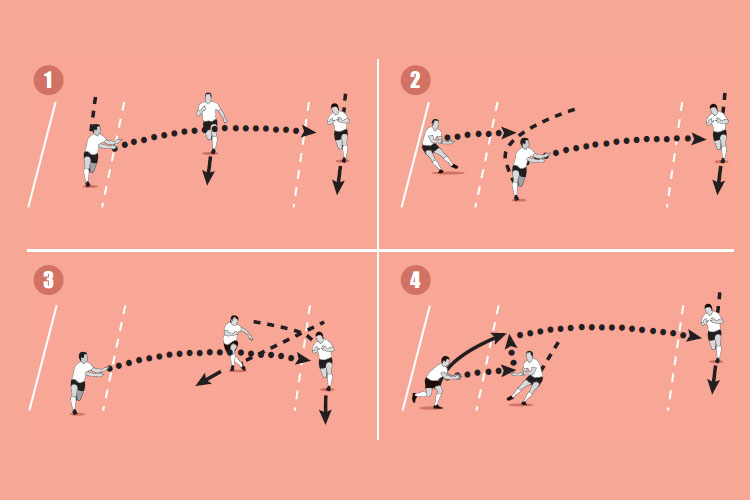
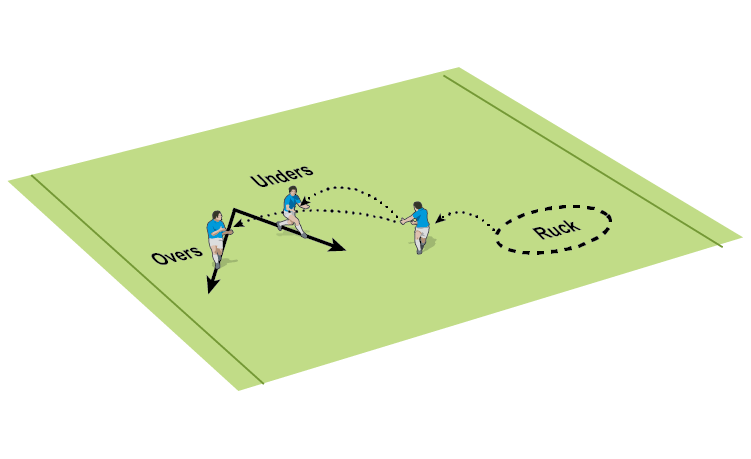
The “slide pass” has been used to good effect recently by a number of international teams. It is a flat pass to a player who is drifting outside his defender. Introducing the move also lets your team practise some good basic passing and running skills.
Warm up time: 5-7
Session time: 10-15
Development time: 10-15
Game time: 15-20
Warm down time: 7-10
What to think about
The slide pass is quite a risky play. It can make the ball carrier drift without committing defenders. However, if the move is set out clearly, the players should be able to distinguish between “sliding” and preserving space. A slide pass is most effective against a drift defence, where defenders are always wary of runners going back against the direction of the attack. To work the ball carrier must convince the defence that the attack is pulling them wide, before attacking the inside shoulders of the defenders. The “sting” is a flat pass given to a runner angling across the pitch and getting outside the defender. To be really effective the move needs a couple of runners attacking against the direction of the drift. The defence will then be hesitant about marking the runner on the outside.set-up
- Deliver the pass as flat as possible.
- The receiver runs the same angle as the passer.
- Get on the outside of the defender.
What you get your players to do
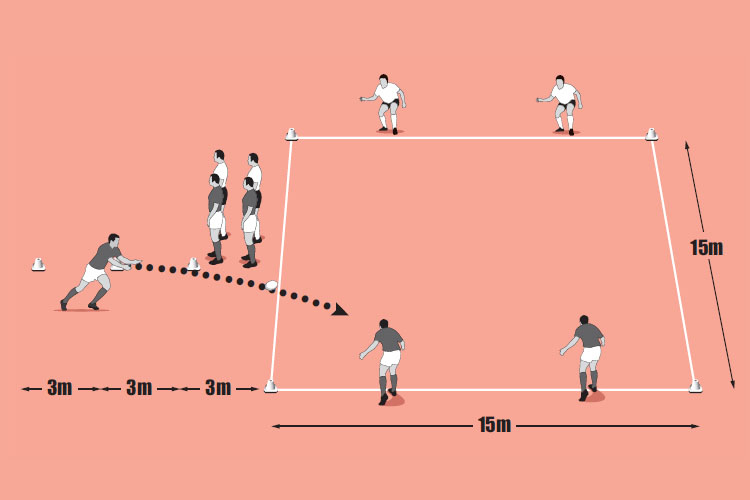
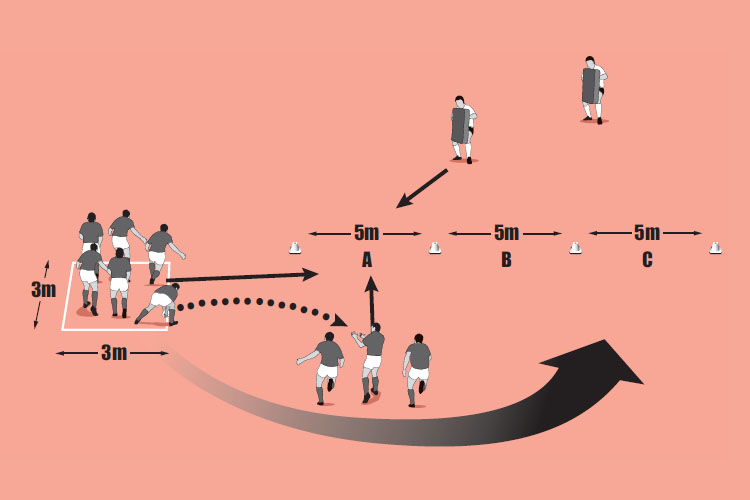
Lay out cones and a bag as in the top picture and work the players in pairs with a ball. Start with the players running straight, before changing direction at the yellow cones. The receiver has to match the angle that the ball carrier is running at. When the ball carrier reaches the red cone he delivers a flat pass across the front of the tackle bag to the receiver angling away. Start off slowly with the players not passing too far and then increase the intensity.Be a more effective, more successful youth rugby coach
- Win more games, without sacrificing the crucial element of fun
- Develop every player, regardless of vast differences in ability
- Run a respected, professional programme - even with a full-time job and limited time
Subscribe for full access
Or register and unlock 2 free articles,
receive our weekly newsletter, and
get a FREE coaching e-book.
Or if you are already a subscriber login for full access.

Dan Cottrell
Latest Issue

Subscribe Today
Subscribe Today
Newsletter Sign Up



Coaches Testimonials

Colin Shaw

Gary Lee Heavner
Subscribe Today
Latest Issue
Be a more effective, more successful rugby coach
In a recent survey 89% of subscribers said Rugby Coach Weekly makes them more confident, 91% said Rugby Coach Weekly makes them a more effective coach and 93% said Rugby Coach Weekly makes them more inspired.
Get Weekly Inspiration
All the latest techniques and approaches


Rugby Coach Weekly offers proven and easy to use rugby drills, coaching sessions, practice plans, small-sided games, warm-ups, training tips and advice.
We've been at the cutting edge of rugby coaching since we launched in 2005, creating resources for the grassroots youth coach, following best practice from around the world and insights from the professional game.
