
 close
close


 LOGIN
LOGINSet piece 12 options
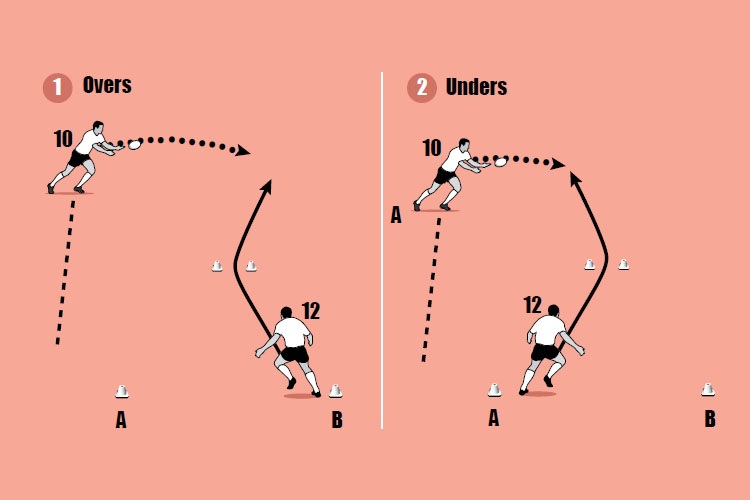
The second receiver from a ruck or set piece needs to act as a ballcarrying option or a support player for close contact in the 10 channel. The 12 (inside centre) is the most likely player for this. This session works on key options so they become second nature.
Warm up time: 5-7
Session time: 8-10
Development time: 10-15
Game time: 10-15
Warm down time: 5-8
What to think about
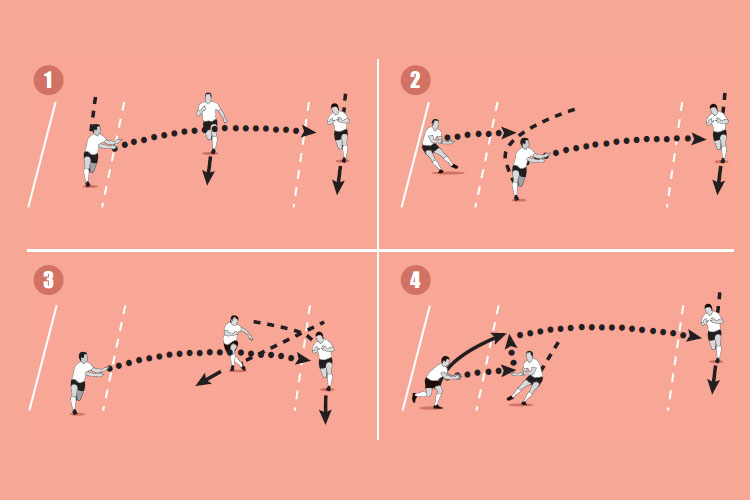
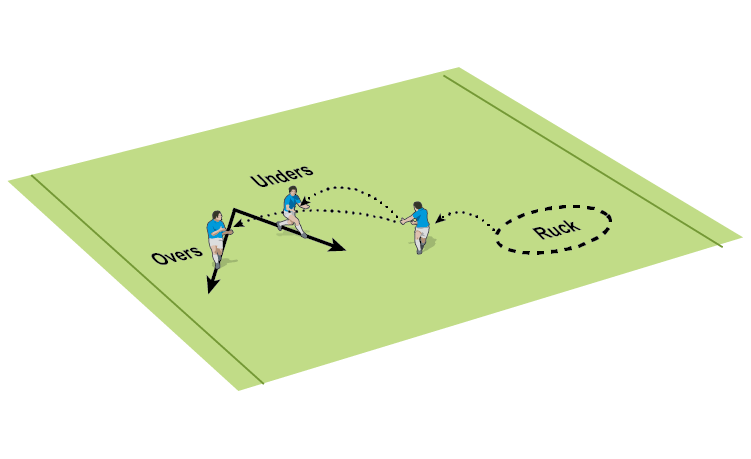
Jargon reminder Unders: A running line towards the passer of the ball. Overs: A running line away from the passer of the ball. Switch/scissors/cut: Take a pass behind the original ball carrier, running towards him. Wrap: After the switch, arcing out and away to beat the cover defence. All these plays are “feel” moves, where the receiver needs to think about the passer’s running lines and where the opposition are standing. Lots of repetition will aid player understanding and feel.set-up
- Wait for the play to be called (either a run off the back of the ruck/scrum) or the ball being released to the backs.
- Get flat for a play that runs straight from the back of the ruck/set piece, adjust depth and width for the pass.
- Communicate early with the first receiver and run once the ball has been passed from the ruck.
- Attack with purpose, expect the ball, and accelerate through the pass.
What you get your players to do
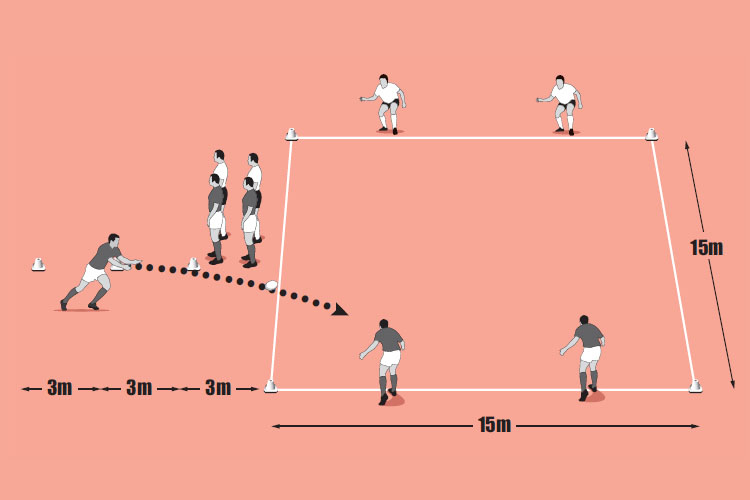
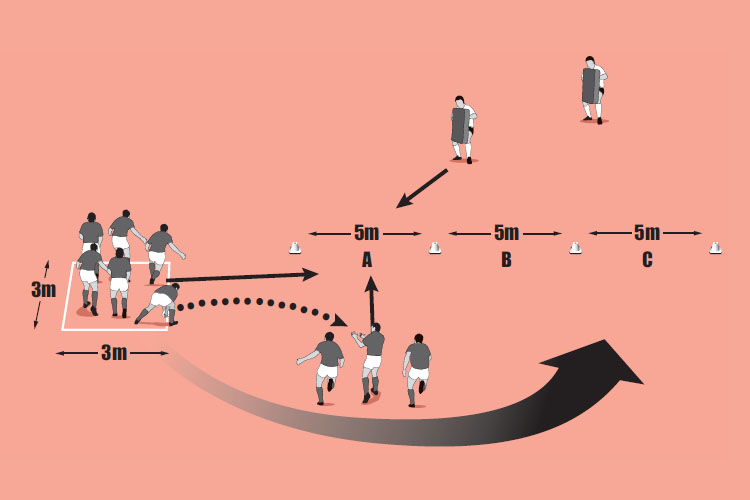
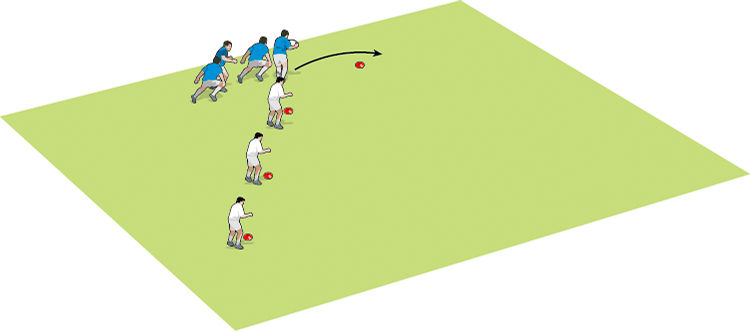
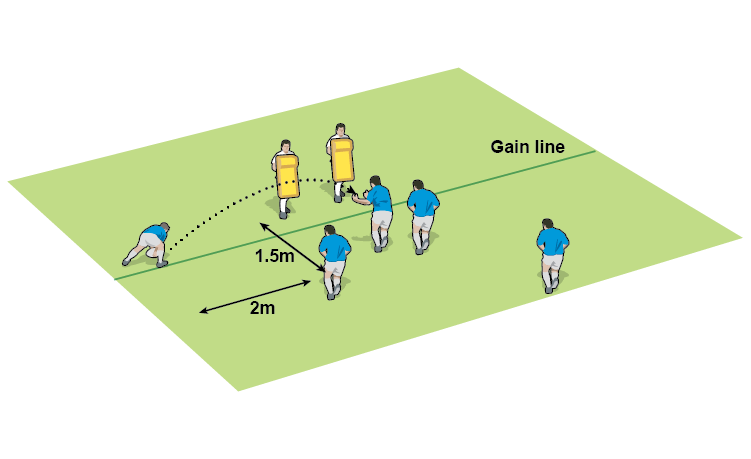
Unders/overs (see picture 1) Call “unders” or “overs”. The 12 stands on the appropriate cone. Get a first receiver to take a pass and run forward. At the same time, the 12 runs at a gate of cones and then cuts in or out, taking the pass from the first receiver. Add ruck pad holders as defenders as a development. Switch/wrap (see picture 2) 12 stands on a cone and then runs at a gate of cones before receiving a pass from the first receiver on the switch. Depending on the position of some advancing ruck pad holders, he changes his angle of run once he has received the ball. (The gate forces greater accuracy and timing of runs by both passer and receiver). First supporter (see picture 3) A forward runs from a ruck pad on the ground, with another forward supporting on his inside. He runs at a set of ruck pad holders. When he makes contact, he goes to ground. 12 and the other forward clear out the ruck pads and the ball is swept away for 10. Develop by the ball carrier popping to 12 and supporting as well or offloading through the pads.Be a more effective, more successful youth rugby coach
- Win more games, without sacrificing the crucial element of fun
- Develop every player, regardless of vast differences in ability
- Run a respected, professional programme - even with a full-time job and limited time
Subscribe for full access
Or register and unlock 2 free articles,
receive our weekly newsletter, and
get a FREE coaching e-book.
Or if you are already a subscriber login for full access.

Dan Cottrell
Latest Issue

Subscribe Today
Subscribe Today
Newsletter Sign Up
Coaches Testimonials

Colin Shaw

Gary Lee Heavner
Subscribe Today
Latest Issue
Be a more effective, more successful rugby coach
In a recent survey 89% of subscribers said Rugby Coach Weekly makes them more confident, 91% said Rugby Coach Weekly makes them a more effective coach and 93% said Rugby Coach Weekly makes them more inspired.
Get Weekly Inspiration
All the latest techniques and approaches


Rugby Coach Weekly offers proven and easy to use rugby drills, coaching sessions, practice plans, small-sided games, warm-ups, training tips and advice.
We've been at the cutting edge of rugby coaching since we launched in 2005, creating resources for the grassroots youth coach, following best practice from around the world and insights from the professional game.
