
 close
close


 LOGIN
LOGINRugby Coach Weekly is the largest digital resource for youth coaches, trusted by 15,000+ coaches, teachers and parents every month.
-
Coach with confidence
-
Improve your teams faster
-
Run great sessions with less effort
- Expert coaching advice from TOP Coaches
- Training sessions for players from U6 to U17+.
Ruck, rest, ruck


Your players need to be able to ruck, then move on to another tight action / task (like run, tackle or pass) and then probably ruck again. In matches, rucking does not happen in isolation. This session works on improving your players technique at rucks, breaking away, then rucking again.
Warm up time: 5
Session time: 5-8
Development time: 6-9
Game time: 15-20
Warm down time: 7
What to think about
Rucks are hard work. They sap energy. But if you are serious about creating multiphase rugby, you need players to recycle themselves quickly to be part of the ongoing play while your side has possession. Here are three questions to ask your players:- If you are on the ground from a ruck, what is the most likely part of play you will be involved in next
- If you are arriving at the ruck, what would stop you entering that ruck?
- What is your running line from a ruck if the next phase is behind the gain line?
set-up
- Ruck well and then get back into the game.
- Make a difference at the ruck or put yourself in a position to make a difference elsewhere.
What you get your players to do
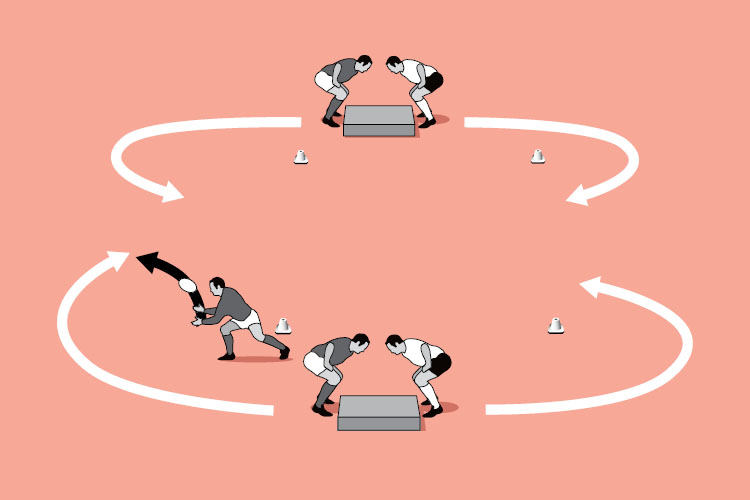
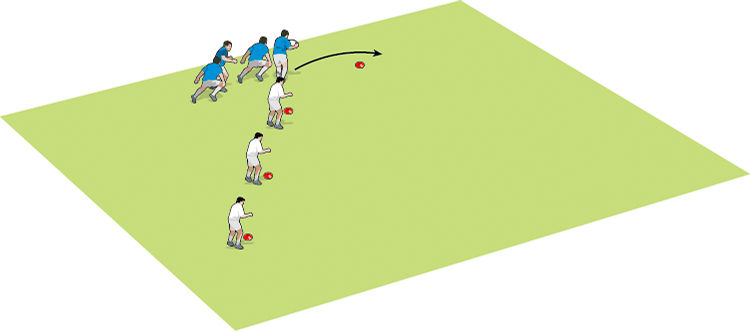
Put two pairs of players over two ruck pads as shown in the top picture. Put a feeder behind one of the pairs. Shout “GO” and the players try to push each other so they can step over the pad. After a few seconds shout “BREAK” and the players disengage and run back around the cones behind them before attacking and defending in the space between the pads. Swap players in attack and defence after each attempt.Development
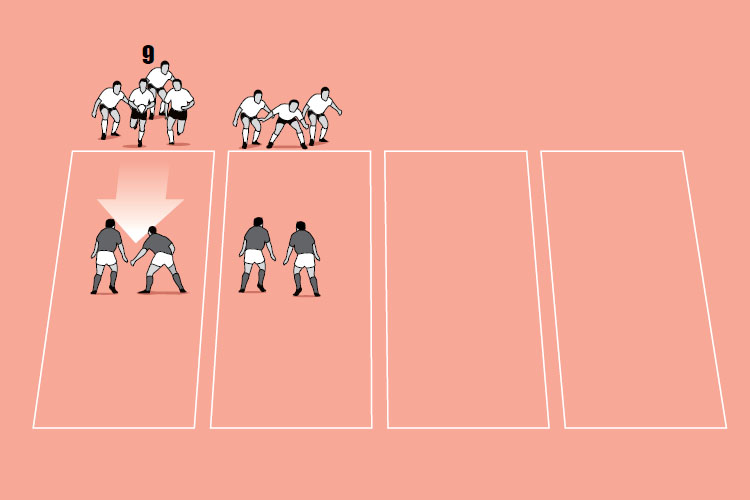
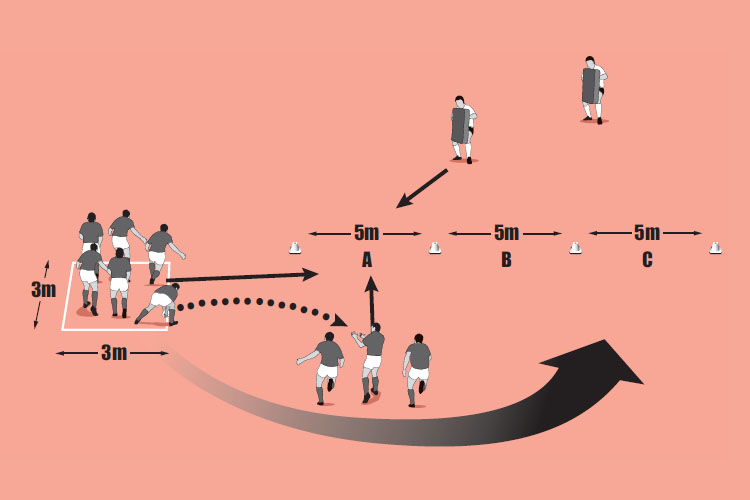
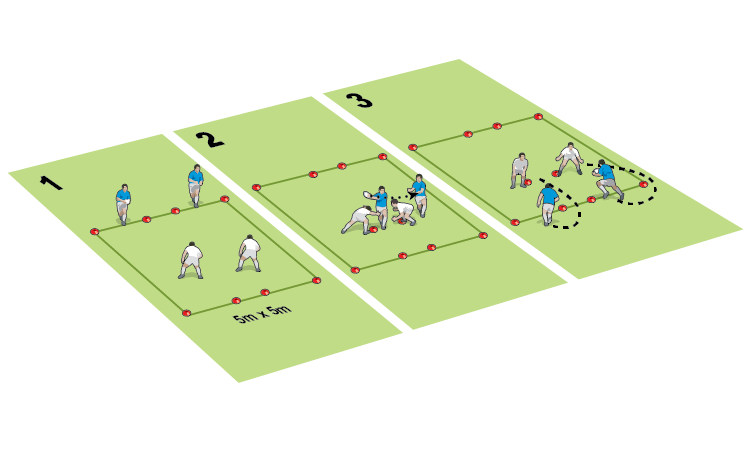
Put two pairs of defenders in the first two boxes. Put three to four attackers opposite the first set of defenders and then another three opposite the second set. The attackers run into the first box, drive forward and form a ruck. If they win the ruck, they pass to the attackers in the next box. Any number of attackers can support this attack. If they win that ruck the ball is moved into either the next box or the previous box. Only two defenders can defend in each box so the first two defenders have to cover the next attack. Continue until an infringement or a try is scored.Related Files
Game situation
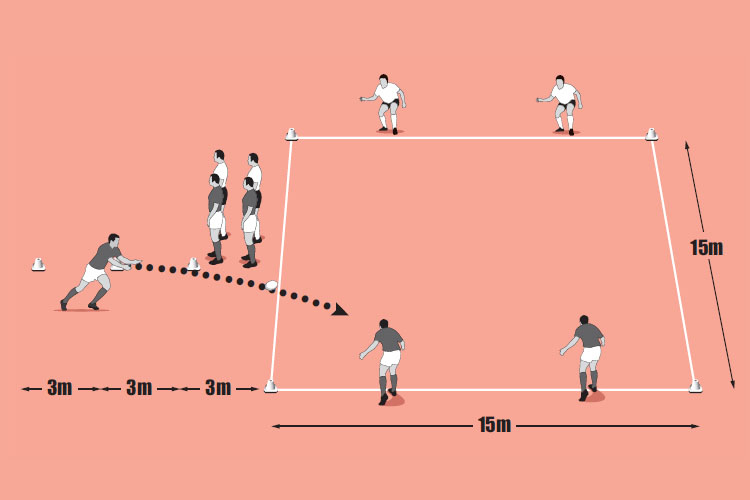
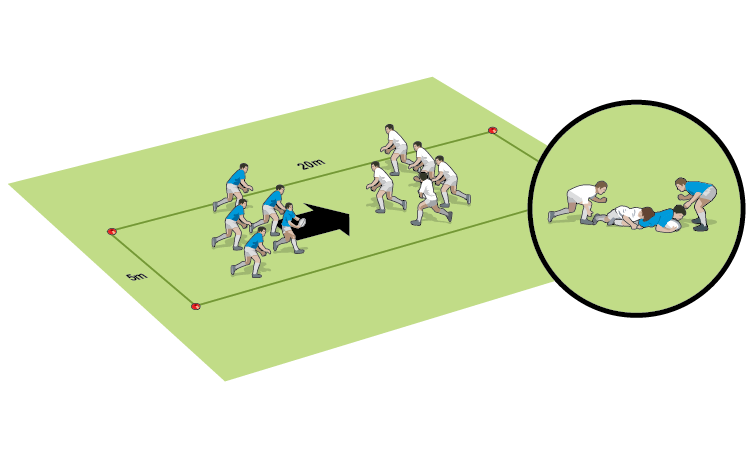
Put six attackers and five defenders in the wider box, set up as in the bottom picture. The attack attempts to score at the try line but can only form two rucks in the wider area. After which, they have to try and score in the narrow area only. Swap teams after three attempts. Restart on any infringement or after a try is scored.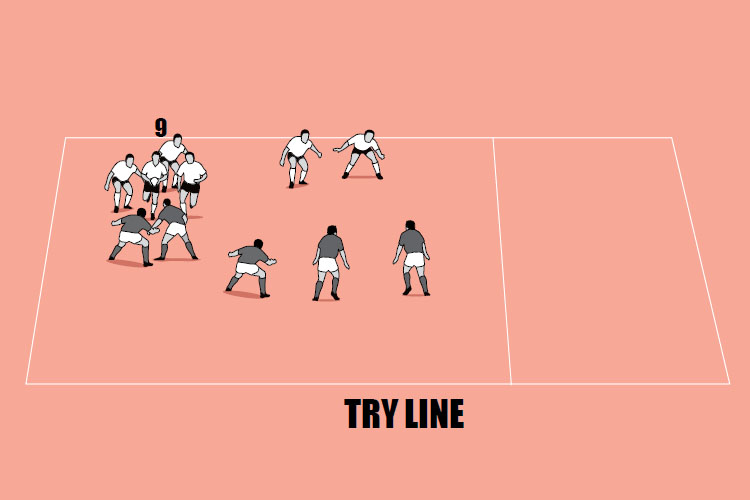
What to call out
- “Win the ruck first”
- “Where can you make a difference?”
- “Put yourself in position to go forward if you can take a pass”

Dan Cottrell

Latest Issue

Subscribe Today
Subscribe Today
Newsletter Sign Up

Coaches Testimonials

Colin Shaw

Gary Lee Heavner
Subscribe Today
Latest Issue
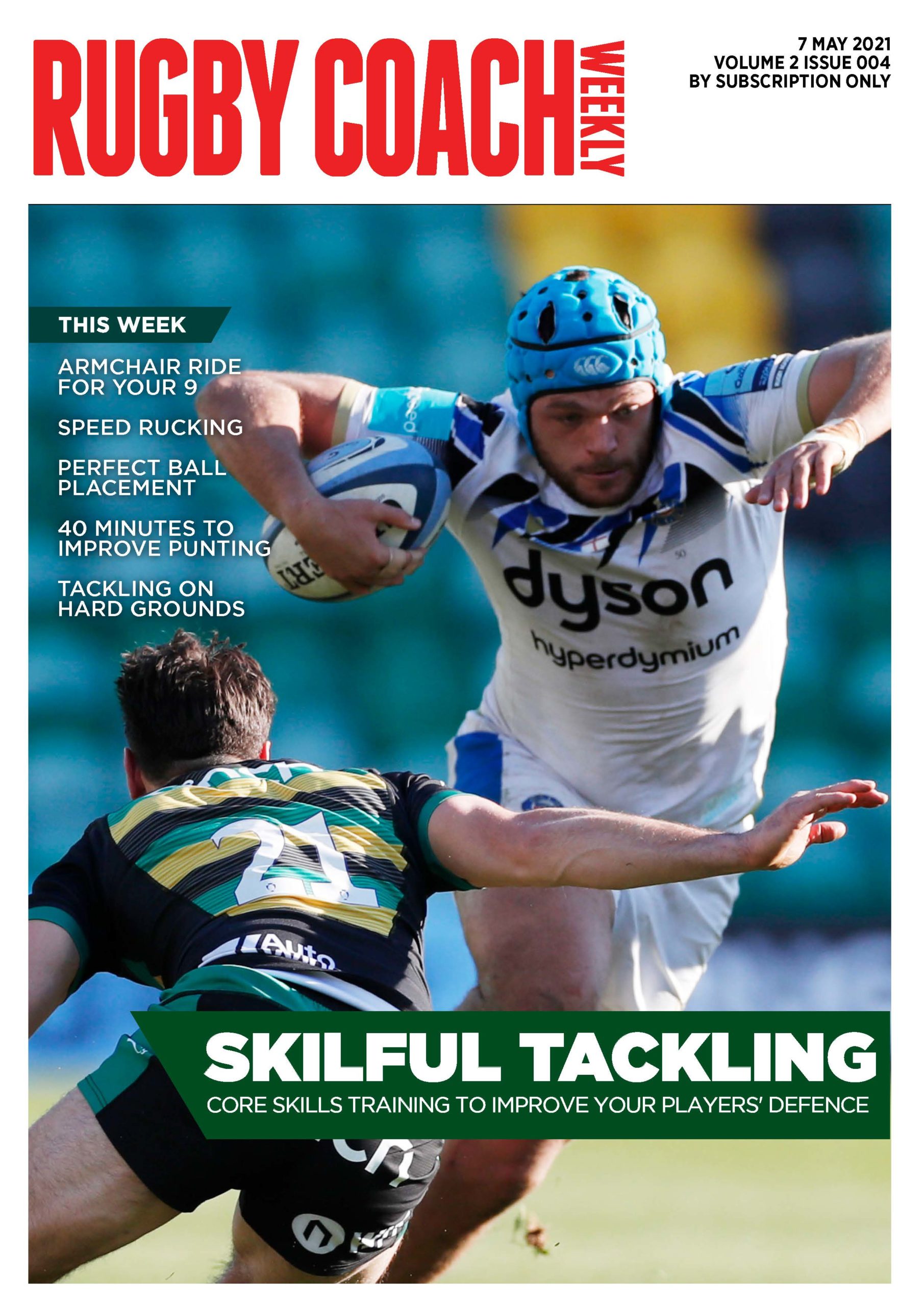
Be a more effective, more successful rugby coach
In a recent survey 89% of subscribers said Rugby Coach Weekly makes them more confident, 91% said Rugby Coach Weekly makes them a more effective coach and 93% said Rugby Coach Weekly makes them more inspired.
Get Weekly Inspiration
All the latest techniques and approaches


Rugby Coach Weekly offers proven and easy to use rugby drills, coaching sessions, practice plans, small-sided games, warm-ups, training tips and advice.
We've been at the cutting edge of rugby coaching since we launched in 2005, creating resources for the grassroots youth coach, following best practice from around the world and insights from the professional game.
