
 close
close


 LOGIN
LOGINRugby Coach Weekly is the largest digital resource for youth coaches, trusted by 15,000+ coaches, teachers and parents every month.
-
Coach with confidence
-
Improve your teams faster
-
Run great sessions with less effort
- Expert coaching advice from TOP Coaches
- Training sessions for players from U6 to U17+.
Ruck and move


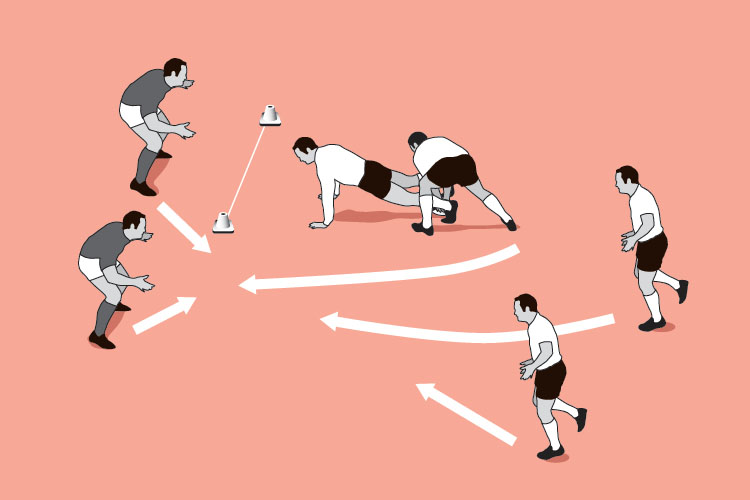
Creating quick ball from slow ruck ball requires a dynamic platform. Your team needs to draw in defenders and recycle good possession for the next attack. This session develops one method which is to create a mini-maul at the side of the ruck. Though primarily for forwards, it is useful for backs as well.
Warm up time: 7-10
Session time: 10-15
Development time: 10-15
Game time: 15-20
Warm down time: 7-10
What to think about
Do you have specific calls when you perform a “ruck and move”? Supporting players need to know whether they are going to drive on to the player or expect a pop pass or offload. When is the best time to “pick and go”, when to mini-maul? Mini-mauls work best when they are enough supporting players in position. “Pick and go” requires fewer players, and is best when the ruck ball is quicker and your side want to keep the momentum of the attack going forward. What is the role of the scrum half? He will be organizing the forwards and should not get involved in the close contact situation.set-up
- Communicate your intention to supporters
- Low to high body positions from pick up.
- Keep the ball secure from the opposition.
- The second player needs to be in a driving position, but focused on the ball at times.
What you get your players to do
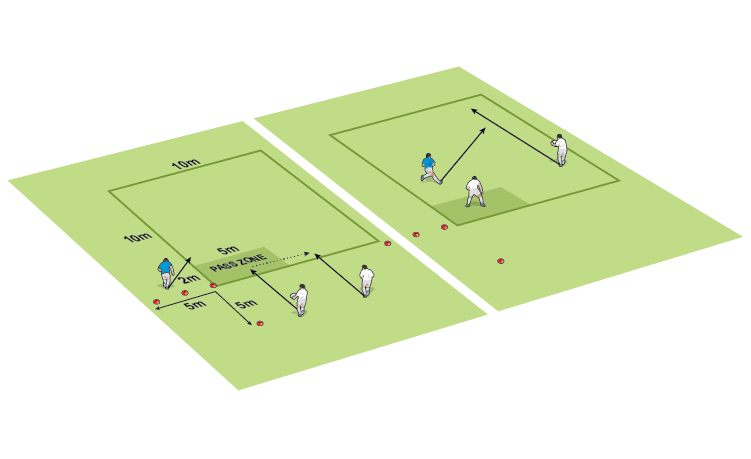
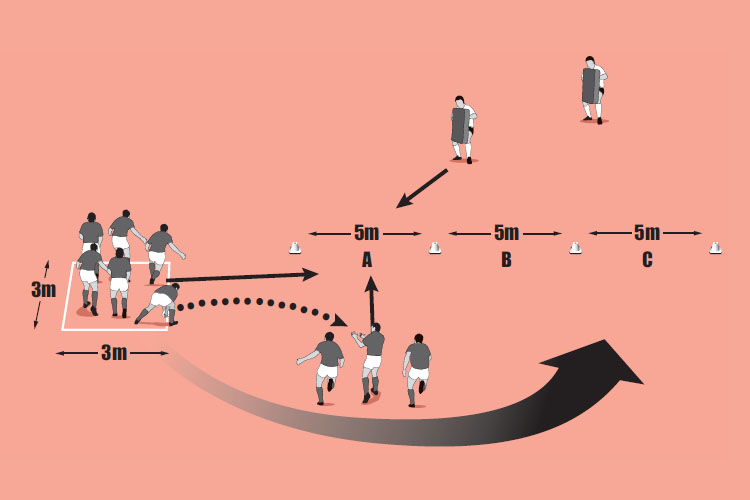
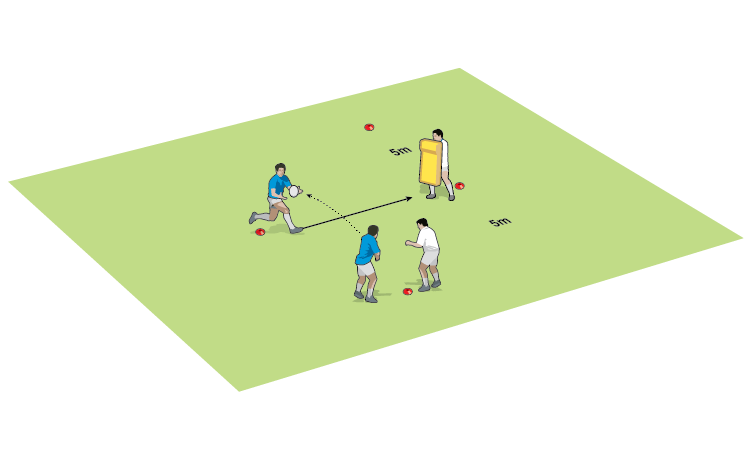
Place one player into a press up position over the ball, acting as the back feet of an attacking ruck. Another player picks up the ball and goes around the side of the ruck. Two other players support. Two opposition players defend passively. Perform the exercise in slow motion to start with to ensure the right body angles and binding.
Development
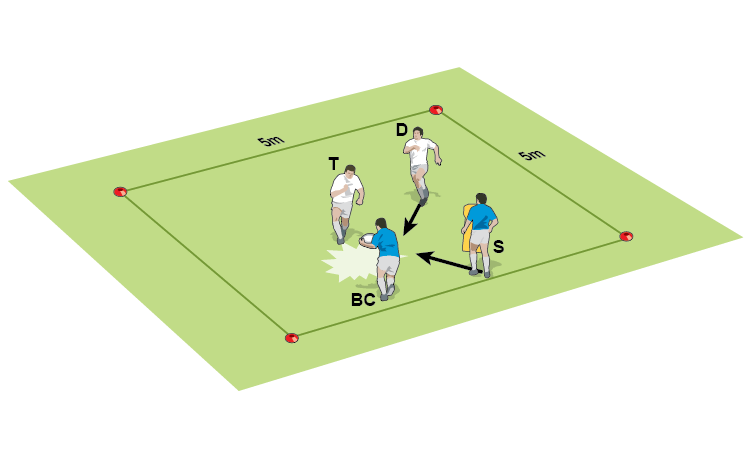
- The defenders tackle or compete for the ball.
- Players approach from cones placed to the side of the original ruck to change the angles.
- Add a second ruck position to go from, so the players need to “ruck and move” more than once.
- Make the defenders arrive at different times, so the attackers need to make more decisions on when to “ruck and move” and what tactic to use.
Related Files
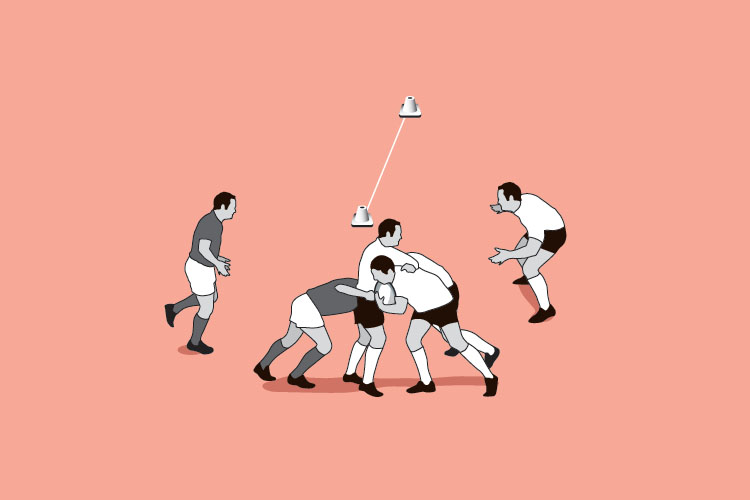
Game situation
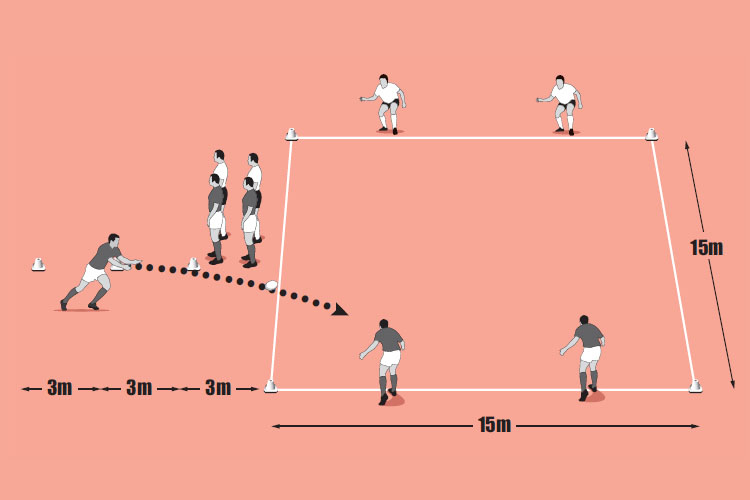
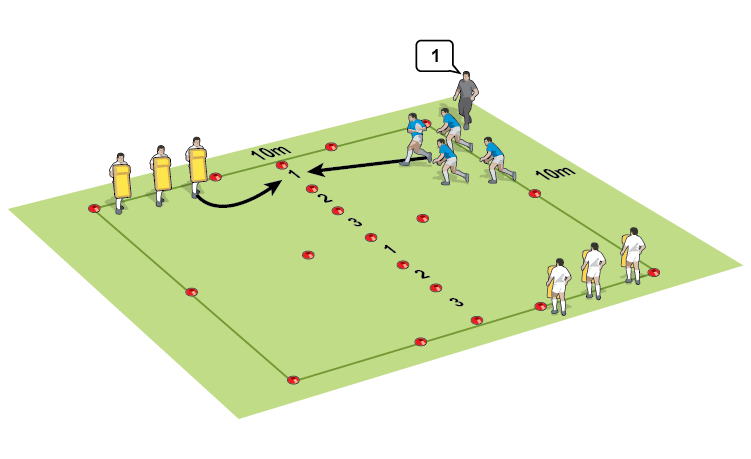
Split into two small teams. Starting in the middle channel the attacking side, who always keep the ball, move forward. When they are tackled or stopped, they need to form a ruck or mini-maul, and then attack once more in the same channel. They then need to attack into one of the other channels. Once they have recycled the ball they attack again in this channel. Finally they need to attack much wider and into the channel they have yet to enter. Attackers are not allowed to go outside any channel until they have won two rucks or contacts. Vary the level of pressure by not allowing the defence to compete for the ball to start with.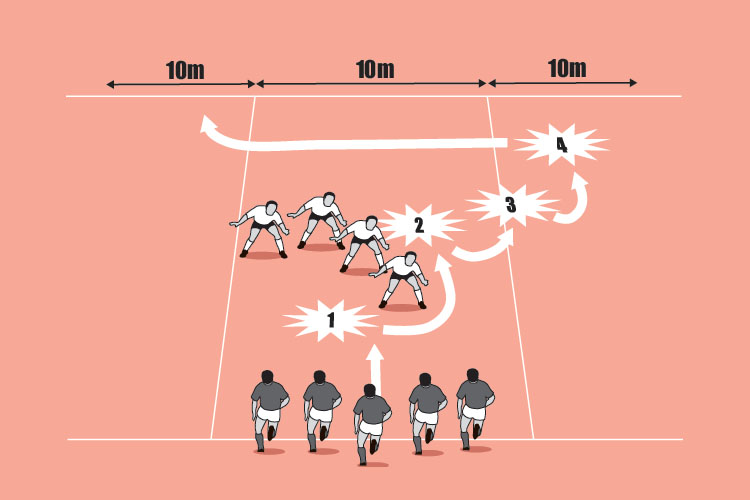
What to call out
- “Don’t get isolated. Only carry the ball if you are sure of your support”
- “Turn early in the tight situations, but always look to go forward”
- “Supporters: keep lower than the ball carrier”
- “Avoid heavy contact. Aim at the arms not the bodies of defenders”

Dan Cottrell
Latest Issue
Subscribe Today
Subscribe Today
Newsletter Sign Up

Coaches Testimonials

Colin Shaw

Gary Lee Heavner
Subscribe Today
Latest Issue
Be a more effective, more successful rugby coach
In a recent survey 89% of subscribers said Rugby Coach Weekly makes them more confident, 91% said Rugby Coach Weekly makes them a more effective coach and 93% said Rugby Coach Weekly makes them more inspired.
Get Weekly Inspiration
All the latest techniques and approaches


Rugby Coach Weekly offers proven and easy to use rugby drills, coaching sessions, practice plans, small-sided games, warm-ups, training tips and advice.
We've been at the cutting edge of rugby coaching since we launched in 2005, creating resources for the grassroots youth coach, following best practice from around the world and insights from the professional game.
